July 15th, 2026
The Complete Guide to AI Writing Tools for SEO Content Creation
 WD
WDWarren Day
Your boss wants to scale content. The budget hasn't moved. Headcount hasn't moved either.
You've tried a few ai writing tools, and the output felt generic. It didn't rank. The promise of fast, cheap content ran straight into the reality of quality control, Google penalties, and traffic that refuses to budge.
You're not looking for a magic bullet. You're looking for a system.
Here's the thing most teams miss: ai writing tools aren't something you just turn on. They're components. Their value depends entirely on how well they fit into your existing workflow, your domain authority, your team structure, what you're actually trying to measure.
The real question isn't "what are the best ai writing tools?" It's "which tools work inside my process to produce content that ranks?"
Most teams get this wrong. They chase whatever demo is trending, publish content that sounds robotic, then wonder why organic traffic flatlines. Meanwhile Google rolls out AI Overviews eating into click-through rates, and clients are asking whether your content is fully automated.
86% of SEO professionals now use AI. Yet only 2.5% of new pages are pure AI-generated. That gap tells you something.
The model that actually works is hybrid: human strategy, AI execution. This guide maps that out, covering the full content pipeline from keyword research and outlining through drafting, optimization, and publishing. We'll also get into how to calculate real ROI beyond cost-per-article, and the operational pitfalls that quietly kill most AI initiatives, including the best free ai writing tools, free ai writing tools like chatgpt, and whether there's genuinely a better ai than chat gpt for writing, or even the best ai for writing novels if that's your use case.
The Case for AI Writing Tools: From Novelty to Necessity
The conversation has already moved on. It's not "should we use AI writing tools" anymore. That's settled. The question now is how.
86% of SEO professionals have integrated AI into their workflow. We're not in early adopter territory. This is mainstream, and it's driven by economics, not enthusiasm.
The numbers are hard to ignore. AI-generated content costs 4.7 times less than human-written content. For a marketing director working with a flat budget, that's not a curiosity. That's a decision you have to make.
But most people miss the actual model that's working. It's not pure AI. 74% of newly created pages contain AI-generated content, but only 2.5% are pure AI. The teams scaling efficiently are using it for drafting, outlining, research, not handing it the wheel.
I've seen this firsthand. The teams struggling are treating AI like a magic button. The ones doing well treat it like a fast, cheap junior writer: useful, but only with clear direction and real editorial oversight.
That 2.5% of pure-AI pages? Those are the cautionary tales. Published without human review, no original insight, doesn't rank, doesn't convert. The other 97.5% is the practical version of this.
So the question isn't "should we use AI?" That ship sailed. The real questions are which tools actually fit your workflow, how you maintain quality at scale, and what your editing process looks like for AI output, whether you're looking at the best ai writing tools for SEO content, the best free ai writing tools for a lean team, free ai writing tools like chatgpt, something that's genuinely a better ai than chat gpt for writing, or even the best ai for writing novels. We'll get into all of it.
There Is No 'Best' Tool, Only the Right Tool for Your Stage
"What is the best AI tool for writing?" is the wrong question. There isn't one.
The right tool depends entirely on where you are in your content pipeline and what specific problem you're trying to solve. A tool that excels at generating novel-length narratives will fail at punchy ad copy. A platform built for SEO optimization won't help you brainstorm initial ideas.
Most enterprise SEO teams understand this intuitively. That's why they use an average of 4.2 different AI tools according to industry surveys. They're building a toolkit, not hunting for a magic bullet.
The real question isn't "which of the best ai writing tools wins?" It's "which tool is best for this stage of our workflow?"
For ideation and research, you want a conversational model with broad knowledge. ChatGPT Plus or Claude Pro are solid here, throw a dozen half-baked ideas at them and you'll get structured outlines, competitor angles, or supporting data in seconds.
For long-form drafting, especially nuanced or narrative work, Claude's larger context window tends to produce more coherent articles than other general models. If you're specifically asking about the best ai for writing novels, you're actually looking at tools trained on literary corpora, not general-purpose chatbots.
Then there's SEO optimization. This is where tools like SurferSEO, Semrush's AI Assistant, or Frase come in. They're connected to live SERP data, analyzing top-ranking pages, suggesting keyword placement, scoring your content against real metrics. Jasper.ai has carved out a strong position for brand voice consistency across marketing copy, while Writesonic leans into factual accuracy with real-time data integration.
Finally, end-to-end automation, platforms like Spectre that handle the entire pipeline from keyword research and SERP analysis through drafting, optimization, and publishing. This isn't about replacing the other categories. It's about connecting them.
When teams report article production time savings of 40% to 50%, it's usually because they've integrated tools across these stages into a coherent system, not because they found one perfect app.
Whether you're looking for a better ai than chat gpt for writing, the best free ai writing tools for a lean team, or free ai writing tools like chatgpt for early-stage ideation, the answer is the same: it depends on what "writing" means to you. Is it the first draft? The SEO polish? The brand-aligned final edit?
Most content teams I've worked with start with a generalist LLM for ideation, use a dedicated SEO editor for structuring and optimization, and keep a separate tool for brand-voice tuning. The "best" setup is just the one that removes the most friction from your specific process.
Mapping AI Tools to Your Content Pipeline
There's no single best ai writing tool. The more useful question is: where in your workflow does each tool actually help?
Most teams just grab ChatGPT and use it for everything, keyword research, drafts, final edits, all of it. That works, technically. But you'll spend way more effort than you need to.
A typical SEO content pipeline runs through six stages: Research → Outline → Draft → Optimize → Publish → Measure. Your tool choices should map to whichever stage is slowing you down the most, not to whatever got a good review this month.
One thing most people skip over: your domain rating (DR) changes which tools are even worth paying for.
I've built content systems for companies with DRs ranging from 20 to 80. A startup at DR 30 cannot realistically rank for "best CRM software" no matter how well their ai writing tools optimize the content. Google's trust algorithm doesn't care. For low-DR sites, the priority is cheap, fast drafting across long-tail keywords. For high-DR teams, the investment shifts to scaling production without losing quality.
Here's the framework I actually use with clients:
- Research & Ideation: Generalist LLMs like ChatGPT or Perplexity. Good for breadth, topic clusters, "People Also Ask" angles, stuff a human might miss. Don't trust their keyword volume numbers. Always cross-reference with Ahrefs or Semrush.
- Outlining & Structure: This is where dedicated SEO platforms earn their keep. Tools like SurferSEO or Frase pull the top 10 SERP results and generate a data-driven outline with recommended headings, word count, and keyword placement. You have a battle plan before writing a single word.
- Drafting: Match the tool to the job. For nuanced long-form work, I use Claude, better reasoning, better structure. For templated content like product descriptions or meta tags, Jasper or Writesonic are faster. If you're asking about the best ai for writing novels specifically, you're actually looking for tools trained on literary corpora, not general-purpose chatbots. For technical docs, you need something with a large context window that can ingest your actual API docs.
- Optimization & Polish: Never publish a raw AI draft. Run it through an SEO editor, SurferSEO's Content Editor is solid for real-time grading against competitors. Then do a human edit to strip out the generic phrasing. This is where the time savings disappear if you're not careful. One survey found 63% of writers spend more time editing AI output than writing from scratch [Source: Elorites].
- Publish & Measure: The most skipped stage. Automation tools like our product, Spectre, close the loop, taking a keyword, researching it, writing a first draft, and publishing to your CMS. That's only valuable if you're tracking what happens next: rankings, traffic, conversions. The "best" tool is the one that helps you learn fastest from what's actually working.
The contrarian take? You probably need fewer tools than you think.
Most small teams can get by with a generalist LLM (ChatGPT Plus), one SEO optimization editor, and a grammar checker. Whether you're looking for free ai writing tools like chatgpt for early ideation, or the best free ai writing tools for a lean budget, that stack covers most of it.
The enterprise team running 50 posts a month is a different story, that's where integrated automation makes sense. But if you're not there yet, choose based on your pipeline's weakest link. Not a vendor's feature list.
ChatGPT's Role in the Modern AI Writing Stack
When someone asks "Is ChatGPT still the best AI for writing?", they're usually coming from one of two places. Either they're brand new to ai writing tools and ChatGPT is all they know, or they've hit its limits and want out.
The honest answer: it's not the best tool for everything. But it's become the default starting point in most professional content stacks for a real reason.
Think of it as your rapid prototyping workshop. The thing it's actually good at is breaking through the blank page. Give it a keyword and a target audience, and within seconds you've got a dozen article angles, a rough outline, maybe some headline options. Teams reporting 40-50% article production time savings with ai writing tools tend to get most of that gain right here, in the ideation phase. [Source: Search Engine Journal]
Where it starts to fall apart is SEO execution.
No built-in keyword density tracking, no competitive SERP analysis, no real-time content scoring. The writing drifts toward generic and slightly academic in a way that experienced readers clock immediately. And even with GPT-4, the context window means you're writing a 3,000-word piece in chunks, not as a whole.
That's why most professional teams use ChatGPT as a starting point, not a finishing line. It handles research and first drafts. Then the content moves into specialized tools, SurferSEO for real-time optimization, Clearscope for keyword alignment, Grammarly for tone. The data backs this up: only 2.5% of newly created pages are pure AI, with the vast majority being human-AI blends. [Source: The Stacc]
So is there a better ai than chat gpt for writing? Depends what you're writing.
For the best ai for writing novels with consistent character voices, Claude is probably the better call. For technical docs that need precise accuracy, Gemini with Google Search grounding. For marketing copy with strict brand voice requirements, Jasper or Writesonic might edge ahead. But for that initial burst of momentum, turning a keyword into a structured concept fast, ChatGPT is still hard to beat, especially at $20/month for Plus.
The practical takeaway: don't abandon it. Just don't expect it to run your entire SEO pipeline.
Use it to break through creative blocks and generate raw material quickly. Then bring in specialized tools for the SEO precision and structural polish that actually moves rankings.
Beyond Generalists: Specialized Tools for Specific Tasks
If ChatGPT is your Swiss Army knife, specialized ai writing tools are your surgical instruments. Not necessarily powered by better models, many still run on GPT-4 or Claude under the hood, but wrapped in features and workflows built for specific content types.
The difference shows up in three places: what training data they're fine-tuned on, how the interface guides your workflow, and what other systems they connect to.
For long-form narrative work, the question people ask is "what's a better ai than chat gpt for writing novels?" And the answer isn't really about a superior model. It's about software designed for sustained narrative. Claude works well here because its interface encourages chapter-by-chapter development and the 200K context window lets you maintain character consistency across an entire manuscript. Generalist chat interfaces just weren't built for that.
Technical documentation is a different problem. Factual accuracy, structural integrity, no hallucinations. Tools like Writer, or specialized ChatGPT setups that can ingest API docs and codebases, become useful here. I've seen engineering teams use these to maintain consistency across developer documentation, where a single wrong parameter name costs hours of debugging.
Marketing teams face the brand voice problem. Platforms like Jasper.ai and Writesonic let you train the AI on your existing content, your top blog posts, product descriptions, email campaigns, and it learns your tone and terminology. When you're producing hundreds of product descriptions monthly, that consistency matters a lot.
For SEO-heavy content, the value is in the integration. Tools like SurferSEO and Semrush's AI Writing Assistant connect directly to SERP analysis and keyword databases. As you write, you're seeing real-time content scores, semantically related keyword suggestions, flags for missing structural elements. It turns AI from a writing tool into something closer to an SEO co-pilot.
And sometimes the most specialized tool is the simplest. For a standard blog post, Content At Scale can generate a 3,000-word draft in 5-10 minutes by automating the whole research-to-draft pipeline. The specialization isn't in prose quality, it's in eliminating workflow friction.
The best free ai writing tools tend to sit at one end of this spectrum or the other: either broad generalists (ChatGPT's free tier) or narrow specialists with free plans built around a single use case. Neither is wrong. It just depends what job you're trying to get done.
Content creation isn't one task. It's a series of distinct jobs, each with its own constraints and quality bar. The best ai writing tools, free or paid, are the ones that were actually built for the specific job you're hiring them to do.
The Real Cost: Pricing, Teams, and Calculating ROI
What does an AI writing tool actually cost you? Not the subscription price. The real cost.
The sticker price is just the entry fee. What actually matters is how the tool fits into your workflow, how much editorial cleanup it creates, and whether it moves your SEO numbers at all.
| Tool | Starting Price | Core Function | Best For |
|---|---|---|---|
| ChatGPT Plus | $20/month | General-purpose writing & research | Teams needing versatile assistant |
| Claude Pro | $20/month | Long-form, nuanced content | Writers needing depth over speed |
| SurferSEO | $69/month+ | SEO-optimized content creation | SEO-focused content teams |
| Jasper | $49/month+ | Brand-voice marketing copy | Marketing teams scaling production |
| Writesonic | $19/month+ | Multi-format content generation | Content marketers needing variety |
Those prices look clean. They're not.
The average enterprise SEO team runs 4.2 ai writing tools simultaneously, according to industry data. That's not efficiency, that's tool sprawl. Each platform solves one part of the problem badly, so you stack subscriptions on top of subscriptions. You're paying for multiple logins, multiple interfaces, and the mental overhead of switching between all of them.
The biggest hidden cost isn't the subscriptions anyway. It's editorial time.
Teams report 40-50% production time savings with ai writing tools. But 63% of writers also report spending more time editing AI output than they would have spent writing from scratch. AI drafts fast. It also produces content that's structurally off, factually shaky, or just generically bland. The editing phase gets heavier, not lighter.
Free Tiers and Open-Source Models
When someone searches "best free ai writing tools," they're usually asking the wrong question. The better question is: what can you actually accomplish before you hit the ceiling?
ChatGPT's free tier, Claude's basic access, and open-source models like Llama or Mistral are genuinely useful for experimentation and low-volume work. Good for testing whether AI fits your process, generating early ideas, handling occasional one-off needs. But professional content production runs into the walls fast: usage caps, older model versions, no SEO features, no brand voice training.
Open-source is a different trade-off entirely. Self-hosting means no per-token costs and full control, but you need technical resources to pull it off. Running Llama 3 70B locally requires serious GPU infrastructure. You're swapping subscription fees for engineering time and hardware costs.
The practical reality: free tiers work if you're a solopreneur or a small team producing fewer than 5-10 pieces a month. Once content is a growth channel, the missing SEO analysis and lack of content scoring cost you more in lost rankings than you're saving on the subscription.
Calculating ROI means going beyond "cost per article." You need to factor in:
- Subscription costs across your full tool stack
- Time saved in research and drafting (that 40-50% production savings)
- Time added in editing, fact-checking, and quality control
- The opportunity cost of content that doesn't rank because it wasn't properly optimized
- The revenue impact of content that does rank and convert
I've seen teams cut $500 per article on writing costs and then spend $800 more on senior editor time fixing the output. The net loss gets buried in the budget and nobody connects the dots.
The winning approach treats the best ai writing tools, whether you're looking at free ai writing tools like chatgpt, paid platforms like Jasper, or something better ai than chat gpt for writing novels like Claude, as multipliers for skilled writers, not replacements for them.
The right ROI question isn't "how cheaply can I generate words?" It's "how much faster can my existing team produce work that actually performs?"
Operational Pitfalls and How to Avoid Them
The most expensive mistakes with ai writing tools aren't technical failures. They're operational blind spots that kill months of work quietly, without a single error message.
Having built content systems for media companies and agencies, I've seen these patterns repeat. Here's what to watch for.
1. Publishing Pure, Unedited AI Content
Only 2.5% of newly created pages are pure AI, and that's not a coincidence. Google's "scaled content abuse" manual actions have been increasing since mid-2025, targeting sites that publish AI content without meaningful human oversight.
The pitfall isn't using AI. It's treating it like a "set and forget" publishing button.
How to avoid it: Build in a mandatory human review layer. At minimum, have an editor fact-check claims, add real examples from your experience, and make sure the structure serves the reader rather than keyword density. The best teams use AI for drafting but keep final publication approval with someone who actually knows the topic and the audience.
2. Ignoring AI Overviews in Your SEO Strategy
When an AI Overview appears for your target query, position one's organic click-through rate drops 54%, from 1.41% to 0.64%. AI Overviews now show up in 13.14% of all Google searches. That's not a rounding error. It changes the math on informational content entirely.
How to avoid it: For keywords where AI Overviews dominate, move away from purely informational content toward commercial or transactional intent. Focus on "how-to" content that covers specific implementation (AI Overviews typically skim past this) or comparison content that helps people decide between options.
3. Over-Reliance on AI Detection Tools
The FTC found one vendor's claimed 98% detection accuracy actually tested at 53%. Most detection tools can't reliably tell the difference between human-edited AI content and purely human writing, and that gap gets wider as models improve.
Using detection results as definitive proof is risky. Legally and practically.
How to avoid it: Treat detection tools as a quality check, not a verdict. If something flags as AI-generated, review it for generic phrasing, factual accuracy, and depth. Don't just trust the flag. For client work, document your human editing process instead of leaning on detection reports.
4. Tracking Output Volume Instead of SEO Outcomes
A SERanking experiment showed AI-generated pages indexed fast (71% within 36 days) but their share of top-100 results dropped from 28% to 3% after three months. Early traffic spikes look great in a weekly report. They can also be completely misleading.
How to avoid it: Track what actually matters, organic traffic, keyword rankings, conversions. Not word count or articles published. Set up tracking for at least six months to account for Google's sandbox effect on newer AI-generated content, and use tools that show ranking trends over time rather than point-in-time snapshots.
5. Neglecting Transparency with Stakeholders
95% of clients ask for proof of human-generated content, according to industry surveys. And beyond clients, your internal team needs to understand where AI fits in the workflow, otherwise expectations around quality and turnaround times get set wrong from the start.
How to avoid it: Create clear disclosure policies before anyone asks. For agency clients, specify exactly how AI is used (research, outlining, drafting) versus where humans are responsible (editing, fact-checking, final approval). Internally, document the AI-assisted parts of your workflow so you can actually calculate ROI and find the real bottlenecks.
The common thread: treat AI as part of a system, not a magic solution. Whether you're using the best ai writing tools, exploring best free ai writing tools, looking at free ai writing tools like chatgpt, or testing something better ai than chat gpt for writing, even the best ai for writing novels, the teams getting consistent results are the ones with disciplined workflows and clear guardrails. Not the ones chasing the lowest cost per word.
The Evolving Landscape: AI Overviews, Detection, and Workflow Futures
So what actually changes if you ignore these trends? A lot, it turns out.
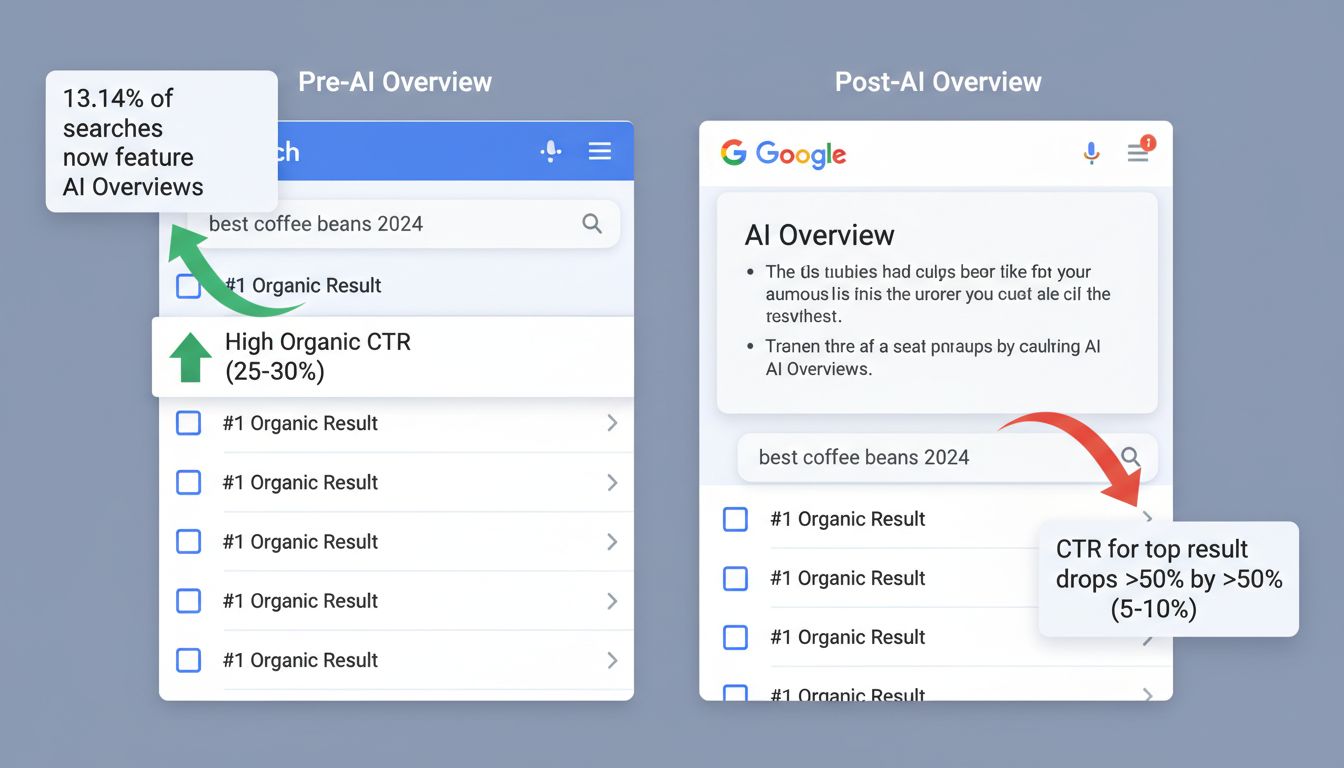
AI Overviews are already here and already hurting traffic. They show up in 13.14% of all Google searches, mostly on informational queries. When one appears, the top organic result's click-through rate drops by over 50%.
That changes the whole game. You can't just answer "what" anymore. You need depth, real context, a perspective worth clicking through for. Surface-level answers are basically free real estate for Google's summary box now.
The detection market, meanwhile, has turned into a mess. Studies show some tools perform barely better than a coin flip, despite vendors claiming 98% accuracy. (The FTC found one vendor's "98%" actually tested at 53%.) Relying on detection for client proof or quality control is increasingly shaky ground.
The smarter move is building content that holds up naturally, through strong hybrid workflows. That's why the dominant model across teams using the best ai writing tools is human+AI, not pure AI. Your editorial process is your detection system.
And workflows are consolidating. The early days of bouncing between a dozen tools for keyword research, briefs, generation, and SEO scoring are fading. Established platforms like Semrush and Ahrefs are building AI in natively. End-to-end systems are handling the whole pipeline from research to publishing.
The point isn't just faster writing. It's cutting the friction between strategy and execution.
None of this changes the core principle, though. Whether you're evaluating the best free ai writing tools, free ai writing tools like chatgpt, something better ai than chat gpt for writing, or even the best ai for writing novels, tools are still just components. The teams winning are the ones who treat AI as infrastructure, not a shortcut.
Your edge won't come from using the same models as everyone else. It'll come from how you run them.
Conclusion
The search for the perfect AI writing tool ends when you stop looking for a single solution and start building a system. These tools are components in your content pipeline, not magic bullets. How effective they are depends entirely on your domain authority, team structure, and what you're actually measuring.
The most successful teams use a hybrid setup, generalist models like ChatGPT for ideation, specialized tools like SurferSEO for optimization. They track real ROI by accounting for both time saved and editorial overhead added. And they stay honest about quality control and legal transparency. [Source: thestacc.com]
Your edge won't come from using the same models as everyone else. It'll come from how you run them.
That's true whether you're testing the best ai writing tools for an enterprise content team, trying out the best free ai writing tools on a budget, comparing free ai writing tools like chatgpt, looking for something better ai than chat gpt for writing, or hunting for the best ai for writing novels. The tool matters less than the system around it.
Your next step: Audit your current content workflow. Find one bottleneck, research, drafting, optimization, pick one, and evaluate a single tool from this guide built specifically for that problem. Run a pilot, measure output quality and production time, then adjust. For teams looking to automate the entire SEO content pipeline from keyword research to published post, explore how Spectre is built for exactly that.
Frequently Asked Questions
What is the best AI tool for writing?
There's no universal answer here. It depends entirely on where your content pipeline is breaking down. Most professional teams mix generalists like ChatGPT for ideation with specialists like SurferSEO for SEO-optimized drafting. The right tool is the one that fixes your specific bottleneck, whether that's keyword research, brand voice, or technical accuracy.
Can I sell a book I wrote with ChatGPT?
Legally, yes. But there are real copyright caveats. Pure AI-generated content may not qualify for copyright protection, so you need substantial human input in the editing, structure, and creative direction. Always check your publisher's terms too, many now require disclosure of AI use, and Amazon has taken manual action against "scaled content abuse" since mid-2025.
Which AI is free for writing?
ChatGPT and Claude both have free tiers that work fine for brainstorming, outlines, and short drafts. Good for experimentation. But they have usage limits and lack the features you'd need for serious SEO content production.
For scaling content, you'll eventually need paid tools with larger context windows, SEO integration, and higher volume allowances. The free ai writing tools like chatgpt are a starting point, not a finish line.
Is it illegal to publish a book written by AI?
No, not inherently. The legal risks are around copyright ownership (pure AI output may not be copyrightable) and plagiarism (AI reproducing copyrighted material). The practical risk is platform enforcement, Google increased manual actions against scaled AI content abuse from June 2025, and many publishers now want transparency about AI use in submissions.
What are the top 5 most popular AI writing tools?
Going by adoption and search data: ChatGPT for versatility, Claude for nuanced long-form writing, SurferSEO for SEO-optimized content, Jasper.ai for marketing copy and brand voice, Writesonic for factual accuracy.
Popularity doesn't equal suitability, though. 86% of SEO professionals use AI, but they're picking tools based on specific workflow stages. Nobody's running the best ai writing tools, or the best free ai writing tools, or the best ai for writing novels on one platform and calling it done. The ones looking for something better ai than chat gpt for writing are usually solving a specific problem, not chasing a ranking.