April 22nd, 2026
Best AI Content Generator for SaaS Founders: A Data-Driven Comparison
 WD
WDWarren Day
You've tried ChatGPT for content. Watched it churn out words. Then hit the same ranking wall every SaaS founder with a domain rating under 30 already knows too well.
The market has 50+ tools all claiming to be the best AI content generator. But for you, the best tool isn't the most powerful one. It's the one that fits your actual DR, your existing stack, and the two hours a week you realistically have.
Most reviews skip this entirely. They compare features like a DR 80 enterprise and a DR 15 startup are fighting the same battle. They're not.
The best AI content generator for a SaaS founder is the one that targets keywords you can actually win, integrates without surprise costs, and scales without losing the human oversight that builds real authority.
Here's what this article covers: why your DR dictates which keywords you can even go after, the five archetypes of AI tools and which one solves your actual bottleneck, real pricing and limitations for 2026's top contenders, hidden operational costs that quietly blow budgets, how to think about AI detection risks without panicking, a 60-second decision flowchart, the scaling mistakes founders keep making, and tailored picks depending on whether you're bootstrapped, seed-stage, or past Series A.
There are also free ai writing tools like chatgpt worth knowing about, and we'll cover where they actually fit (and where they don't).
Why Your Domain Rating Dictates Your AI Tool Choice
Hard truth most AI tool marketing glosses over: your domain rating (DR) is the single most important number in your SEO strategy. Not a vanity metric. It's your site's actual SEO horsepower, a 1-100 scale measuring your backlink authority relative to every other site on the web.
A client of mine spent £5,000 on Surfer SEO's enterprise plan with a DR of 12. Meticulously followed every optimisation suggestion, hit all the keyword density targets, published perfectly structured content. Result? Zero movement on competitive keywords. They were trying to win Formula 1 races with a go-kart engine.
Your DR fundamentally determines which keywords you can even attempt to rank for. It's not about content quality alone. It's about whether Google trusts your site enough to rank it above established competitors.
Here's the practical heuristic I use with every SaaS founder I work with:
- DR < 15: Focus on content velocity and discovery. Your main bottleneck is getting enough content published to be indexed consistently. Tools that prioritise speed over deep optimisation are your friend here.
- DR 15-40: Shift to SEO optimisation. You have enough authority to compete for some keywords, but need data-driven guidance to pick winnable battles. This is where SEO-integrated AI tools start making sense.
- DR > 40: Build content clusters and authority. You can target more competitive keywords, but need systematic topic coverage to dominate your niche.
The mistake I see repeatedly is founders using sophisticated SEO optimisers like Surfer or Clearscope with a DR under 20. These tools analyse SERPs and tell you to match what's ranking. But those ranking pages have DRs of 40, 50, or 60. You're being told to compete with opponents who have three times your SEO horsepower.
The insider rule I follow: if your DR is less than half the average DR in the SERP for a target keyword, you're almost certainly wasting effort.
Instead, prioritise long-tail, question-based content where DR matters less and topical relevance matters more. "How to integrate Stripe with React" is more winnable than "payment processing" when you're starting out.
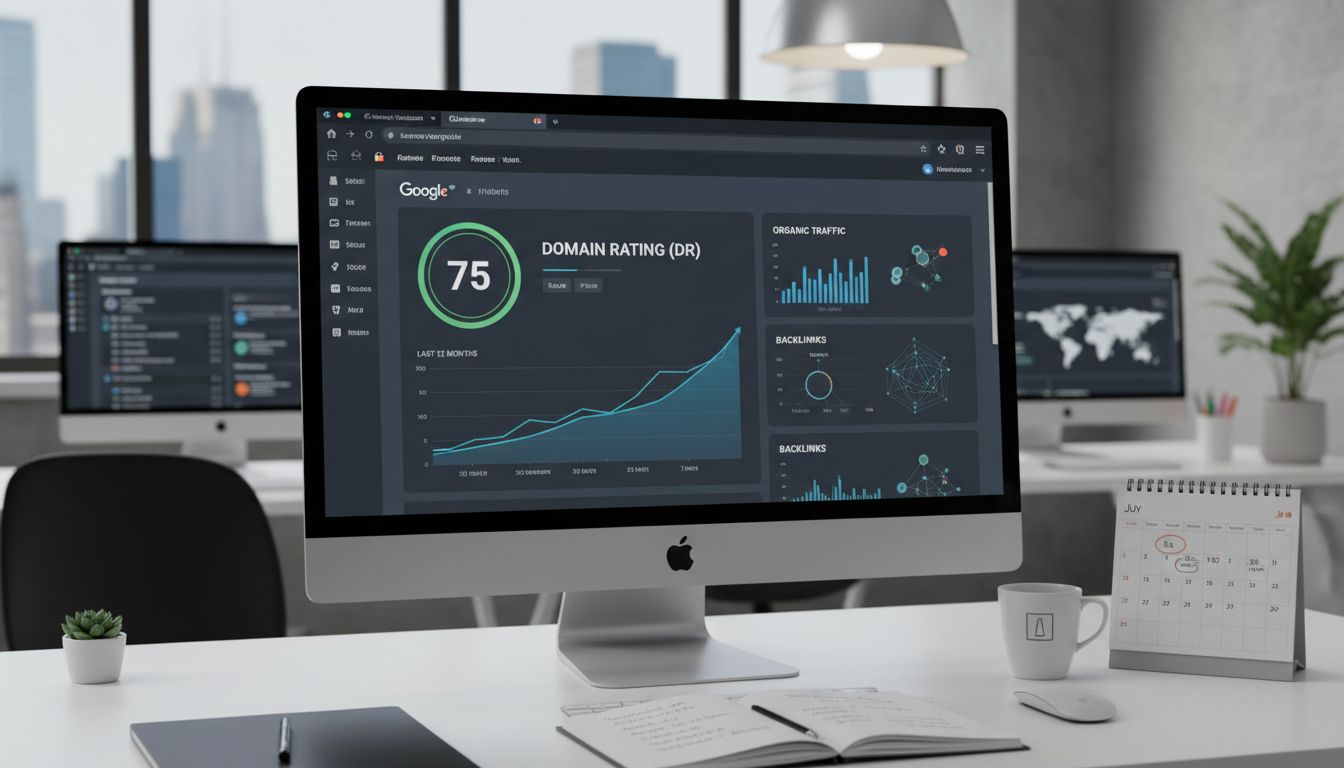
Every minute and pound spent on content that can't rank is a resource pulled from content that could. Your DR isn't fixed (it grows with quality backlinks and consistent publishing), but working within your current reality is how you build toward the next level.
That's also why the best ai content generator for your situation isn't whoever has the most features. It's whichever tool matches your site's actual competitive position right now. Free ai writing tools like chatgpt can absolutely fit into this picture too, depending on where you sit on that DR scale.
The AI tool archetypes we'll cover next map directly to these DR ranges. Pick the wrong archetype and you're just spending money to feel productive.
The 5 AI Content Tool Archetypes – And What They're Really For
Most AI tools blur together on paper. But each one has a primary strength, and picking the wrong archetype is how you spend money to feel productive.
Think of it like climbing gear. Wrong tool for the terrain and it doesn't matter how hard you work.
Here are the five archetypes.
1. The Generic Writer
ChatGPT Plus and Claude are your Swiss Army knives. Great for ideation, brainstorming, rough first drafts. High flexibility, low cost, but no SEO guidance and no structured workflows.
I use them to break through writer's block on technical topics, or to explore a few angles before committing to an outline. They give you raw material. Not a polished final piece. Free ai writing tools like chatgpt fit squarely here.
2. The Marketing Copywriter
Tools like Jasper and Copy.ai are built for persuasion. Ad copy, emails, short-form content where conversion is the whole point.
Many include brand voice features so you can train them on your existing tone. Jasper's Pro plan offers a 10,000-character "lookback" window for brand context [Source: hastewire.com]. Use these when you need 10 variations of a LinkedIn ad headline, not a 2,000-word technical deep dive.
3. The SEO Optimiser
This is your gear for keyword mountains. Frase, Surfer SEO, and Clearscope don't just write, they analyse SERPs and guide your content toward rankings.
They require an existing keyword strategy. Clearscope users report 20–45% increases in organic traffic within 6–12 months [Source: clearscope.io/customers]. Choose this archetype when you're targeting competitive keywords and need data-driven structure, not creative inspiration.
4. The Workflow Automator
Frase AI and ContentBot are about scaling your entire operation. They automate briefing, research, and multi-step workflows to cut out manual steps.
A case study found Embryo Digital saved 180 hours per month using Frase [Source: frase.io/case-studies]. These tools shine when your bottleneck is process, not writing. They're for founders coordinating briefs, research, and publishing across a growing content calendar.
5. The Performance Predictor
Anyword is the outlier. It uses data to predict copy performance, CTR, engagement, conversion, before you publish.
One case study showed a 30% CTR increase for PetCareRx using its predictive scores [Source: anyword.com]. Best deployed when you're optimising high-value pages with measurable commercial outcomes. Not when you're still building traffic.
Here's the contrarian take: the most expensive tool isn't always the right fit.
A bootstrapped founder with a DR under 20 needs the SEO Optimiser to compete on winnable keywords. Not the Performance Predictor for pages that get no traffic yet. The question of which is the best ai content generator for your situation always comes back to matching the archetype to your actual bottleneck, not your aspirational workflow.
Head-to-Head Comparison: 2026's Top Contenders for SaaS
Cut through the marketing. Here's what actually matters when choosing between the top AI content generators for SaaS.
| Tool | Best For (Archetype) | Ideal DR Range | Starting Price (2024/25 data) | Key Limitation | Our Verdict |
|---|---|---|---|---|---|
| ChatGPT Plus | General Purpose Writer | DR 0-40 | $20/month | No SEO structure, zero brand memory | Good for ideation, terrible for execution |
| Jasper | Brand Voice Manager | DR 20-50 | $29/month for 20K words | Lookback window varies by plan (1,500 chars vs 10K) | Solid for consistent tone, expensive for volume |
| Copy.ai | Short-Form Specialist | DR 0-40 | Free tier (2K words/month) | Shallow SEO integration | Decent starter tool, hits limits quickly |
| Anyword | Performance Predictor | DR 30+ | $49/month ($39 annual) | Requires existing traffic to predict | Only useful if you have conversion data |
| Frase | SEO Optimiser | DR 10-50 | $15/month (Solo) | Research-heavy, slower output | Excellent for competitive analysis |
| Surfer SEO | SEO Optimiser | DR 20+ | $89/month (Essential) | Steep learning curve | Powerful but needs SEO expertise |
| Writesonic | General Purpose Writer | DR 0-40 | Free plan available | Credit system gets expensive fast | Good value initially, watch usage spikes |
ChatGPT Plus ($20/month) is what everyone starts with, and it shows. It's good for brainstorming and drafting emails, but ask it to follow an SEO brief and you'll spend more time editing than writing.
Zero brand memory means every session starts from scratch. Your "voice" is whatever prompt you craft that day. For SaaS founders, it's a research assistant, not a content creator.
Jasper starts at $29/month for 20,000 words [Source: hastewire.com], but here's what they don't tell you: the "Lookback" feature gives you 1,500 characters on the Creator plan versus 10,000 on Pro.
That's the difference between maintaining consistency across a blog series and starting fresh every article. Their Surfer SEO integration is solid, but you're paying for the wrapper, not superior AI.
Copy.ai's free tier offers 2,000 words monthly [Source: hastewire.com], making it one of the better free AI writing tools like ChatGPT for testing the waters. Their Pro plan includes unlimited words and five seats for $49/month, which sounds great until you realise the SEO features are surface-level.
Fine for social posts and ad copy. Don't expect it to help you rank for competitive SaaS keywords.
Anyword's predictive scoring sounds impressive, they report cases like PetCareRx achieving a 30% CTR increase, but it only works if you have existing conversion data to train on. At $49/month ($39 annual), it's wasted money if your DR is under 30 and traffic is minimal.
The predictions are based on patterns from similar companies, not your actual audience.
Frase at $15/month (Solo) is where SEO-first founders should look. The research automation saves genuine time, they report clients like Embryo Digital saving 180 hours monthly [Source: frase.io].
But it's methodical, not fast. You'll spend time analysing SERPs before writing a word. Perfect if you're targeting featured snippets in niche SaaS verticals.
Surfer SEO ($89/month Essential) delivers serious results, their case studies show B2B sites achieving 198% traffic growth [Source: surferseo.com]. The underlying magic comes from their data APIs (Ahrefs, DataForSEO). If those APIs have gaps in your niche, Surfer's recommendations will too.
It's not a tool. It's a system that requires understanding SEO fundamentals.
Writesonic's credit system seems flexible until you realise how quickly 1,000 credits disappear. The quality is comparable to ChatGPT with better templates, but you're essentially paying for a prettier interface.
The hidden dependency nobody mentions: every SEO-focused tool's effectiveness depends on the quality of their underlying data providers.
If Ahrefs has thin data in your specific SaaS niche, Surfer and Frase will give you generic advice that won't move the needle. Always check if your target keywords actually have search volume data before trusting any tool's recommendations.
The Hidden Costs Every Founder Misses
The monthly subscription is the tip of the iceberg. Founders burn runway on AI content tools not because the headline price is wrong, but because they miss the fully loaded cost of getting publishable content that actually ranks.
For a low-DR SaaS site, those hidden expenses can turn a promising SEO channel into a money pit before you see any return.
Calculating Your True Cost Per Article
Here's the math most founders skip:
True Cost Per Article = (Monthly Tool Cost ÷ Articles Published) + (Editor Hourly Rate × Editing Hours) + API Overage Risk
Say you're on a $49/month "unlimited words" plan, publishing 8 articles a month. That's $6.13 per article in tool costs. Seems fine.
Now add reality. Each AI draft needs 1.5 hours of editing from a founder or contractor at $50/hour. That's $75 per article.
Your $6 article now costs $81. And you haven't counted the 30 minutes fixing hallucinated facts, or the SEO review to align with Surfer's recommendations.
That $49 tool is delivering articles at over $100 each. For a DR30 site, that's unsustainable, you're spending enterprise-level money without the domain authority to rank for terms that would justify it.
The editing burden doesn't scale linearly either. More articles means more context switching, more inconsistency to fix, more calendar time blocked for editing instead of product work.
The Infrastructure Tax Nobody Bills You For
"Unlimited words" marketing hides the real expense: inference costs. Vendors bet you won't hit their actual compute thresholds. Scale just 20% beyond their assumptions and you find out fast, inference costs can account for 85% of enterprise AI budgets, with scaling often revealing 500-1000% cost underestimation.
Then there's integration debt. An AI tool that doesn't connect to your CMS means engineering hours for custom webhook handlers, error monitoring for failed publishes, and maintenance when APIs change. Tools that create content silos need manual copy-paste workflows that eat another 15 minutes per article.
Compliance overhead is the one nobody plans for. The EU AI Act's 2026 deadlines bring real penalties. Deploying AI without early security team involvement increases data leakage risk and creates remediation work later. Governance isn't bureaucracy, it's technical debt that compounds.
- Monthly subscriptions are just the entry fee
- Editing time typically costs 5-10x the tool fee
- "Unlimited" plans have hidden inference cost thresholds
- Poor integrations create engineering maintenance debt
- Late compliance work is more expensive than doing it right
For low-DR sites, the move is choosing tools that minimize editing time through better first drafts, not tools that maximize word count. Whether you're looking at the best AI content generator for scale or free AI writing tools like ChatGPT for getting started, your constraint isn't content volume. It's the founder hours needed to make that content actually work.
Navigating the AI Detection Minefield
The anxiety is real. You publish an AI-assisted post, then immediately run it through three different detection tools and watch the results swing from "99% human" to "definitely AI." Here's the thing: detector performance is wildly inconsistent. Treat them as hygiene checks, not gospel.
Originality.ai claims 99% accuracy for its Lite 1.0.2 version [Source: originality.ai/blog/ai-accuracy], and independent benchmarks show GPTZero achieving high recall in specific tests [Source: gptzero.me/news/ai-accuracy-benchmarking]. But no detector is reliably accurate across all writing styles and contexts. When I build content systems for clients, I work from one principle: assume detection is possible, and make the content good enough that it doesn't matter.
Forget the mythical "30% rule." That's SEO folklore from 2023 that's been thoroughly debunked.
Google's algorithms prioritize E-E-A-T signals, experience, expertise, authoritativeness, trustworthiness, not whether a human or machine wrote the thing. The real risk isn't detection. It's publishing thin, unoriginal content that provides no unique value.
Here's my practical checklist for humanizing AI output:
- Inject proprietary data: Add a chart from your analytics, a screenshot of your dashboard, or customer usage statistics that only you have access to.
- Include founder anecdotes: Share the specific problem you faced building your product, the technical hurdle you overcame, or the customer conversation that changed your roadmap.
- Reference your research: Mention what you learned from analyzing your own user behavior, A/B test results, or support ticket patterns.
- Add contradictory nuance: AI tends toward consensus. Include the one edge case where your solution doesn't work, the limitation you're still solving, or the competing approach that actually has merit.
Run a quick check with Originality.ai or GPTZero. If your score is borderline, focus on improving the content itself rather than gaming the detector.
The content that gets penalized isn't AI-written. It's content with no original insight, regardless of where it came from. Whether you're using the best AI content generator on the market or free AI writing tools like ChatGPT, that part doesn't change.
Your Decision Flowchart: Find Your Tool in 60 Seconds
Stop overthinking this. You don't need to evaluate 50 tools. Answer two questions.
Question 1: What's your domain rating?
- Low (<15): You're building authority. Focus on demonstrating expertise, not chasing high-volume keywords.
- Medium (15-40): You have some traction. You can target mid-competition keywords but need efficient workflows.
- High (>40): You have authority. You can compete for commercial intent terms and need tools that scale.
Question 2: What's your primary bottleneck?
- Ideation: You struggle to generate topics and outlines.
- Writing: You know what to write but need to produce drafts faster.
- SEO optimisation: You can write, but your content doesn't rank.
- Workflow: You need to manage a content calendar and team collaboration.
- Conversion: You need copy that drives sign-ups, not just traffic.
Here's your text-based flowchart:
Start → Low DR (<15)
- Bottleneck: Ideation/Writing → Use ChatGPT Plus. It's your cheapest research assistant.
- Bottleneck: SEO optimisation → Use Frase. Its research-first approach builds authority on niche topics.
Start → Medium DR (15-40)
- Bottleneck: Writing at scale → Use Jasper. Its brand voice features maintain consistency as you scale output.
- Bottleneck: SEO + Writing → Use Surfer SEO with its AI writer. It directly ties content to ranking data.
- Bottleneck: Conversion copy → Use Anyword. Its predictive scoring helps optimise for clicks.
Start → High DR (>40)
- Bottleneck: Workflow & team scale → Use Clearscope. Its optimisation-first approach fits established editorial processes.
- Bottleneck: High-volume production → Consider Content at Scale or enterprise Jasper for pure output volume.
Here's the thing most people get wrong. Most SaaS founders with DR under 30 should start with ChatGPT Plus or Frase, not the "all-in-one" platforms. You end up paying for features, like Jasper's 50,000-word Pro plan, that you won't actually use until you have the domain authority to compete for the keywords those tools are built around. Source: hastewire.com
Whether you're reaching for the best ai content generator on the market or free ai writing tools like chatgpt, the same logic applies: pick the tool that solves your immediate bottleneck, not the one with the longest feature list.
Your content strategy will shift as your DR grows. Your tool should too.
Common Mistakes SaaS Founders Make (And How to Avoid Them)
What kills most SaaS content programs? It's rarely the tool. It's the operational stuff nobody talks about before they scale. I've watched these same patterns repeat across dozens of clients.
Mistake 1: Scaling Without Clear Metrics
You buy a tool, generate 50 articles, and six months later see nothing. No traffic, no rankings, no idea why.
This happens when you treat content as a volume game. Projects without predefined success metrics fail at much higher rates.
Before your first article, define what success actually looks like for your stage. Is it reducing time-to-first-draft from 4 hours to 30 minutes? Is it moving your Surfer content score from 60 to 80? Measure that. Not word count.
Mistake 2: Underestimating Hidden Operational Costs
A founder I worked with signed up for a mid-tier AI writer, then scaled to 100 articles. They didn't account for human editing time (2 hours per article), image creation, or the SEO specialist needed to clean up the output.
Their $200/month tool became a $5,000/month content operation overnight.
Map your entire workflow before you scale. If you're a solo founder, budget 30-50% of the AI's generation time for human review. That's your real cost.
Mistake 3: Treating AI Output as Final Copy
This is the fastest way to publish thin content that Google ignores. I audited a site recently where every article scored below 30 on Clearscope, all published directly from Jasper without a single edit. They couldn't figure out why nothing ranked.
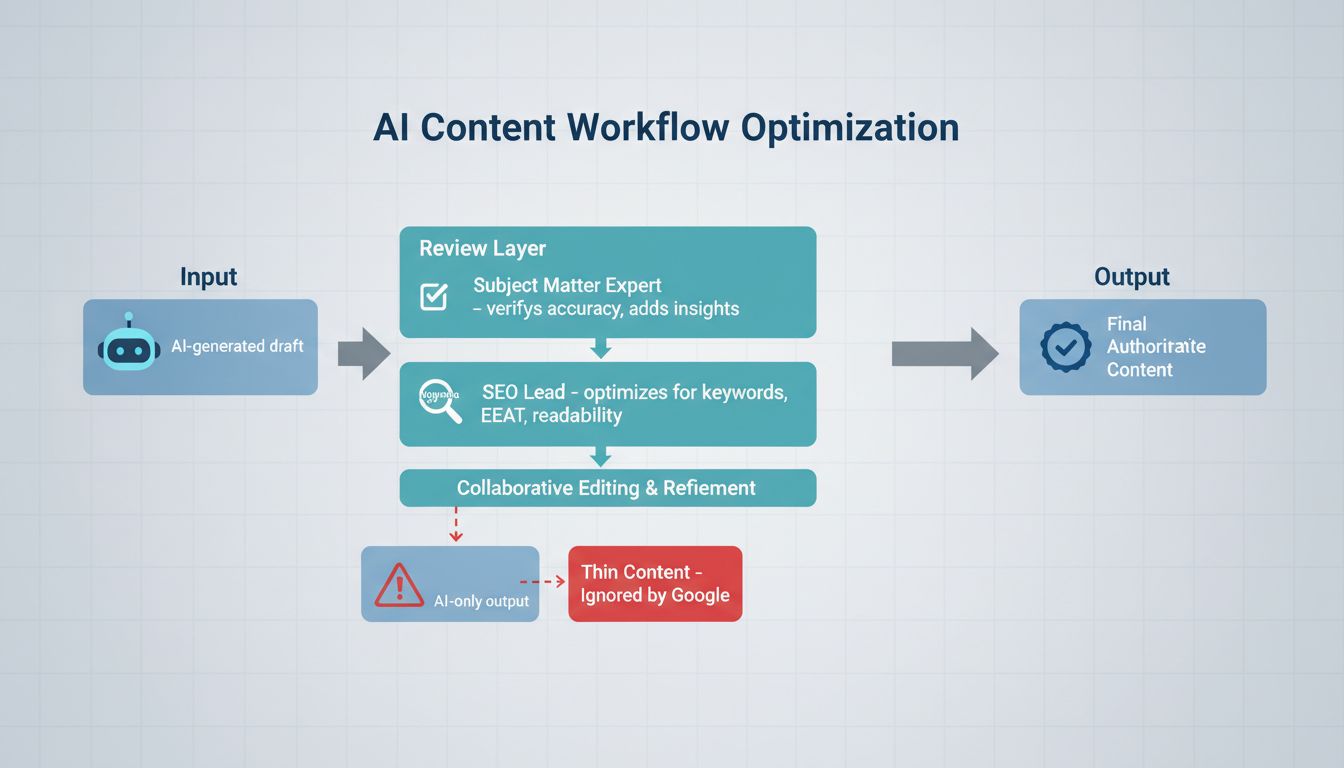
The fix: a mandatory two-step review. A subject matter expert verifies accuracy and adds unique insights. Then an SEO lead optimises for target keywords and EEAT signals. The AI writes the first draft. Your team makes it authoritative.
Mistake 4: Ignoring Security and Data Privacy
Most founders deploy AI tools without thinking about what data flows through them. I've seen client support tickets with sensitive customer information fed straight into ChatGPT for response drafting. That's a GDPR violation waiting to happen.
Do a lightweight risk assessment before you go live. Ask: what data will this tool process? Where does it get stored? Can it be used for model training? For customer-facing content, use tools with enterprise-grade data protection, or just keep sensitive data out of the workflow entirely.
Mistake 5: Overlooking Multilingual Requirements
If you're selling globally, your content strategy has to work across languages. One study found that multilingual AI support reduced non-English support costs by 30% while increasing CSAT by 10%. Most founders still pick English-only tools and deal with the fallout later.
If international expansion is anywhere on your roadmap, prioritise multilingual capabilities from day one. Retrofitting later is painful.
Mistake 6: Chasing Novelty Over Retention
The shiny new AI feature isn't what keeps users engaged. I've watched teams build complex AI chatbots while their documentation was outdated, or add the best ai content generator they could find while their existing articles lacked basic on-page SEO.
Fix the fundamentals first. Optimise your core content, clean up your site architecture, and make sure you're targeting keywords you can actually win. Then use AI, including free ai writing tools like chatgpt, to scale what's already working.
The pattern across all of these is premature scaling. Get one piece of content ranking with your chosen workflow, measure the results, then replicate. Don't build a factory before you've figured out the prototype.
The Bottom Line: Our Recommendations by Stage
The "best" AI content generator depends entirely on where you are right now, not where you want to be.
Bootstrapped, DR < 10: The Frugal Operator
Your priority is conserving cash while proving you can rank for something.
Use ChatGPT Plus ($20/month) for ideation and first drafts. Pair it with manual SEO checks using free tools like Google's Keyword Planner and the free version of Surfer's Chrome extension.
You're trading time for money. At this stage, that's the right trade. Don't pay for SEO features you lack the authority to use yet.
Seed-Stage, DR 10-30: The Systematic Builder
You've validated demand and need to scale output. The question is: what's slowing you down?
If research and brief creation are the bottleneck, Frase ($45+/month) automates that workflow. Their case studies show clients like Embryo Digital saving 180 hours monthly [Source: frase.io]. If you need sheer volume for a content hub strategy, Copy.ai Pro ($49/month) gives you unlimited words.
This is where content stops being a series of one-off tasks and starts being a system.
Series A, DR 30-50: The Authority Investor
You have traction and a budget. At this point, optimisation matters more than generation.
Invest in Surfer SEO ($89+/month) or Clearscope to guide your human writers. One Surfer case study showed a B2B services site hitting 198% traffic growth by pairing AI with deep optimisation [Source: surferseo.com].
At this authority level, the tool's job isn't to write. It's to make sure everything you publish is engineered to rank.
These tools are amplifiers, not strategists. The global AI-powered content creation market is projected to hit $9.2 billion by 2033, but that growth comes from companies who already know what to say.
Your domain rating and unique insight are the real assets. The right tool just helps you deploy them faster.
Conclusion
The search for the "best AI content generator" stops when you quit looking for a universal solution and start matching tools to your actual situation. Your domain rating isn't a limitation to work around. It's the main constraint that dictates which keywords you can realistically target and what kind of support you need.
A tool like Surfer SEO might be worth every penny for a DR 40+ team going after competitive terms. For a DR 15 startup, it's wasted budget. Use Frase or one of the free AI writing tools like ChatGPT to build topical authority on long-tail queries first.
The hidden costs add up fast. The hours spent editing, the technical debt from a poor integration, the inference fees that scale with output... these often eclipse the subscription price itself.
And while the AI detection arms race keeps going, with tools like Originality.ai claiming 99% accuracy, the real answer isn't evasion. It's adding the unique insight, practitioner experience, and strategic framing that only you have. No tool can fake that.
These tools are amplifiers, not strategists. They scale execution. They don't supply the strategy, the unique insight, or the authority that makes content worth ranking. That part is on you.
Your next step: Check your current Domain Rating with a free tool like Ahrefs' Domain Rating checker. Run through the decision flowchart in this article. Then shortlist one or two tools for a 30-day trial focused on a single content cluster. Share what you find in the comments.
Frequently Asked Questions
Which AI is best for creating content?
Which AI is best? Depends entirely on what you're making and where your site sits competitively.
For brainstorming and first drafts, ChatGPT Plus does the job well. For SEO-optimised articles that need to rank, Frase or Surfer SEO give you the SERP analysis that a general-purpose chat tool can't. For marketing copy and ad creative, Jasper or Copy.ai's specialised frameworks are the better fit.
Match the tool to the content type. That's it.
What are the top AI content generators?
The top AI content generators in 2026 are more specialised than they used to be. ChatGPT Plus for general writing, Jasper for marketing copy with brand voice consistency, Frase for SEO content workflows, Surfer SEO for data-driven optimisation, Anyword for performance-predicted copy, Copy.ai for high-volume production.
But "top" shifts a lot depending on use case. What works for a DR 5 startup won't serve a DR 50 scale-up.
The comparison table earlier in this article breaks down which tools actually fit which situation for SaaS founders.
What is the 30% rule for AI?
The "30% rule", edit at least 30% of AI output, is mostly outdated advice at this point.
Search engines don't count percentages. They evaluate quality, expertise, and whether the content is actually useful.
Instead of arbitrary editing quotas, focus on what the AI can't generate: proprietary data, founder insights, real case studies, proper fact-checking. The best AI-assisted content I've seen adds significant original analysis. Not just a light rewrite of whatever the model produced.
What is the best AI tool for startup founders?
The best tool depends on your domain rating and how much runway you're working with.
Bootstrapped founders with DR under 10 should start with ChatGPT Plus. It's cost-effective and versatile enough to cover a lot of ground early on. Seed-stage founders in the DR 10-30 range might add Frase for SEO-focused articles, or Copy.ai Pro for marketing copy.
Series A founders with higher domain authority can justify Surfer SEO's premium pricing, but should still budget for human editing. Your tool should match both your competitive position and your actual editorial capacity.
Is ChatGPT considered SaaS?
Yes, ChatGPT Plus is a SaaS product. Cloud-based, subscription-driven, accessible via web and API.
That said, it's a general-purpose AI tool, not a specialised content platform. It fits in a SaaS tech stack for ideation and drafting, but it doesn't have the native SEO analysis, workflow automation, or team collaboration features you'd get from dedicated tools like Frase or Clearscope.
Think of it as one of the free AI writing tools like ChatGPT that you layer into your workflow, not a complete content solution on its own.