March 27th, 2026
The 2026 Guide to Automated SEO Tools for Scaling Content Production
 WD
WDWarren Day
Your content pipeline is under pressure. More organic traffic, more leads, more published content , but your current process can't keep up. You've looked at automated SEO tools and AI writers, maybe signed up for a few, but the results are inconsistent and the tool landscape is genuinely confusing. Underneath it all sits a nagging question: what if you scale the wrong way and tank your rankings?
That anxiety makes sense. Every vendor is competing for your budget with bold claims, and the noise is deafening.
Here's the thing most teams get wrong: they treat automation as a tool-buying exercise. Add an AI writer here, a rank tracker there, wonder why nothing meaningfully improves. Scaling profitably isn't about accumulating software. It's about building a workflow where each tool does a specific job, hands off cleanly to the next, and gets checked by a human at the right moments.
That last part matters more than most vendors will tell you.
This article gives you a concrete blueprint for doing exactly that. You'll get a four-pillar automation workflow covering Research, Creation, Optimization, and Performance Tracking , the stages where most small teams leak the most time and money. You'll also get a practical tool stack matched to where you actually are right now in your scaling journey, plus a clear-eyed look at the mistakes that cause well-intentioned automation efforts to fail.
No generic tool lists. No hype. Just a framework you can start applying this week.
The 2026 SEO Reality: Why Strategic Automation Is Non-Negotiable
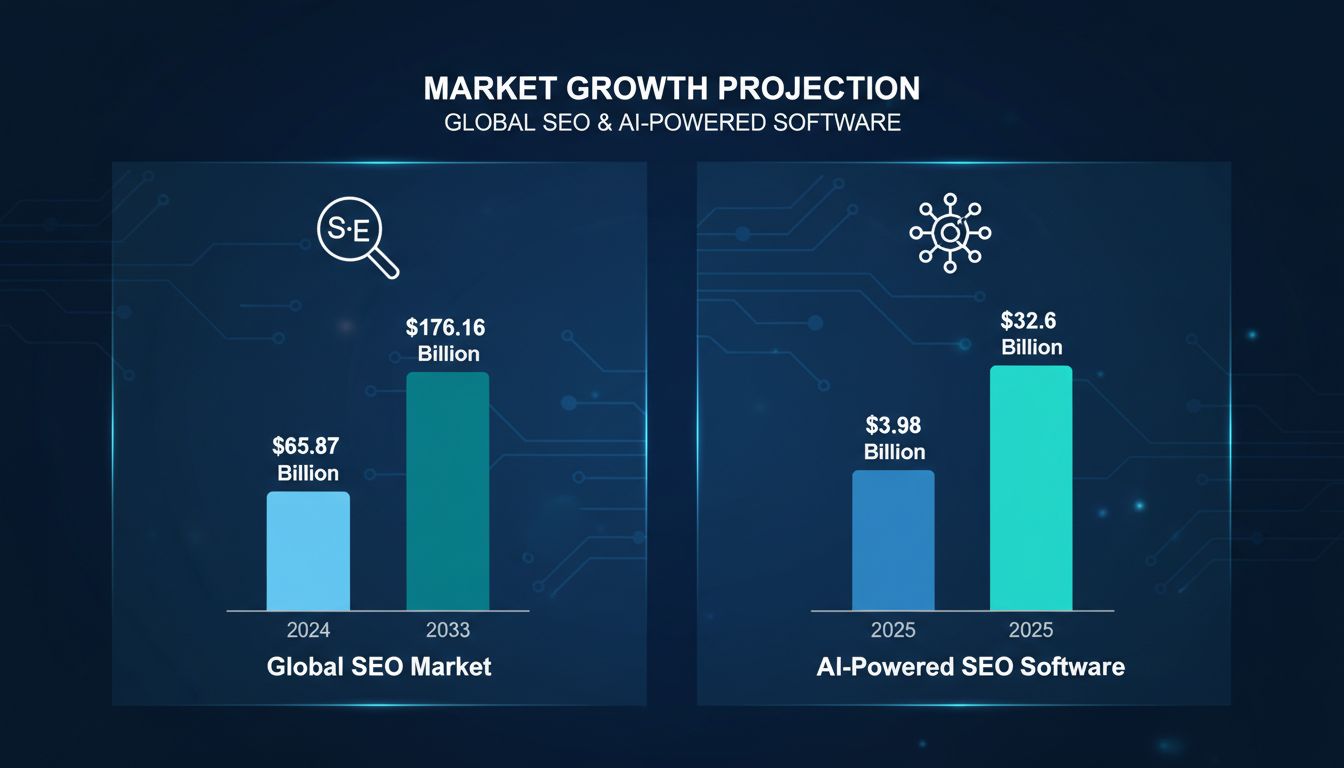
The SEO market is getting bigger fast. From $65.87 billion in 2024 to a projected $176.16 billion by 2033 , and that's the broader market. The AI-powered SEO software segment is growing even faster, from $3.98 billion in 2025 to a projected $32.6 billion by 2035. What that actually means for you: more competitors are entering this space, more are spending on tools, and more content is flooding every niche you're trying to rank in.
Manual processes can't keep up with that. Full stop.
SEO isn't dying , it's bifurcating. Teams grinding through keyword research and content briefs by hand will lose ground. Teams that build systematic, repeatable workflows will pull ahead. The discipline has become a hybrid operation where your process efficiency matters as much as your editorial quality.
The 80/20 framing is useful here. Keyword data aggregation, competitive gap analysis, first-draft content, technical crawl checks, rank tracking , all of it is repetitive, data-heavy, and follows recognizable patterns. That's precisely what automated SEO tools are built for. These aren't tasks that require human judgment. They require consistency and speed, and machines are better at both.
What humans need to own is the remaining 20%: strategic calls, genuine subject-matter expertise, brand voice, and the editorial instinct to catch something that's technically correct but useless to an actual reader. That's not a small thing. It's the difference between content that ranks and content that converts.
The mistake most teams make isn't using automation. It's buying tools without a framework, getting patchy results, and concluding that AI content doesn't work. What they've actually discovered is that a random stack of software isn't a strategy.
What works is a structured workflow that applies the right automation at each stage of the SEO process, with deliberate human checkpoints built in. That's exactly what this guide is built around.
Beyond the Hype: The 4-Pillar SEO Automation Workflow
Most teams approach automation the wrong way. They buy a tool, use it for one task, and wonder why nothing moves. The problem isn't the tools , it's that there's no system connecting them.
Here's how to fix that.
The framework below organizes SEO automation into four distinct pillars, each handling a specific stage of the process. Together they form a repeatable workflow rather than a pile of disconnected tasks.
The Four Pillars:
- Research & Strategy , Automated keyword discovery, competitor gap analysis, and topic clustering
- Content Creation & Drafting , AI-assisted brief generation, drafting, and brand-voice consistency at scale
- On-Page & Technical Optimization , Automated audits, meta tag deployment, schema markup, and internal linking
- Performance Tracking & AI Visibility , Rank monitoring, traffic attribution, and visibility in AI-generated search results
Notice what sits at the center of this system: human judgment. Automation handles the volume and the repetition. Your team handles strategy, quality control, and decisions that require context no tool can replicate. That's not a limitation , it's the design. 93% of marketers review AI-generated content before it goes live, which reflects a professional standard, not a lack of trust in the technology.
This also isn't a linear process. Each pillar feeds the next. Performance data from Pillar 4 reshapes your research priorities in Pillar 1. Technical fixes in Pillar 3 unlock the ranking potential of content built in Pillar 2. It's a cycle, not a checklist.
graph TD
P1["🔍 Pillar 1
Research & Strategy"]
P2["✍️ Pillar 2
Content Creation & Drafting"]
P3["⚙️ Pillar 3
On-Page & Technical Optimization"]
P4["📊 Pillar 4
Performance Tracking & AI Visibility"]
CENTER["🧠 Human Strategy
& Oversight"]

P1 --> P2
P2 --> P3
P3 --> P4
P4 --> P1

CENTER --- P1
CENTER --- P2
CENTER --- P3
CENTER --- P4

style CENTER fill:#f0f4ff,stroke:#4a6cf7,stroke-width:2px,color:#1a1a2e
style P1 fill:#ffffff,stroke:#cbd5e1,stroke-width:1px
style P2 fill:#ffffff,stroke:#cbd5e1,stroke-width:1px
style P3 fill:#ffffff,stroke:#cbd5e1,stroke-width:1px
style P4 fill:#ffffff,stroke:#cbd5e1,stroke-width:1px
What follows breaks down each pillar in detail , the specific tasks to automate, the tools that do them well, and where human oversight isn't optional.
Pillar 1: Automating SEO Research & Strategy
The research phase is where most content programs quietly die. Teams spend days compiling keyword lists in spreadsheets, manually checking competitor rankings, and debating which topics to prioritize , only to end up with a bloated backlog and no clear direction. Automation doesn't eliminate this work. It compresses it from days into hours and makes the output far more actionable.
The goal here isn't more data. It's faster clarity.
What You Can Automate
Three tasks in the research phase are ripe for automation and deliver the clearest ROI:
Keyword discovery and clustering. Tools like Ahrefs and Semrush can surface thousands of keyword variations from a single seed term, then group them by topic and search intent automatically. What used to take a specialist half a day now runs in minutes. The output , organized clusters mapped to informational, commercial, or navigational intent , becomes the skeleton of your content calendar.
Competitor content gap analysis. This is where automation genuinely earns its keep. By feeding three to five competitor domains into Ahrefs' Content Gap tool or Semrush's Keyword Gap report, you get a prioritized list of topics your competitors rank for that you don't. That's not just research , it's a ready-made opportunity map.
Topic authority scoring. Platforms like MarketMuse assess how comprehensively a domain covers a subject area and flag where you have the highest probability of ranking. Frase does something similar, pulling SERP data to build content briefs that show exactly what top-ranking pages cover. Both tools shift the question from "what should we write?" to "where can we win?"
The Analysis Paralysis Problem
Here's the counterintuitive risk: better research tools can produce worse decisions if you're not careful.
When a tool like Semrush hands you 10,000 keyword opportunities, the instinct is to chase volume. Teams end up targeting high-competition head terms while ignoring the mid-tail clusters where a lean team can actually build topical authority. Honestly, this is one of the more common ways solid automated seo tools get misused , the capability is real, but without a filter, you're just drowning in a shinier spreadsheet.
The fix is using automation for focus, not just discovery. Set a filter , keyword difficulty under 30, search volume over 200 , and build your initial clusters there. Let the tool eliminate the noise before a human strategist makes the final call on priorities.
The Human Checkpoint
Automated research surfaces what people search for. It doesn't tell you why it matters to your specific buyer.
A marketing manager at a 10-person SaaS company needs a human to connect keyword clusters to actual pipeline stages. That's the layer no tool in your top SEO tools list can replace. Use automation to build the shortlist. Use judgment to build the strategy.
Pillar 2: Automating Content Creation & Drafting (The Scaling Engine)
This is where real leverage lives. If Pillar 1 tells you what to create, Pillar 2 is what actually fills your editorial calendar , at a pace that's simply not possible with a manual writing process.
The proof is concrete. Digital Harvest published more than 200 blog posts in 2025, up from just six the year before, and grew organic search traffic by 159% year-over-year. That kind of output increase doesn't come from hiring more writers. It comes from pairing AI drafting tools with a disciplined editorial process.
General-Purpose AI vs. Specialized AI SEO Tools
This distinction matters more than most teams realize. ChatGPT is a capable drafting assistant , useful for ideation, rewriting paragraphs, and generating meta descriptions. But it has no access to real-time SERP data, no content scoring, and no built-in optimization signals. It's a blank canvas.
The best AI SEO tools for content creation are purpose-built for ranking, not just writing. Surfer AI generates a full article draft in roughly 15-20 minutes and immediately scores it against competing pages in its Content Editor. Jasper offers brand voice training so output stays on-message across a team. Copy.ai has iterated its model support to reduce hallucinations. These tools don't just write , they write toward a ranking target.
A question that surfaces here pretty often: Can ChatGPT do an SEO audit? Honestly, no. It can help you interpret data you paste into it, but it can't crawl your site, analyze log files, or benchmark your content against live SERPs. For drafting and ideation inside a governed workflow, it's a useful assistant. For auditing, you need the specialized tools covered in Pillar 3.
Scaling Beyond Blog Posts
Content automation isn't limited to long-form articles. Some of the highest-ROI applications are the unglamorous ones:
- Meta titles and descriptions , Tools like BulkGPT can generate optimized versions for hundreds of pages in a single batch, eliminating one of the most tedious manual tasks in SEO.
- Product and service pages , Structured prompts with consistent templates let teams produce on-brand page variants at scale.
- Content refreshes , AI can identify outdated sections and draft updated copy, which feeds directly into Pillar 4's maintenance workflow.
If you're exploring free AI SEO tools to test this before committing budget, both ChatGPT's free tier and Google's Gemini handle basic drafting tasks well enough. Just don't expect integrated content scoring or SERP-aware optimization at that level.
The Human-in-the-Loop (HITL) Framework
Here's the part most "AI content" guides skip entirely.
Speed without governance is how you produce 200 pages that nobody reads. The fact that most marketers review AI-generated content before publishing isn't a sign of distrust in the tools , it's just professional standards.
Your HITL review checklist before anything goes live:
- Fact-check every specific claim. AI hallucinates statistics, names, and dates. Verify anything quantitative against a primary source.
- Align with brand voice. AI defaults to generic. Read the draft aloud , if it doesn't sound like your company, rewrite those sections.
- Add unique insight or experience. This is your E-E-A-T layer. A data point from your own client work, a counterintuitive observation, a real example , something the AI couldn't have invented.
- Check search intent alignment. Does the draft actually answer what the target keyword is asking? AI drifts. Confirm the opening 200 words are on-target.
- Review internal link opportunities. AI won't know your site architecture. A human should manually insert relevant internal links before publishing.

The Digital Harvest team used two journalists to guide production. AI accelerated drafting, but human judgment shaped every piece. That's the model worth copying.
The Pitfall: Confusing Volume With Impact
Publishing 200 posts that aren't mapped to real search demand produces 200 pages with zero ROI. That's not a hypothetical , the vast majority of published web pages receive no organic traffic at all.
Automation amplifies your strategy, good or bad. If your keyword targeting and content briefs are sharp (Pillar 1), automation multiplies that advantage. If they're not, you're just producing noise faster. The scaling engine only works if there's something worth scaling.
Pillar 3: Automating On-Page & Technical Optimization
Great content that nobody can find is wasted effort. So is content Google can't properly crawl. This pillar covers two distinct but connected jobs: making sure each piece is optimized before it publishes, and making sure your site's technical foundation isn't quietly working against you.
On-Page Optimization: From Checklists to Integrated Guidance
Tools like Surfer SEO, Clearscope, and Frase embed directly into your writing environment , Google Docs, WordPress, your CMS , and give real-time feedback as content gets drafted. They analyze what's already ranking for your target keyword and surface the semantic terms, heading structures, and topic coverage that top-performing pages have in common.
Honestly, this is where the friction-reduction is most obvious, especially for smaller teams where the editor and the SEO strategist are the same person. Instead of cross-referencing a separate brief in another tab, writers get live signals inside the document they're already working in. Clearscope's Google Docs integration and Surfer's WordPress plugin are both solid examples of this. For teams just getting started, they're among the best SEO tools for beginners precisely because they translate complex SERP analysis into a simple, actionable score.
But treat that score as a floor, not a ceiling.
Surfer's own research across one million SERP entries found a 0.28 Spearman correlation between Content Score and Google rankings. Meaningful, but far from deterministic. A score of 85 doesn't guarantee a page-one ranking , it signals that your content is structurally competitive with what's already there. Hitting the target number and stopping is a mistake the best-performing teams don't make. They use the score as a calibration tool, not a finish line.
The AI-driven suggestions , recommended headings, FAQ additions, related entities , are most valuable when a human editor evaluates them for relevance and accuracy. Auto-insert features exist. Use them selectively.
Technical Health: Proactive Audits at Scale
Here's the uncomfortable truth: a technically broken page can negate every on-page optimization you've made. A crawl error, a slow load time, or a broken internal link means Google either can't access your content or deprioritizes it entirely. Technical SEO isn't glamorous, but automation makes it manageable at scale.
Tool choice depends on your workflow. Desktop crawlers like Screaming Frog (£199/year) are the standard for deep, on-demand audits , site migrations, pre-launch checks, diagnosing a sudden traffic drop. Fast, highly configurable, granular control over what gets crawled. Cloud-based crawlers like Sitebulb Cloud shift the model toward continuous monitoring: scheduled crawls run automatically, surface new issues as they appear, and present findings in visual crawl maps that are far easier to share with non-technical stakeholders. For agencies managing multiple client sites, that distinction matters. Screaming Frog for the deep dive, Sitebulb for the always-on health check.
For WordPress-based sites, both tools integrate cleanly with Google Search Console data, making them strong candidates for best SEO tools for WordPress workflows where you need to connect crawl findings to actual traffic and ranking data.
Beyond crawling, the automatable technical checklist for 2026 looks like this:
- Indexation health , pages blocked by robots.txt or noindex tags unintentionally
- Internal link discovery , tools like Ahrefs and Conductor's AI-powered link suggestions identify orphaned pages and recommend contextually relevant internal links to strengthen site architecture
- Page speed monitoring , automated alerts when Core Web Vitals degrade, tied to specific URLs
- XML sitemap validation , ensuring new content is submitted and indexed promptly
- Structured data validation , schema markup checked against Google's requirements to maintain rich result eligibility
The real ROI here isn't speed. It's prevention.
A weekly automated crawl catches a broken redirect before it costs you rankings, not six weeks after the fact when you finally notice a traffic dip in GA4. That's what this pillar actually delivers , not faster SEO, but consistent SEO that doesn't quietly fall apart between audits.
Pillar 4: Automating Performance Tracking & AI Visibility
Rank tracking used to be the finish line. You published content, watched your position climb from page two to page one, and called it a win. That's still worth measuring , but it's no longer the whole picture.
The metric that's actually changing how teams operate is AI Visibility: whether your brand gets cited when someone asks ChatGPT, Claude, Perplexity, or Google's AI Overviews a question your content should answer. If your content isn't showing up in those answers, a chunk of your potential audience never finds you, regardless of where you rank in traditional search.
SEO isn't being replaced. Its success metrics are just expanding.
What to Automate at This Pillar
Traditional rank and performance tracking should run on autopilot. Scheduled GSC and GA4 reporting, automated rank-movement alerts, weekly traffic summaries -- these are table stakes at this point. Tools like Semrush handle this natively, and their platform integrates social performance data too. That's useful if you're already consolidating organic and social reporting in one place rather than stitching together free social media management tools that don't talk to your SEO data.
AI Visibility monitoring is the newer layer, and honestly it's where most teams have the biggest blind spot. Tools like Frase track your brand across eight AI platforms daily -- ChatGPT, Claude, Gemini, Perplexity, Google AI, and more -- showing you which prompts trigger mentions, your share of voice against competitors, and where you're completely absent. Starting at $39/month, it's accessible for small teams without a dedicated analytics budget. AthenaHQ goes deeper, mapping the exact sources AI engines cite when discussing your category so you can identify which third-party publications to pursue for coverage.
Voice search is the third surface to account for. Queries like "what's the best project management tool for remote teams" are conversational by nature, and the structured data and FAQ-style content you built in Pillars 2 and 3 directly feeds your visibility here. No separate workflow required.
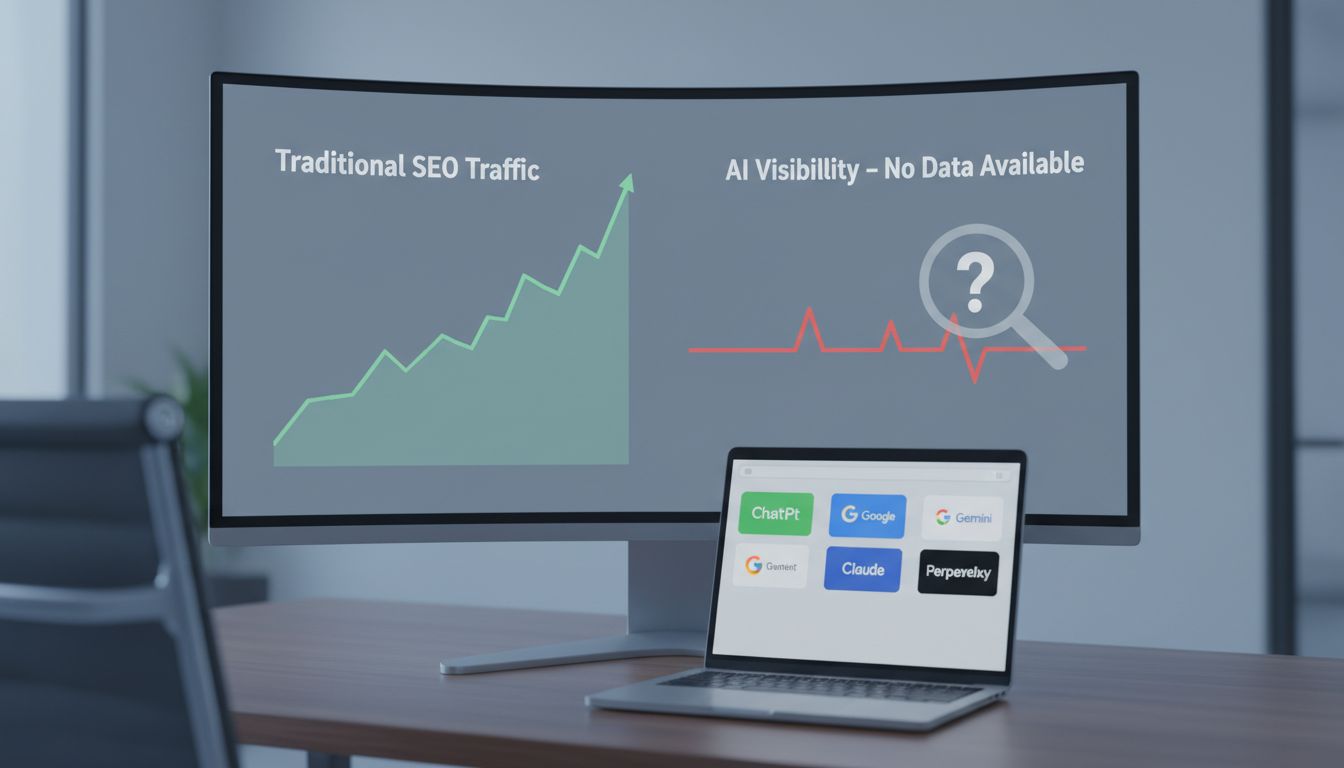
Here's the uncomfortable truth: most teams have no idea whether AI search engines mention them at all. That blind spot is getting more expensive every month.
Building Your 2026 Tool Stack: A Strategic Guide by Scaling Stage
Most tool comparison guides are just feature lists dressed up as advice. This one isn't. The right automated SEO tools for your team depend on your bottleneck, your headcount, and what an extra hour of analyst time actually costs you , not on which platform has the most checkboxes.
The principle is simple: one core platform for breadth, one specialist tool for your biggest constraint. Resist the urge to buy seven tools. You'll use three.
📌 All pricing reflects publicly available rates as of early 2026 and is subject to change. Always verify directly with vendors before purchasing.
The Stack by Scaling Stage
| Scaling Stage | Primary Bottleneck | Recommended Core + Specialist Stack | Est. Monthly Budget | Key Considerations |
|---|---|---|---|---|
| Solo Creator / Bootstrapped SMB | Publishing consistently; no time for deep research | Core: Google Search Console + Ahrefs Starter ($29/mo) Specialist: Frase Starter ($38/mo) for AI briefs and content scoring. For local visibility, add Google Business Profile (free) + BrightLocal ($29/mo) | $70–$100/mo | The best SEO tools for small businesses are the ones you'll actually use weekly. Don't pay for Semrush's full suite if you're publishing twice a month. Free GSC covers rank tracking at this stage. Local SMBs: BrightLocal handles map-pack tracking and citation management, purpose-built for local search. |
| Growing Content Team (3–5 people) | Content quality is inconsistent; briefs take too long | Core: Semrush Pro ($139/mo) for research, audits, and reporting Specialist: Surfer SEO Essential ($99/mo) for content scoring and AI drafts | $238–$280/mo | This is where the "Core + Specialist" model pays off. Semrush handles keyword research, competitor gaps, and site audits. Surfer handles the content layer Semrush doesn't go deep on. Don't treat Surfer's Content Score as a ranking guarantee , it's a useful signal, not a certainty. |
| Marketing Agency (serving multiple clients) | Reporting overhead; scaling content across different client niches | Core: Semrush Business ($455/mo) or Ahrefs Standard ($249/mo) Specialist: Surfer Scale ($175/mo) + AgencyAnalytics ($125/mo) for white-label reporting | $550–$755/mo | Automated client reporting is the time-sink most agencies underestimate. AgencyAnalytics pulls from 80+ data sources and generates branded reports automatically. Honestly, this is where the best automated SEO tools earn their keep , not in writing, but in eliminating the monthly reporting scramble. |
| Enterprise / Large-Scale | Compliance, crawl budget, and cross-team governance | Core: BrightEdge or Conductor (custom pricing) Specialist: Botify for crawl-budget analysis + Jasper Pro ($99/mo) for governed AI content at scale | $2,000–$10,000+/mo | Botify's typical small deployment starts around $30,000/year , this tier isn't for everyone, and it shouldn't be. Enterprise buyers are paying for GDPR/CCPA/ISO compliance, SLAs, and crawl-log analysis at millions of pages. If you need to justify the spend to a CFO, the compliance audit trail alone often does it. |
The Honest Word on "Free" Tools
Look, the genuinely useful free tier is smaller than vendors want you to believe. Google Search Console, GA4, and Ahrefs Webmaster Tools (free for verified sites) form a legitimate foundation. Beyond that, most free plans are either trials or heavily restricted lead-generation tools. Use them to evaluate, not to run a programme.
The pricing gap in this market is real. Frase's entry plan starts around $38/month. Botify enterprise can exceed $400,000 annually. If you're searching for the best SEO tools for beginners or free options to get started, that gap matters because it means there's no single right answer , only the right fit for where you are now, with room to move up when your current stack starts holding you back.
Navigating the Pitfalls: Common Automation Mistakes & How to Avoid Them
Automation doesn't fail because the tools are bad. It fails because teams misuse them.
Here are the five mistakes that consistently derail otherwise solid workflows.
Pitfall 1: Publishing Without Human Review
Don't skip this step. Around 93% of marketers review AI-generated content before it goes live, and honestly, the ones who don't are taking on real risk. AI drafts hallucinate statistics, misattribute quotes, and occasionally produce confident nonsense. A single factual error reaching a client or prospect does more brand damage than a month of slow content production ever could.
Pitfall 2: Treating Content Scores as Ranking Guarantees
A Surfer Content Score of 75+ is a useful signal that your content covers the right topics at the right depth. It is not a promise of page-one rankings. The correlation between content scores and actual Google positions is real but modest , use these scores as a quality floor, not a finish line.
Pitfall 3: Tool Misalignment
Using a content optimization tool as your entire SEO stack is like using a hammer for every job. Surfer won't audit your crawl budget. Screaming Frog won't write your briefs. Botify is built for enterprise sites with millions of pages, so deploying it on a 50-page SaaS site is expensive overkill. Match the tool to the actual problem.
Pitfall 4: Skipping Compliance Verification
Enterprise teams handling customer data need to verify vendor claims, not just accept them at face value. Platforms like BrightEdge explicitly document GDPR, CCPA, and ISO 27001 compliance. Others don't. Before onboarding any tool into a data-sensitive workflow, get specifics from the vendor in writing.
Pitfall 5: The "Set and Forget" Fallacy
Here's the thing: automation handles execution. It doesn't handle thinking. Search intent shifts, competitors publish, and algorithms update. Your workflow needs a human reviewing performance data monthly and adjusting strategy accordingly. The four pillars are a cycle, not a one-time configuration.
The Takeaway: Build the Workflow, Not the Tool Stack
Every team that struggles to scale content has the same problem. They're collecting automated SEO tools instead of building a system.
The four pillars exist for a reason. Research without creation is just data. Creation without optimization is just volume. Optimization without tracking is guesswork. And all three without a maintenance loop means you're building on sand. The framework only works when the pillars connect.
Here's what separates teams that see compounding organic growth from those that spin their wheels:
- They automate for impact, not convenience. Every tool investment traces back to a specific bottleneck.
- They keep humans in the loop. Not because AI can't write, but because brand accuracy, strategic judgment, and quality control aren't automatable. The 93% of marketers who review AI content before publishing, per Yahoo Finance, already understand this.
- They match tools to their scaling stage. A three-person team and a ten-person agency have different leverage points. The right stack reflects that.
- They treat the workflow as a cycle. Strategy gets revisited. Content gets refreshed. Performance data feeds back into research.
Honestly, the teams winning in 2026 aren't necessarily the ones with the biggest budgets or the most sophisticated best seo tools. They're the ones with the most disciplined process.
Start there. Audit your current workflow against the four pillars. Find your single biggest bottleneck. Make one targeted automation investment. Then build from there.