March 24th, 2026
Top Surfer SEO Alternatives in 2026: AI-Powered Content Optimization Compared
 WD
WDWarren Day
Your 2024 SEO playbook is probably leaking traffic.
AI Overviews, zero-click results, tools charging per AI-generated paragraph. The old formula still works (keyword research, optimize content score, publish), but it won't carry you much further. ChatGPT owns 64.5% of the AI search market. AI-powered search tools grabbed 12-15% of global search share by late 2025 [Source: seomator.com]. Your prospects get their answers without ever clicking through to your site. Those carefully optimized articles? They're losing to AI-generated summaries that never send you a visitor.
SaaS marketing teams are rethinking their tool stacks because of this. Surfer SEO is still popular for content optimization, but the $99/month starting price, per-article AI fees, and narrow focus on traditional SERP analysis create real gaps. You're not just optimizing for Google's algorithm anymore. You're fighting for visibility in generative engines, working with tighter budgets, and trying to scale content without it turning into garbage. The real question isn't whether Surfer works. It's whether a surfer seo alternative better fits your growth stage, content velocity, and the reality of AI-dominated search in 2026.
The right tool isn't about feature-matching or finding something cheaper.
Look, you need a platform that adapts to Generative Engine Optimization (GEO), actually integrates into your workflow, and scales whether you're publishing 10 articles monthly or 100. This article gives you a founder-focused framework for making that call. You'll see how eight leading alternatives compare on what actually matters: AI-search readiness, honest pricing, workflow integration, scalability. You'll get a decision matrix that matches your primary objective (strategy, speed, or consolidation) with the tool that delivers. And you'll learn which implementation mistakes cost teams months of momentum when they switch. No fluff here. Just the analysis you need to build a future-proof SEO stack.
The 2026 SEO Landscape: Why "Content Score" Isn't Enough Anymore
Is SEO dead? Wrong question.
SEO isn't dying. It's fracturing into multiple surfaces you need to optimize for at the same time.
The old model was simple: write content, hit your target keyword density, earn a 90+ content score, watch Google rankings climb. That playbook still works for traditional organic search. But traditional organic search isn't the only game anymore.
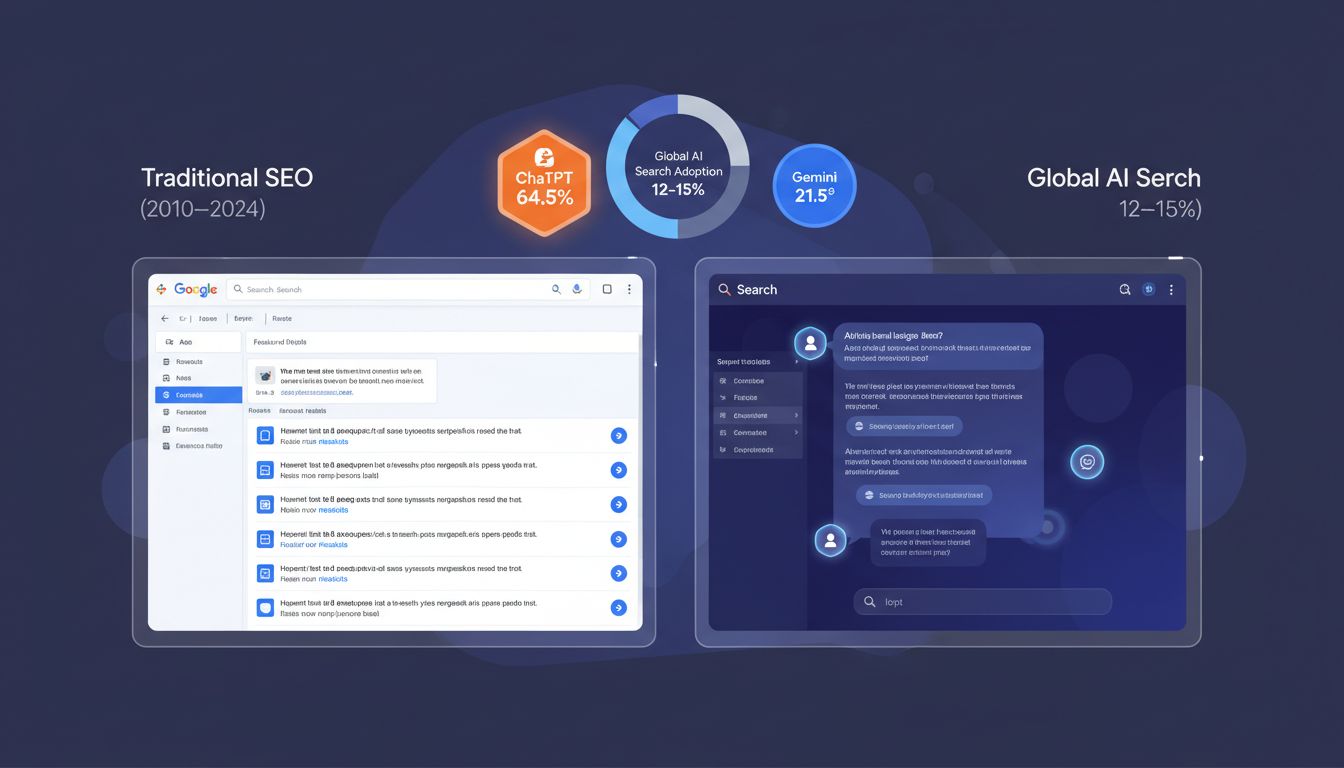
By late 2025, AI-powered search tools grabbed 12-15% of global search market share [Source: seomator.com]. ChatGPT now commands 64.5% of the generative AI search market. Google Gemini holds 21.5%. These aren't experimental toys anymore. They're becoming primary research surfaces for your buyers. And they don't rank content the way Google does.
Here's what changed: AI Overviews killed click-through rates by roughly 34.5% in tested queries. Zero-click results are the new default. Your prospect reads an AI-synthesized answer and never visits your site. If your content isn't structured to feed those AI engines, if you're only optimizing for Google's traditional SERP, you're invisible in the fastest-growing segment of search.
This shift has a name: Generative Engine Optimization (GEO). The GEO market hit $886 million in 2024 and is projected to reach $7.3 billion by 2031 [Source: precedenceresearch.com]. Companies investing in GEO report an ROI of $3.71 for every dollar spent [Source: precedenceresearch.com]. This isn't fringe tactics anymore. It's table stakes.
What does this mean for your tool selection?
In 2024, you picked a content optimization tool to help you write for Google. In 2026, you need a platform that helps you write for Google and for the AI engines your prospects are querying and for the strategic content gaps your competitors haven't filled. A high content score isn't enough proof that your article will perform. You need to know: Will this get cited in ChatGPT? Does it answer the questions Gemini surfaces? Does it build topical authority that compounds over time? Can it adapt when the next AI model launches?
The tools that solved 2024's SEO problems weren't built for this reality. That's why you're here, evaluating a surfer seo alternative. The question isn't whether to switch. It's which platform is actually architected for the search landscape you'll compete in for the next three years.
Is Surfer SEO Any Good? A 2026 Reality Check for SaaS Teams
Yes, Surfer SEO is good at what it does. But that's increasingly not enough.
Surfer built its reputation on a simple promise: give you a live Content Score that updates as you write, so you know exactly how your page stacks up against the top 10 results. That core feature still works. The editor analyzes competitor content, suggests semantic terms, flags structural gaps, and grades your draft in real time. For teams optimizing existing pages or scaling blog production, it's a proven workflow accelerator.
The case studies back this up. One law firm reclaimed top rankings and saw 5x traffic growth after refreshing content with Surfer's recommendations. Surfer reports that pages updated with their tool are twice as likely to hit the top 10 within 30 days. If your goal is traditional Google SERP performance, Surfer delivers measurable results.
But here's where the 2026 cracks show for SaaS founders.
surfer seo pricing starts at $99 per month for the Essential plan, which covers basic content optimization. Scale that to a team managing 20+ articles monthly, and you'll quickly bump into the $219 Scale plan or face per-article fees for Surfer AI drafts on top of your subscription. For a lean SaaS marketing team, those costs compound fast. And you're still paying for Ahrefs or Semrush to handle keyword research, rank tracking, and backlink analysis that Surfer doesn't provide.
The learning curve matters, too. Surfer's interface isn't as intuitive as newer tools. Your writers will need onboarding time to interpret the Content Score without falling into "keyword stuffing to hit 100%" traps that tank readability. I've seen teams spend weeks training new hires to use Surfer without sacrificing content quality.
Is Surfer SEO better than Semrush?
This question misframes the decision.
Surfer and Semrush aren't competitors. They're different tool categories. Surfer is a deep content optimizer built for the page level. Semrush is a full SEO suite with keyword research, site audits, rank tracking, and competitive analysis across your entire domain. Semrush's SEO Writing Assistant gives you optimization feedback, but it's not as granular as Surfer's live scoring. Surfer gives you better content optimization. Semrush gives you better SEO infrastructure. Most teams need both or a surfer seo alternative that bridges the gap.
The real 2026 question: Does Surfer help you show up in AI search?
Surfer optimizes for Google's traditional SERP. It doesn't track whether ChatGPT, Perplexity, or Gemini mention your brand. It doesn't model Generative Engine Optimization. It doesn't tell you which prompts trigger your content in AI Overviews.
For a SaaS founder competing in a landscape where 12-15% of search traffic now flows through AI engines, that's a strategic blind spot. You can score 95 on every piece of content and still be invisible to prospects researching through AI chat interfaces.
You'd look beyond Surfer if you:
Need full-stack SEO data (keywords, backlinks, rank tracking) without juggling multiple subscriptions. Want AI content generation baked into your optimization workflow at a predictable cost. Require AI-search visibility tracking to capture GEO traffic. Operate on a tighter budget and need a surfer seo free trial or lower entry price. Prefer a simpler interface that doesn't require training your team on score interpretation.
Surfer isn't broken. It's just optimized for yesterday's search ecosystem.
Top 8 Surfer SEO Alternatives Compared: Features for the AI-Search Era
Choosing a surfer seo alternative isn't about finding the cheapest clone. It's about matching your content workflow, AI-search ambitions, and team structure to a tool that actually fits how you work.
Here's the breakdown of eight alternatives, organized by what they do best. Not alphabetically. Not by price. Each includes the blunt take you won't find in vendor marketing decks.
1. Clearscope: The Enterprise-Grade Optimizer
Core differentiation: Clearscope delivers surgical content optimization with an obsessive focus on semantic relevance and topic coverage, wrapped in an interface your writers will actually enjoy using.
Key AI & 2026-relevant features: Clearscope grades your content A-F based on how comprehensively you cover a topic, not just keyword density. It analyzes top-ranking pages to extract must-cover terms and concepts, then integrates directly into Google Docs and WordPress. The platform supports five languages, English, French, German, Italian, and Spanish, making it viable for international SaaS teams expanding into European markets.
What Clearscope doesn't do: technical SEO audits, backlink analysis, or rank tracking.
Most teams pair it with Ahrefs or Semrush for those capabilities.
Ideal user profile: Content teams at B2B SaaS companies (20-200 employees) who prioritize quality over volume and have dedicated writers or editors. Works best when you're producing 10-30 high-stakes pieces per month where ranking matters more than publishing speed.
Pricing note: Essentials starts at $129/month. Business jumps to $399/month. Enterprise is custom-priced. This is premium territory, you're paying for precision.
SpectreSEO take: Choose Clearscope if your team lives in Google Docs, you have budget for best-in-class optimization, and you're willing to maintain a separate tool for keyword research and technical SEO. Skip it if you need all-in-one simplicity or if you're producing more than 50 articles monthly, the per-document economics break down fast.
2. Frase: The All-in-One Brief, Writer, and AI-Search Tracker
Core differentiation: Frase combines content briefs, competitor analysis, AI writing, and, critically for 2026, AI search tracking that monitors your presence in ChatGPT, Gemini, Perplexity, and Claude.
Key AI & 2026-relevant features: Frase's "Rank-Ready" documents pull questions and topics from SERPs, then let you generate AI drafts with unlimited words on most plans. The AI search tracking feature is the standout: you can see which prompts trigger mentions of your brand or content in generative engines, giving you visibility into the 12-15% of search traffic that's shifted to AI-powered platforms.
Opinion Stage saved 500 hours over 18 months using Frase, with a 74% increase in landing-page clicks and 41% impression growth.
Ideal user profile: SaaS marketing teams (5-50 people) who want research, writing, and AI-visibility monitoring in one place. Especially valuable if you're targeting high-intent keywords where AI Overviews are eating your clicks.
Pricing note: Entry pricing ranges from $38-$45/month depending on the plan. Mid-tier scales to $98-$195/month. The variance across sources suggests frequent plan changes, verify current pricing directly.
SpectreSEO take: Frase is the best value if you want a surfer seo alternative that actually addresses AI search, not just traditional Google. The AI drafts need editing (they always do), but the research and brief features are solid. The interface isn't as polished as Clearscope, but you're getting 3x the functionality at half the price.
3. MarketMuse: The Strategic Topic Modeling Powerhouse
Core differentiation: marketmuse review consistently shows it shifts the conversation from "optimize this article" to "here's the content strategy that will build topical authority and ROI across your entire site."
Key AI & 2026-relevant features: MarketMuse uses AI to model your content inventory, identify gaps, calculate personalized keyword difficulty based on your site's authority, and forecast ROI for content investments. It generates briefs, tracks topic clusters, and provides site-wide heatmaps showing where you're strong and weak.
One documented case showed a 32% traffic increase in 30 days after implementing MarketMuse recommendations. The platform emphasizes long-term authority building over quick wins.
Ideal user profile: Content strategists and SEO leads at SaaS companies (50-200+ employees) who need to justify content investments to executives and want data-driven prioritization. Best for teams publishing 30+ pieces monthly with a multi-quarter content roadmap.
Pricing note: MarketMuse doesn't list pricing publicly, you'll need to book a demo. Plans include Free, Optimize, Research, and Strategy tiers, differentiated by tracked topics and strategy documents. Expect enterprise-level pricing.
SpectreSEO take: MarketMuse is overkill if you just need to optimize blog posts. It's the right call if you're treating content as a channel, have executive buy-in for a premium tool, and need to answer "which 50 articles should we write this quarter?" with data, not gut feel. The learning curve is real. Plan for onboarding time.
4. Ahrefs + AI Content Helper: The Deep-Research Suite with an AI Add-On
Core differentiation: Ahrefs built its reputation on backlink analysis and keyword research depth. The AI Content Helper is a recent add-on that brings optimization features to the platform's massive data foundation.
Key AI & 2026-relevant features: Ahrefs offers industry-leading keyword research with historical data, site explorer for competitive analysis, rank tracking, technical audits, and now an AI Content Helper (paid add-on) that provides content scoring and optimization suggestions. The real value is the research layer, you're getting access to one of the web's largest crawl databases.
Pricing tiers (Lite $99/mo, Standard $199/mo, Advanced $399/mo, Enterprise $999/mo) differ by project limits, keyword tracking capacity, and data history access.
Ideal user profile: SaaS teams that need industrial-strength keyword research, competitive intelligence, and backlink monitoring plus content optimization in one platform. Works best if you're already considering Ahrefs for its core SEO features and want to consolidate tools.
Pricing note: The AI Content Helper is an extra fee on top of your Ahrefs subscription. Factor that into total cost.
SpectreSEO take: Buy Ahrefs for the research, rank tracking, and backlink data, the content optimization is a bonus, not the main event. If you only need content scoring, Clearscope or Frase will serve you better at lower cost. But if you're consolidating from 3-4 tools into one platform and have the budget, Ahrefs makes sense.
5. Semrush SEO Writing Assistant: The Ubiquitous Platform's Content Arm
Core differentiation: Semrush is the Swiss Army knife of SEO platforms. The SEO Writing Assistant brings real-time readability, SEO, originality, and tone recommendations into Google Docs, WordPress, and Microsoft Word.
Key AI & 2026-relevant features: The Writing Assistant scores content as you write, checking readability, keyword usage, originality (plagiarism detection), and tone consistency. It integrates with the broader Semrush ecosystem, keyword research, rank tracking, competitive analysis, and technical audits, making it a true all-in-one solution.
Full Writing Assistant access requires Guru ($249.95/month) or Business ($499.95/month) plans.
That's steep, but you're getting the entire Semrush platform.
Ideal user profile: SaaS companies (20-200 employees) that want one vendor for all SEO activities and already use or plan to use Semrush for keyword research and rank tracking. Best if you have multiple stakeholders (content, SEO, paid, PR) who can leverage different Semrush modules.
Pricing note: The Writing Assistant alone isn't worth $250/month, you're paying for the full platform. A standalone Content Toolkit plan at $60/month exists but with limited features.
SpectreSEO take: Only buy Semrush for the Writing Assistant if you're already committed to the Semrush ecosystem for other SEO work. The content features are solid but not exceptional, you're choosing platform consolidation over best-in-class optimization. If you just need content help, look elsewhere.
6. GrowthBar: The Founder-Friendly, Streamlined Workflow
Core differentiation: GrowthBar strips away complexity to offer a fast, founder-friendly path from keyword idea to published article with AI assistance at every step.
Key AI & 2026-relevant features: GrowthBar's "2-Minute Blog Builder" generates outlines, headlines, and full drafts quickly. It includes keyword discovery, competitor tracking, and basic rank monitoring, enough to run a lean content operation without juggling five tools. The interface prioritizes speed over depth.
Pricing starts at $29-$49/month for Standard. Pro and Business tiers reach $79-$199+/month. One source notes it supports only English.
Ideal user profile: Solo founders or small SaaS marketing teams (1-5 people) who need to publish consistently without a dedicated SEO specialist. Best for companies in early growth stages prioritizing volume and speed over surgical optimization.
Pricing note: Entry pricing is attractive, but verify language support and feature limits if you need multilingual content or advanced optimization.
SpectreSEO take: GrowthBar is the scrappy choice, you won't get Clearscope-level precision or Frase's AI-search tracking, but you'll ship content faster and cheaper. Perfect for bootstrapped founders who need "good enough" SEO without the learning curve. Outgrow it once you hit Series A and hire a content lead.
7. Outranking: The Semantic-Depth and Concepts Expert
Core differentiation: Outranking's "Concepts" feature extracts factual points and semantic clusters from top-ranking articles, then uses them to build first drafts, emphasizing depth and comprehensiveness over speed.
Key AI & 2026-relevant features: Outranking analyzes SERPs for semantic relationships, not just keywords. The Concepts extraction helps you cover topics thoroughly by identifying the specific facts, data points, and subtopics that high-ranking content includes. Keyword clustering (via Strategist add-on) helps organize content strategy.
Pricing ranges from roughly $29/month (Starter) to $139-$159/month (SEO Wizard), with variation across sources.
Ideal user profile: SaaS content teams (10-50 people) in technical or complex verticals (dev tools, infrastructure, security) where semantic accuracy and depth matter more than publishing speed. Best for long-form, authority-building content.
Pricing note: Pricing inconsistency across sources suggests plan changes, verify directly. The Strategist add-on for clustering may be extra.
SpectreSEO take: Outranking is for teams who compete on expertise, not volume. If you're writing 2,000-word guides on Kubernetes architecture or compliance frameworks, the Concepts feature will save research time and improve depth. If you're cranking out 800-word blog posts, it's overkill, go with Frase or GrowthBar instead.
8. Content at Scale or Jasper: For Pure, High-Volume AI Generation
Core differentiation: These platforms prioritize AI writing volume and speed over optimization nuance, think programmatic content pipelines, not editorial precision.
Key AI & 2026-relevant features: Content at Scale offers explicit per-post economics: Solo plan at $250/month generates 8 posts (roughly $31/post). Scaling plan at $1,000/month generates up to 50 posts (roughly $20/post). Jasper reported 76 million content generations in 2025 and supports 30+ languages. Jasper Pro costs $59/seat annually.
Both platforms focus on bulk generation with brand-voice training and multi-language support.
Content at Scale is more explicitly programmatic. Jasper is more versatile for marketing copy beyond blog posts.
Ideal user profile: SaaS companies (50-200+ employees) with high content velocity requirements, think 50-200 articles monthly, affiliate sites, or multi-brand portfolios. Best when you have editorial resources to review and refine AI drafts at scale.
Pricing note: Content at Scale's per-post pricing is transparent. Jasper's seat-based model works better for teams with multiple writers. Neither is cheap at volume.
SpectreSEO take: Only choose these if you're treating content as a volume game. The output needs heavy editing, don't expect publish-ready drafts. Content at Scale fits programmatic SEO strategies. Jasper fits marketing teams that need versatility beyond blog posts. For most SaaS teams under 50 employees, you'll get better ROI from Frase or Clearscope with selective AI assistance.
Other tools worth knowing about: scalenut offers AI-first content creation starting at $39/month and is worth evaluating if Frase's interface doesn't click for you. NeuronWriter ($19-$97/month annual) is the closest budget mirror of Surfer's core workflow. SE Ranking (roughly $52+/month) bundles rank tracking, audits, and content tools for teams wanting one consolidated platform.
The right surfer seo alternative depends less on feature checklists and more on your team's workflow, content volume, and whether you're optimizing for traditional Google or the emerging AI-search landscape.
The next section breaks down pricing and ROI so you can run the numbers for your specific situation.
The 2026 Pricing & Value Deep Dive: A Founder's Comparison Table
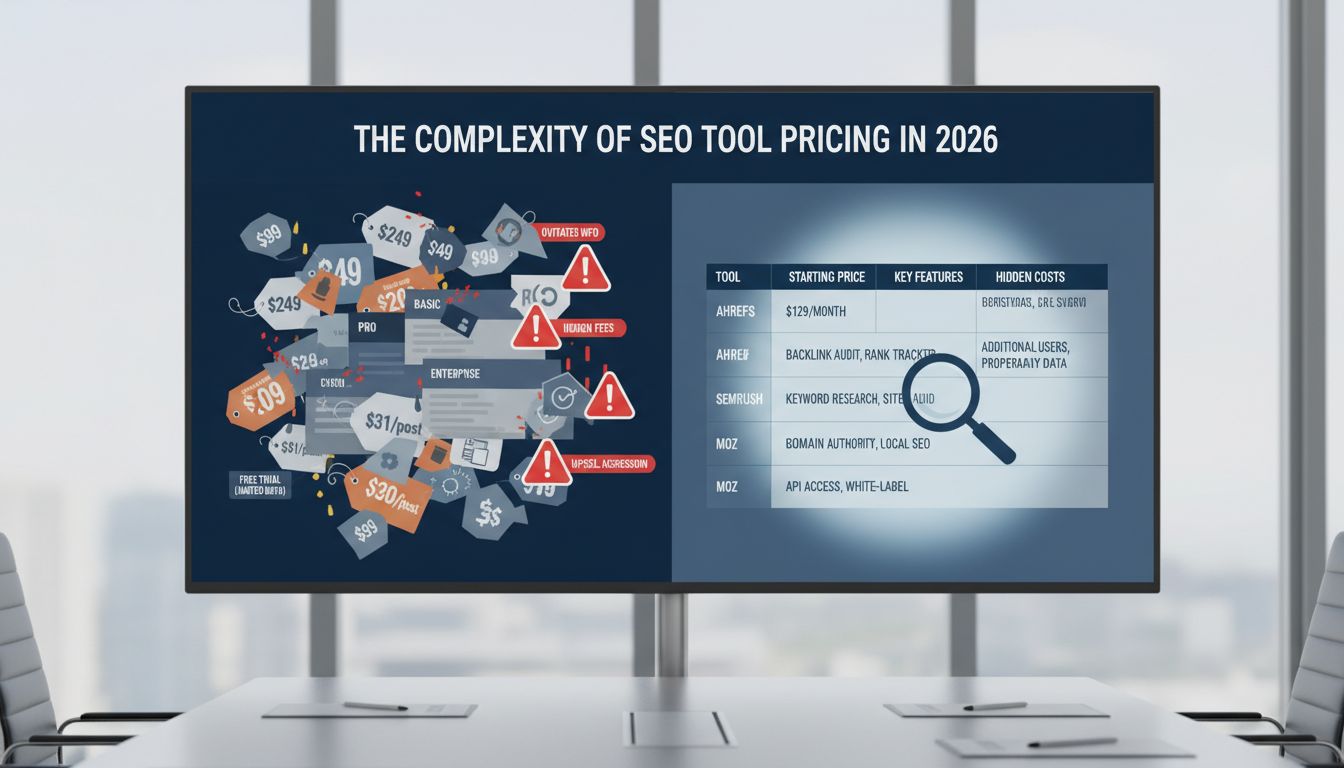
Pricing information for content optimization tools is a mess. You'll find three different numbers for the same tool across different sites, half of them outdated, and nobody mentions the per-article fees that double your actual spend.
This table consolidates current pricing as of March 2026. Use it to narrow your shortlist, then verify directly with vendors, especially for custom enterprise tiers and add-on costs.
Data sourced March 2026. Pricing and features change frequently. Use this for comparison, then confirm on vendor sites.
| Tool | Core Focus | Key 2026 Differentiators | Starting Price (Monthly) | Hidden Costs & Considerations | Best For (SaaS Scenario) |
|---|---|---|---|---|---|
| Surfer SEO | Content optimization | Content Score editor, auto-optimization, plagiarism checker | $99/mo (Essential); $219 (Scale) | Surfer AI costs extra per article; 7-day money-back (not a true surfer seo free trial) | Mid-sized teams scaling content who need real-time scoring |
| Clearscope | Content grading & relevance | A-F grading, Google Docs integration, 5 languages | $129/mo (Essentials); $399 (Business) | No technical audits or backlinks, pair with Ahrefs/Semrush; no free trial | Editorial-first teams prioritizing content quality over volume |
| Frase | Research + AI briefs | AI search tracking (ChatGPT, Gemini, Perplexity), unlimited AI words | $38–$45/mo (Starter); up to $297 (Scale) | surfer seo pricing varies across sources, verify current tiers; AI drafts need heavy editing | Bootstrapped founders exploring GEO on a budget |
| MarketMuse | Strategy & topic modeling | Personalized difficulty, content inventory, ROI forecasting | Demo required (not public) | Enterprise pricing only; steep learning curve | Content strategists at scale, not early-stage SaaS |
| Ahrefs | Full SEO suite + content helper | Deep keyword/backlink data, 10+ years SERP history | $99/mo (Lite); $199 (Standard) | AI Content Helper is a paid add-on; overkill if you only need content optimization | Teams needing research depth + occasional content scoring |
| Semrush | Full SEO platform | SEO Writing Assistant, real-time readability/tone, multi-platform integration | $250/mo (Guru) for full Writing Assistant | Content features locked behind higher tiers; complexity for content-only needs | Agencies managing multiple clients with diverse SEO needs |
| GrowthBar | AI content workflow | 2-Minute Blog Builder, one-click outlines | $29–$49/mo (Standard); up to $199 (Business) | English only per some sources; lighter optimization depth | Solo founders prioritizing speed over precision |
| Content at Scale | Programmatic generation | Explicit per-post economics, bulk content pipelines | $250/mo (8 posts = ~$31/post); $1,000 (50 posts = ~$20/post) | Pay per post, not per word; best for high-volume, not one-offs | SaaS content teams publishing 20+ articles/month |
The pricing spread is brutal.
You can spend $38/month or $1,000/month and still miss critical features. The real cost isn't the subscription, it's choosing a tool that requires three other subscriptions to fill the gaps. Anyone comparing surfer seo alternatives hits this immediately: one tool has surfer seo pricing but no backlink data, another has backlink data but charges separately for AI features, a third bundles everything but only at enterprise tiers you can't access.
Look at the "Hidden Costs" column before you commit. That's where budgets actually break.
Choosing Your 2026 Stack: A Decision Framework for SaaS Founders
Stop comparing feature lists. Start with your bottleneck.
Most founders approach tool selection backwards. They compare pricing tables, count features, then wonder why their new stack doesn't move the needle. The right Surfer SEO alternative emerges when you diagnose what's actually blocking your growth.
Here's a four-step framework that maps your constraints to the right tool:
Step 1: Diagnose Your Primary Need
Ask yourself: What's failing right now?
If your content ranks but doesn't convert, you need better content quality and topic authority, not another content score. MarketMuse or Clearscope excel here. If you're drowning in keyword research but can't produce enough content, you need AI generation at scale. Content at Scale or Jasper fit that profile.
If you don't know what to write about, you need strategic gap analysis and a full SEO suite. Ahrefs or Semrush become necessary. Most SaaS teams discover they're optimizing content when the real problem is they're targeting the wrong keywords entirely.
Step 2: Audit Your Team & Budget Reality
Solo founder under $100/month? GrowthBar ($29–$79/month) or Frase (starting around $38–$45/month) deliver the most leverage. You'll sacrifice some depth, but you'll ship content.
Growing team with $200–$500/month? Pair a research platform (Ahrefs Lite at $99/month or Semrush) with a dedicated content optimizer like Clearscope ($129/month) or Frase's mid-tier. This combination covers keyword discovery, competitive analysis, and optimization without overlap.
Budget above $500/month? You can afford specialization. MarketMuse for strategy, Clearscope for optimization, Ahrefs for research. But here's the trap: true total cost includes per-article fees (Surfer AI charges extra), add-ons (Ahrefs' AI Content Helper is a paid add-on), and the tools you'll still need to fill gaps. A $99/month tool that requires three other subscriptions isn't cheaper than a $299/month all-in-one. The math doesn't work.
Step 3: Map Your Integration & Workflow
Where does content live?
If your team writes in Google Docs, Clearscope and Semrush's SEO Writing Assistant integrate natively. WordPress-heavy workflow? Frase, Clearscope, and Surfer all offer direct publishing.
If you're running analytics-driven content experiments, you need rank tracking built in. SE Ranking, Ahrefs, or Semrush handle this. Pure content optimizers like Clearscope assume you're tracking elsewhere.
Step 4: Validate Future-Proofing for AI Search
Does the tool acknowledge that search is fragmenting? Frase tracks your content's presence in ChatGPT, Gemini, Perplexity, and Claude. That's a feature no traditional optimizer offers. If 12–15% of search traffic now flows through AI tools, ignoring GEO is leaving money on the table.
Check roadmaps. Tools that mention "AI answer optimization" or "generative engine visibility" are building for 2027. Tools still talking exclusively about "SERP position #1" are optimizing for a world that's shrinking.
The 80/20 Filter
Most founders need three things: keyword clustering, content scoring, and basic rank tracking. That's your 20% that drives 80% of results.
Choose a tool that nails those three, ignore the rest. Outranking's Concepts feature or Frase's unlimited AI words matter more than seventeen integrations you'll never use.
The right stack isn't the one with the most features. It's the one that removes your specific constraint without creating three new ones.
Implementation Pitfalls: How to Avoid Costly Mistakes When You Switch
Most founders lose money not on the subscription itself, but on the three months of fumbling around that follow.
You pick a tool, migrate your workflow, train your team, and then discover the AI drafts are unusable or the pricing structure doesn't match what you thought you bought. Here are the five mistakes that cost SaaS teams the most time and budget when switching tools.
The Unedited AI Draft
AI-generated content reads like AI-generated content until a human fixes it.
Every tool in this comparison (Frase, Surfer AI, GrowthBar) will produce drafts that need editing for tone, factual accuracy, and anything resembling your brand voice. The mistake isn't using AI. It's treating AI output as publish-ready.
Use AI for structure and speed, not final copy. Budget 30-50% of your original writing time for editing, fact-checking, and injecting the perspective that makes content worth reading. The robots give you a head start. You still have to cross the finish line.
The Siloed Optimizer
Clearscope will make your content better. It won't tell you why your site is slow, which pages have broken links, or where your backlink gaps are.
The mistake: buying a content optimizer and expecting it to replace your entire SEO stack. The fix: explicitly pair tools. If you choose Clearscope or Frase for content, keep Semrush or Ahrefs for technical audits, rank tracking, and backlink analysis. Content optimization is one layer. It doesn't replace the foundation underneath.
The Pricing Mirage
List prices for Frase, Outranking, and GrowthBar vary wildly across review sites because vendors change tiers, rename plans, and offer discounts that aren't public.
The mistake: trusting a comparison table from six months ago.
Visit the vendor's pricing page directly. Ask about annual discounts (often 20-30% off). Calculate total cost including add-ons. Surfer SEO pricing starts at $99/month but climbs to $130+ once you add per-article AI fees. That gap matters when you're producing 20 articles a month.
The Hidden Fee Surprise
Surfer AI charges per article. Ahrefs' AI Content Helper is a paid add-on. Semrush's writing assistant requires the Guru tier at $249.95/month, not the base plan.
The mistake: comparing headline prices without reading usage limits. Before you buy, answer this: "If I use this tool the way I plan to, what will month three actually cost?" Add 20% to your budget estimate. You'll be closer to reality.
The Language Assumption
If you're creating content in Spanish, French, or German, half these tools won't work for you.
GrowthBar supports English only. Clearscope supports five languages. Jasper supports 30+. The mistake: assuming multilingual support is standard. If you need non-English optimization, verify language support before the trial ends, not after you've committed to annual billing.
One founder I know spent $1,200 on an annual Surfer SEO free trial upgrade only to discover the AI writer couldn't handle their Canadian French audience. Support refunded it, but only after two weeks of back-and-forth. Just check first.
The Future-Proof Tool: Where SEO Software is Headed in 2026 and Beyond

Is SEO becoming obsolete? No. But it's shedding its skin.
The discipline you knew as "search engine optimization" is morphing into something broader: Visibility Optimization. You're no longer just optimizing for Google's algorithm. You're optimizing for every interface where your buyer might ask a question, ChatGPT, Perplexity, Gemini, and platforms that don't exist yet.
The tools that survive this shift share four traits.
AI integration becomes table stakes. Every major platform will embed AI writing assistants within 18 months. The differentiator won't be "do you have AI?", it'll be whether the AI understands your brand voice, learns from your edits, and gets smarter with each article. Expect workflow intelligence: tools that know when to suggest a rewrite versus a refresh, or flag content that's cannibalizing your own rankings.
GEO graduates from feature to core module. Right now, Frase's AI search tracking feels like a bonus. By late 2026, tracking how ChatGPT and Claude answer queries about your category will be as standard as rank tracking. Vendors who ignore this are choosing irrelevance.
Analytics shift from descriptive to prescriptive. Today's tools tell you where you rank. Tomorrow's will predict the traffic impact of publishing a 3,000-word guide versus three 1,000-word posts, then prescribe the exact content gaps to fill.
Think less "here's your score" and more "do this, expect that."
Consolidation meets specialization. Expect Semrush and Ahrefs to acquire nimble AI content tools. Simultaneously, watch for hyper-focused entrants. GEO for local service businesses. AI optimization for technical documentation. Tools built for one thing and one thing only.
Choose a vendor with a public roadmap and a cadence of monthly releases. Your 2026 tool should have a credible path to 2027.
The right Surfer SEO alternative isn't the one with the longest feature list today. It's the one built to adapt to search engines that don't exist yet.
Conclusion
No single Surfer SEO alternative is objectively "best." Depends entirely on what you're actually trying to do, rank in Google, show up in ChatGPT answers, pump out content at scale, or some combination of all three.
Clearscope and MarketMuse work for enterprise teams that need precision and can afford to pay for it. Frase and NeuronWriter fit lean SaaS teams trying to balance budget constraints with staying relevant in the AI era. Ahrefs and Semrush make sense if you need a full SEO suite, not just content scoring. Different tools for different problems.
Here's what actually matters in 2026: you can't ignore AI search anymore. ChatGPT holds 64.5% of AI search market share [Source: seomator.com]. If you're only optimizing for traditional Google rankings, you're leaving traffic on the table. The winners are optimizing for both [Source: seomator.com].
Apply the 80/20 rule ruthlessly. You don't need every feature, you need the 20% that drive 80% of your results. For most SaaS teams, that's solid keyword research, real-time content scoring, and AI search tracking. Everything else is nice-to-have.
The best tool isn't the one with the longest feature list. It's the one that fits into your existing workflow without friction, scales as you grow, and adapts as search evolves. Treat your SEO stack like seo alternative investments, diversify where it matters, consolidate where it doesn't.
Ready to choose? Audit your current workflow with our free SEO tool selection checklist to identify your bottleneck before you switch.
Frequently Asked Questions
Who is the competitor of Surfer SEO?
Three distinct categories. Clearscope, Frase, and MarketMuse compete head-to-head on content scoring and SERP briefs. Ahrefs and Semrush bundle their content tools (SEO Writing Assistant, etc.) inside broader research platforms, different philosophy, but overlapping use cases.
Then you've got the high-volume players like Content at Scale and GrowthBar, built for programmatic content generation. They're solving a different problem entirely, scale over per-article precision.
What is similar to Surfer SEO?
If you want the same live-editor-with-content-score workflow, look at Clearscope (term recommendations and grading), Frase (Rank-Ready docs with competitor analysis), or NeuronWriter (budget-friendly NLP optimization). Semrush's SEO Writing Assistant and MarketMuse briefs offer SERP-based guidance wrapped in different interfaces.
They all pull from top-ranking pages to suggest keywords, structure, and depth. Just with different pricing models, data sources, and editorial approaches.
What is the difference between Surfer SEO and Ahrefs?
Surfer is laser-focused on content optimization, live editor, content score, AI drafting for on-page SEO. That's it.
Ahrefs is a full research suite. Keyword explorer, site audits, backlink analysis, rank tracking, plus an AI Content Helper add-on. Use Surfer to write and optimize individual articles. Use Ahrefs to decide what to write in the first place, track performance over months, and audit your technical foundation [Source: ahrefs.com, surferseo.com].
Can ChatGPT do an SEO audit?
No. It can't access live crawl data, backlink indexes, site speed metrics, or historical rankings, the actual inputs you need for an audit.
Ahrefs, Semrush, and SE Ranking crawl your site, flag technical issues, and benchmark against competitors. ChatGPT can help you interpret audit reports after you have them, or draft action plans from existing data. But it can't generate the audit itself.
What is the most popular SEO tool?
Depends what you mean by "popular." Semrush and Ahrefs dominate the all-in-one suite market, millions of users, deepest keyword and backlink databases. For content optimization specifically, Surfer SEO, Clearscope, and Frase lead adoption among SaaS and agency teams.
ChatGPT held 64.5% of AI tool usage in February 2026, but it's a writing assistant, not a dedicated SEO platform [Source: seomator.com/blog/ai-seo-statistics]. Different tool categories entirely.
Is Surfer SEO better than Semrush?
Different jobs. Surfer excels at content optimization, live scoring, SERP-based briefs, per-article AI drafting. Starts at $99/month [Source: stackmatix.com].
Semrush is a full platform: keyword research, rank tracking, site audits, backlink analysis, and an SEO Writing Assistant bundled in. Guru tier runs $249.95/month [Source: semrush.com]. Pick Surfer if content quality is your bottleneck. Pick Semrush if you need research, tracking, and technical SEO under one roof.