July 13th, 2026
Best On-Page SEO Tools: Top Picks for AI Content Optimization
 WD
WDWarren Day
Most content teams are drowning, and the tools they're using aren't helping.
If you're a content manager or founder buried in keyword research, manual writing, and endless optimization, "on-page SEO" stopped being about meta tags a long time ago. Ahrefs reported that 74.2% of new web pages now contain AI-generated content. Loopex Digital puts the average ROI for AI-driven marketing at 300%. The ground has shifted.
The best on-page SEO tools in 2026 aren't just editors. They're automation platforms that handle keyword research, writing, and optimization inside one workflow, so small teams can scale without adding headcount.
Manual pipelines don't scale. At some point you're just adding another step, not solving the problem.
This list covers the best AI SEO tools, the best free SEO tools, and the best paid SEO tools, broken down by what actually matters: automation depth, not just feature count. Whether you're looking at the top 10 SEO tools, SEO software tools free options, or the best SEO tools for beginners just getting started, the goal is the same, find something that fits how your team actually works, not something that creates more complexity.
The top SEO tools free and paid options for small businesses are different from what an enterprise needs. So we'll also flag the best SEO tools for small businesses specifically, because that's usually who gets burned by the wrong choice.
Here's the full SEO tools list.
How We Chose: The 3 C's for Automated On-Page SEO
Most "best SEO tools" lists evaluate features, not outcomes. That's backwards if you're a founder or small team trying to scale content with limited hours.
We tested against three criteria that measure actual workflow automation.
Content Automation: Does it handle keyword research, writing, and optimization in one flow, or just one step? Tools that make you export data between platforms create more work, not less. The entire pipeline needs to connect.
Convenience & Integration: Does it reduce your manual steps from five to one? The best tools integrate directly with your CMS, pull live SERP data without manual exports, and publish autonomously. Every copy-paste step is a place where content stalls.
Cost & ROI: Is the monthly cost justified by time saved and traffic gained? AI-driven marketing reports show 300% average ROI for marketers using AI daily, but only when the tool actually automates the bottleneck. For small teams, ROI means fewer manual hours per published article.
It's the 80/20 rule of SEO tool selection. Focus on platforms that deliver the biggest lift with the least configuration effort.
Granular control matters less when you're trying to publish consistently with a team of three.
1. Spectre (Best for Automated On-Page SEO Workflows)
Best for founders and small teams who need a content factory, not just an editor.

Most on-page SEO tools hand you a checklist and expect you to do the rest. Research the keywords, analyse the SERPs, write the drafts. Spectre just... does it.
It's an AI-powered platform that automatically researches keywords, writes optimised articles against live SERP data, and publishes directly to your CMS. For teams of 10-50 people trying to scale organic traffic without a dedicated content department, that end-to-end automation is the difference between publishing 5 articles a month and 50.
We built Spectre because we hit that bottleneck ourselves. Content creation tools can deliver 420% ROI on average [Source: Quick SEO, 2026], but only if you can actually produce the content.
The platform integrates with DataForSEO for keyword research and SERP analysis, then uses that data to generate fully-formed, optimised drafts. Not just a score. A publishable article, complete with meta tags, internal linking suggestions, and a structure built to rank.
The trade-off is intentional.
Spectre isn't built for power users who want granular control over every optimisation parameter. If your workflow involves tweaking individual sentence scores in Surfer, you'll find it too hands-off. But if your goal is consistent output at scale, that automation is the feature.
It turns the whole manual process of on-page SEO into a scheduled workflow that runs while you focus on strategy.
AI-Driven Content Editors (Best for Manual Optimization Control)
Best for content editors who want granular, real-time control over optimization, not for teams needing end-to-end automation.
These tools answer one question: "What should I include in this draft?" They analyze the SERP and give you a live score. Powerful if you want to tweak every paragraph... but they assume you've already done keyword research and have a draft ready.
For busy founders, that's three separate tools and three manual steps.
Surfer SEO (Best for Real-Time Scoring & NLP Suggestions)
The most popular answer when SEO teams ask "what's the best tool for manual optimization?"
Surfer's real-time editor shows you exactly what top-ranking pages cover that your draft doesn't. Its NLP-driven suggestions for headings, keywords, and semantic entities go deep. The workflow is: find a keyword elsewhere, paste it into Surfer, write or import a draft, then chase the score.
For teams with dedicated writers who can spend an hour per post on optimization, it works. AI-optimized landing pages built with tools like Surfer generate 36% higher conversion rates [Source: Position Digital, 2026].
The friction comes before and after the editor. You still need to research keywords and publish the content manually.
Clearscope (Best for Enterprise E-E-A-T & Semantic Depth)
Best for large content teams where semantic depth and E-E-A-T compliance are non-negotiable.
Clearscope focuses on entity coverage and topical authority, which matters a lot in YMYL niches. Its reports are cleaner and more focused on semantic relevance than raw keyword density. The Google Docs integration is smooth, so writers stay in a familiar environment.
The weakness is the same as every other tool in this category: it's an optimization layer, not a production pipeline. You bring the brief and the draft.
For enterprise teams with established editorial calendars and dedicated SEO strategists, that's fine. For a founder running content alongside product development, it's just another manual step.
Neuronwriter (Best for NLP-Driven Outlines & SERP Analysis)
Best for budget-conscious teams who want Surfer-like analysis at a lower price point.
Neuronwriter pulls SERP data, highlights semantic gaps, and gives you a real-time content score. It also includes a GPT-4o writer for generating drafts inside the tool, which gets it closer to actual automation.
The catch: the AI writer still needs prompting and direction. You're essentially building the brief inside the tool instead of importing one from somewhere else.
For solo marketers who enjoy hands-on editing and don't mind stitching tools together, it's a capable option. For teams measuring velocity, the manual assembly is the bottleneck.
The common thread across all of these: excellent editors, not factories. They add extra steps to your workflow, research, brief creation, writing, optimization, then publishing.
If you have the bandwidth for that manual control, they deliver better-optimized pages. If you're measuring output per week rather than perfection per post, the overhead becomes the constraint.
Technical On-Page & Bulk Automation Tools
Most SEO tools lists treat content optimization as separate from page performance. That's a false distinction. A perfectly optimized article on a slow, poorly structured page won't rank.
These tools bridge that gap by automating technical fixes at scale.
Best for engineering teams and large sites that need to apply consistent on-page rules across thousands of pages without manual coding.
Alli AI (Best for Bulk Technical Fixes Across Thousands of Pages)
Alli AI is basically your site-wide technical janitor. It scans your entire domain and automates on-page fixes like meta tag updates, schema markup injection, and internal linking across every page.
You set the rules once, "ensure every product page has product schema" or "add internal links from blog posts to relevant service pages", and it executes across your site.
The value is in bulk consistency, not creative content work. The trade-off is obvious: it's a rule-based automation layer, not a content intelligence platform. You still need something to decide what those meta tags should actually say.
MarketMuse (Best for Topic Authority & Content Clustering)
MarketMuse approaches on-page SEO from a strategic altitude. Instead of optimizing single articles, it maps your entire site's content against topic clusters and competitive gaps.
Its AI analyzes SERPs to prioritize which content gaps to fill first to build topical authority.
Powerful for large editorial teams planning quarterly content calendars. Overkill for a startup publishing its first ten blog posts. You're paying for a content strategist in a box, which is invaluable at scale but feels like bureaucratic overhead when you just need to publish something.

Tools are increasingly integrating Core Web Vitals metrics directly into optimization workflows [Beeby Clark Meyer, 2025]. Your best bet is to pair a content-focused editor with a technical automation tool.
But that's two subscriptions, two dashboards, and twice the complexity.
For most teams, that's the point where the tool stack becomes the bottleneck.
Best Free & Budget Options for Beginners
Best for teams testing the waters before committing to a dedicated workflow.
So when should you actually spend money on SEO tools? Honestly, not until you've run the process manually a few times and know what you're trying to automate.
These budget options are built for that phase. Learn the ropes, validate the workflow, no heavy subscription required.
SEMrush Writing Assistant (Best for Beginners Using the SEMrush Ecosystem)
Best for marketers already inside SEMrush who need basic on-page guidance without another tab.
If you're already paying for SEMrush, the Writing Assistant is a logical next step. It scores readability, tone, and SEO in real-time as you write in Google Docs or WordPress, pulling keyword suggestions straight from SEMrush's database.
The catch is it's a feature, not a standalone product. You need an active subscription, and the recommendations are less granular than dedicated tools like Surfer or Clearscope.
Good for light editing and picking up basic optimization habits. It won't automate research or generate detailed briefs.
Frase.io (Best for Content Intelligence & Brief Generation)
Best for solopreneurs who need to turn a keyword into a research-backed outline quickly.
Frase is fast at the front end. Enter a keyword and it pulls the top SERP results, then spits out a content brief with competitor outlines, questions to answer, and a semantic topic list.
Its pricing starts lower than most dedicated optimizers, which is why it shows up on a lot of best free SEO tools lists. That said, the real-time editor isn't as polished as Surfer's, and there's no automated publishing or keyword research pipeline like you'd get with a platform like Spectre.
It's a research assistant. You still do the writing.
The bottom line: For beginners or anyone publishing a handful of articles a month, these are genuinely useful. As Ahrefs data shows, 74.2% of new web pages now contain AI-generated content [Ahrefs, 2026], people are using these tools just to keep up.
But the limits show up fast when you try to scale. Free tiers cap word counts, skip advanced SERP analysis, and offer zero automation. They're fine as top SEO tools free starting points, and they belong on any honest seo tools list for beginners. Just don't expect them to carry you past a certain volume.
The ChatGPT & General AI Caveat
Best for content outlines and first drafts, but a dangerous standalone tool for SEO.
The question I get most from technical founders is: "Can't I just use ChatGPT?" The direct answer is no.
ChatGPT and other general LLMs can't do SEO by themselves. They have no access to real-time SERP data, no built-in E-E-A-T checks, and if you use them naively, you get keyword stuffing and thin content. Research shows AI-generated content alone often shows no performance lift, while adding human review can cut bounce rates by 73% [Digital Applied, 2026].
Here's something most best ai seo tools roundups won't tell you: a lot of them are just GPT wrappers with a nicer interface.
The actual value isn't the language model. It's the integrated SERP data, competitor analysis, and optimization scoring sitting underneath it. A raw ChatGPT draft run through Surfer SEO will almost always show massive gaps in topical coverage and entity relevance.
So here's what to actually do. If you're using a general AI writer like ChatGPT or Jasper, pair it with a dedicated optimizer like Surfer or Clearscope. Use the LLM for ideation and drafting, then run the output through the SEO tool to fill semantic gaps, fix structure, and match search intent.
Better yet, use a platform like Spectre that bakes SERP analysis directly into the generation workflow. No manual back-and-forth. That's the difference between the best on-page seo tools and just... a text generator.
Common Mistakes When Using AI for On-Page SEO
Treating AI output as final copy. I've seen agency clients publish raw AI drafts, then watch bounce rates spike.
Research shows AI-generated content alone often shows no performance lift, but adding human review can cut bounce rates by 73% [Digital Applied, 2026]. Use AI for the first 80%, research, outlines, drafts, then have a human refine for voice, intent, and nuance.
Chasing optimization scores instead of user intent. Tools like Surfer give you a numeric score, but blindly hitting 100/100 creates robotic content.
One e-commerce client I worked with saw rankings drop after over-optimizing for keyword density an AI tool suggested. Semantic relevance matters more than the number.
Ignoring technical foundations. Perfectly optimized content on a page that loads in 5 seconds won't rank.
I audit sites weekly where content teams work in silos from developers. Get Core Web Vitals checks into your publishing workflow.
Skipping E-E-A-T signals in YMYL niches. For health, finance, or legal content, AI doesn't have the required expertise.
Publishing unverified AI claims in those areas risks penalties and erodes trust fast. Add author bios, citations, and real-world experience.
Forgetting about AI search visibility. 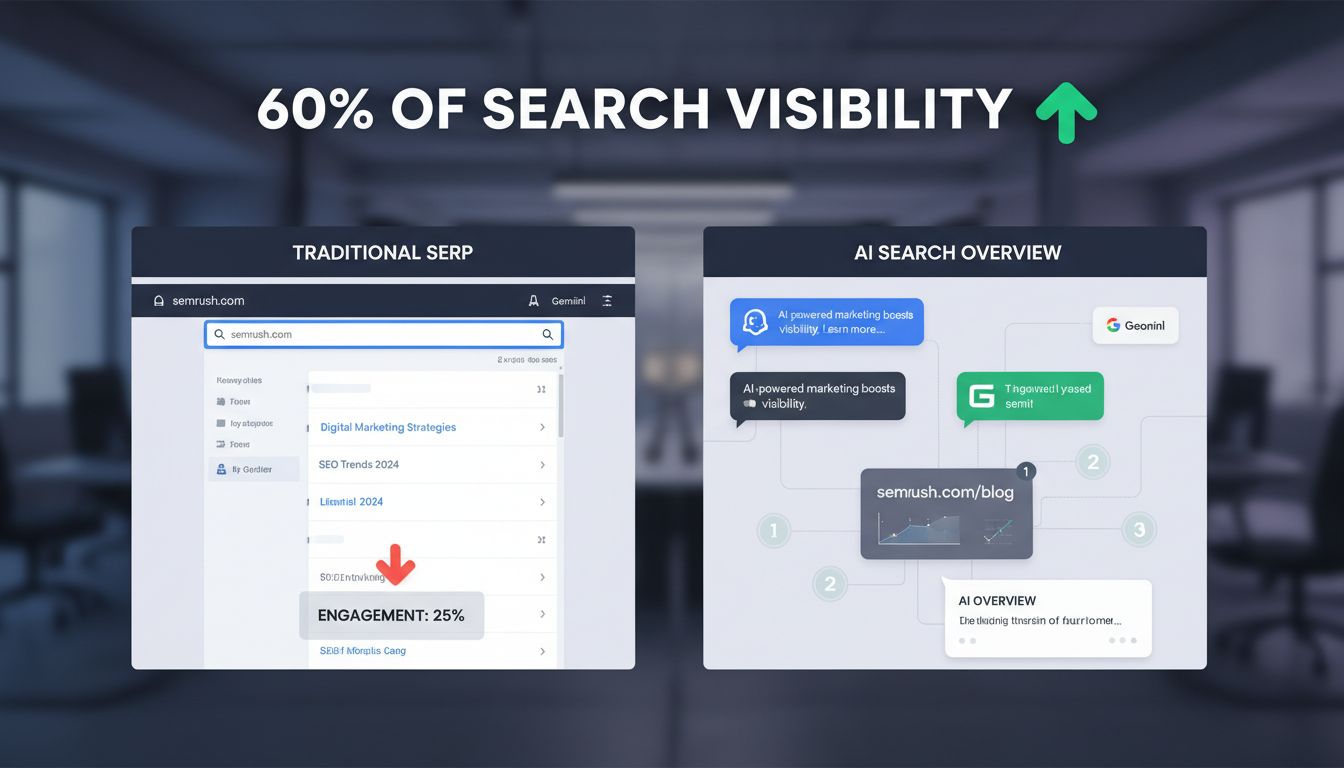
If you're only tracking traditional SERPs, you're missing 60% of the picture. Monitor citations in ChatGPT, Gemini, and AI Overviews using tools like Semrush's AI Visibility reports.
Future Trends: AI Overviews, E-E-A-T, and Your Tool Choice
So what actually changes if you pick the wrong tool right now?
A lot, honestly. AI Overviews now dominate 60% of Google searches [Source: Beeby Clark Meyer, 2025]. If your tool doesn't track citations across ChatGPT, Gemini, and AI Overviews, you genuinely don't know where your content is showing up.
The traditional four pillars of SEO, technical, on-page, off-page, content, are collapsing into single platforms. The best on-page SEO tools and best AI SEO tools are merging fast.
Modern platforms now blend E-E-A-T scoring with semantic analysis and Core Web Vitals monitoring in one place. Clearscope focuses on entity authority. SearchAtlas has its SCHOLAR feature for assessing expertise signals directly.
This isn't optional anymore. Research shows 74.2% of new pages contain AI-generated content, which makes E-E-A-T verification genuinely matter for YMYL topics, health, finance, legal, where a penalty isn't just an annoyance.
Whether you're looking at the top SEO tools, the best free SEO tools, the best paid SEO tools, or just running through an SEO tools list to find the top 10 SEO tools, if AI visibility dashboards and built-in trust scoring aren't on the checklist, you're optimizing for a version of search that doesn't exist anymore.
That goes for everyone: best SEO tools for small businesses, top SEO tools free, best SEO tools for beginners, seo software tools free options included. The bar just moved.
How to Choose: A Practical Framework for Your Team
Map your team size and primary bottleneck to the right tool. The economics of SEO for small businesses means you can't afford tools that solve problems you don't have.
Scenario 1: You're a founder or small team scaling content. Your bottleneck is producing enough quality content to compete. You need automation from research to publish. Choose Spectre. It's the only tool that handles the entire workflow, turning a keyword into a live, optimized post without manual steps.
Scenario 2: You have a dedicated writer who needs deep editorial control. Your bottleneck is perfecting individual articles, not volume. Choose Surfer SEO or Clearscope for real-time scoring against the SERP.
Scenario 3: You need bulk technical fixes across hundreds of pages. Your bottleneck is legacy technical debt, not content creation. Choose Alli AI for automated meta tags, schema, and internal linking.
Scenario 4: You're learning with a tight budget. Your bottleneck is understanding the basics without overspending. Start with SEMrush Writing Assistant or Frase's free tier for light optimization.
The 80/20 rule applies here. Pick the tool that solves your biggest time sink. For most content managers and founders, that's the manual churn of research, writing, and optimization.
Measuring AI impact with dedicated KPIs delivers 2.4x better content ROI. A tool that automates the workflow gives you those KPIs by default.
If scaling quality content is your primary constraint, which it is for most teams of 1-5, Spectre delivers the highest ROI by removing the entire manual process. Start there, measure the output. Only add specialized tools if a specific secondary bottleneck shows up.
Whether you're scanning the best on-page SEO tools, the best AI SEO tools, the top SEO tools, the best free SEO tools, the best paid SEO tools, or just running through an SEO tools list to find the top 10 SEO tools, the question is always the same: what's actually slowing you down?
That goes for everyone: best SEO tools for small businesses, top SEO tools free, best SEO tools for beginners, SEO software tools free options included. Start with the bottleneck. The tool follows from that.
Conclusion
The best on-page SEO tools don't just help you write better content. They handle the whole workflow, from keyword discovery to published post.
For founders and small teams, it really comes down to your biggest bottleneck. Scale (Spectre), editorial control (Surfer/Clearscope), technical fixes (Alli AI), or budget.
Don't use raw AI like ChatGPT without SEO-specific optimization on top of it. And if you're not tracking AI Overviews or E-E-A-T signals yet, you're already behind.
For most teams of 1-5, the bottleneck is content volume. Spectre's automated pipeline removes the manual overhead entirely, which is where the ROI comes from.
Start there. Measure the output. Only add more tools if something else becomes the problem.
Whether you're comparing the best AI SEO tools, scanning an SEO tools list for the top 10 SEO tools, looking at the best free SEO tools vs. best paid SEO tools, or just want top SEO tools free and SEO software tools free options because budget is tight, the question is the same.
What's actually slowing you down?
That goes for everyone searching the best SEO tools for small businesses, the best SEO tools for beginners, or the top SEO tools in general. Find the bottleneck. The tool follows from that.