May 15th, 2026
The Complete Guide to SEO Content Creation for AI-Driven Search
 WD
WDWarren Day
If your organic traffic has plateaued and you're reading headlines about "SEO is dead" because of AI search... you're not alone.
The reality is SEO hasn't died. It's just gotten harder to fake.
Over 58.5% of Google searches now end without a click. AI Overviews show up in the majority of U.S. queries. And yet only 14% of marketers are actually tracking AI visibility. That gap explains a lot about why traditional keyword-first approaches are quietly falling apart.
Effective seo content creation isn't really about writing for humans or bots anymore. It's both, at the same time, for a system that processes them together. The teams winning right now aren't just writing more content faster with AI tools. They're engineering their entire site structure for machine comprehension.
That's a different problem than most seo marketing courses teach.
In this guide, we'll get into why your existing playbook needs an overhaul (not a funeral). We'll cover the shift from on-page seo keywords to topic clusters and entities that AI systems actually understand, the kind of thing that matters for on-page seo and off-page seo alike. You'll see real seo marketing examples of hybrid workflows that speed up production without killing quality.
We'll also get into the technical architecture piece, what AI crawlers actually need to index and cite your content, which goes well past basic schema markup. Plus how to write for extraction, what to measure when rankings stop telling the whole story, and what you can actually act on next week.
If you've been searching for seo marketing near me or trying to figure out whether that seo marketing salary is worth pursuing right now... the short answer is yes, but the job looks different than it did two years ago. On-page seo services alone won't cut it anymore.
The companies pulling ahead aren't doing more of the old thing. They're building something different entirely.
The TL;DR: Your AI-First SEO Content Blueprint
SEO isn't dead. It just rewards different things now.
If your traffic has plateaued and you keep seeing "SEO is dead" headlines, the frustration is real. But the opportunity is actually bigger for anyone willing to adapt to how AI search actually works.
Here's what separates the teams pulling ahead from everyone else:
Stop writing for humans or bots. Effective seo content creation in 2026 means engineering your site as a machine-readable knowledge system. That's the strategy we built Spectre around.
Your blueprint:
- Shift from on-page seo keywords to topic clusters & entities – Topic-cluster architecture with five or more pages yields a 3.2× increase in AI citations according to Digital Applied research
- Implement a hybrid human-AI workflow – Use AI for research, structuring, and scaling, but keep human oversight for fact verification, voice, and strategic direction
- Architect your site for AI crawlers – Technical signals like structured data, bidirectional internal linking, and Core Web Vitals now directly impact AI visibility
- Write for extraction, not just consumption – Structure content with TL;DR summaries, clear Q&A pairs, and data points that AI can easily parse and cite
- Measure what matters – Only 14% of marketers track AI visibility, which is a real gap if you're looking at seo marketing examples of what's actually working right now
This is also what's changing the role itself. If you've been thinking about on-page seo services, wondering what an seo marketing salary looks like in 2026, or searching seo marketing near me to find someone who gets it... the job is real, but it looks different than it did two years ago. Any seo marketing course still built around the old keyword-first playbook is teaching the wrong problem.
The companies winning here aren't just writing faster with AI. They're building systems for machine comprehension, from site structure down to how individual sentences are formatted. That's what we're building together in this guide.
Why Everything You Knew About SEO Just Changed
The foundation isn't cracking. It's already cracked.
If your SEO playbook is built around keyword density, backlink campaigns, and optimizing for ten blue links... that approach is losing ground fast. Search engines aren't just indexing pages anymore. They're building internal knowledge graphs, parsing your content for facts and context rather than matching it against queries.
The most visible sign of this: zero-click search. Over 58.5% of Google searches now end without a click. The user gets their answer from an AI Overview or Featured Snippet, and your site never gets a visit.
The goal has shifted from driving traffic to becoming the cited source inside the answer itself.
How widespread are AI-driven features right now? One tracker found AI Overviews appearing in 60.32% of U.S. queries as of late 2025. Global studies report figures closer to 13-19%. The exact number matters less than the direction: AI summaries are taking up SERP real estate, and traditional organic results keep sliding down the page.
Your content now has to compete for extraction, not just a click.
So is SEO dead? No. It's moved from a game of signals (links, on-page seo keywords) to one of comprehension. The new objective is structuring your content clearly enough that an AI can extract it and cite it as a definitive answer.
If your strategy still treats SEO as something you layer on after writing, you're already behind.
The Foundational Shift: From Keywords to Topic Clusters & Entities
Stop optimizing individual pages. Start building something an AI can actually understand.
Modern SEO content creation isn't about stuffing on-page SEO keywords into a page and hoping for the best. It's about building your site as a knowledge system where AI crawlers can understand context, relationships, and authority all at once. That shift from targeting isolated keywords to building topic architecture is the biggest adjustment you need to make for 2026.
Intent-First Keyword Research for AI Search
Traditional keyword research starts with volume. Intent-first research starts with semantic relationships.
When AI systems evaluate content, they're looking for comprehensive coverage of a subject, not just keyword mentions. Tools like Ahrefs and Semrush have moved beyond simple suggestions, they now cluster related queries by parent topic and semantic intent.
Here's what that means in practice. Instead of writing separate articles for "on-page SEO keywords," "on-page SEO best practices," and "on-page SEO checklist," you treat "on-page SEO" as the parent topic and build one pillar page that covers all of it. The AI tools surface these relationships automatically, based on how people actually search and how AI systems interpret content.
Building Topic Clusters for AI Comprehension
The reason topic clusters work is pretty simple: they signal expertise to AI crawlers.
When you have five or more tightly interlinked pages covering different angles of the same core topic, you're showing comprehensive knowledge rather than scattered information. Topic-cluster architecture with five or more pages yields a 3.2× increase in AI citations.
This isn't just a content planning decision, it's a technical architecture one. You need bidirectional internal linking (pillar to cluster pages, and back again) to create navigable pathways for crawlers. That structure tells the AI: "Here's the definitive resource on this topic, and here's all the supporting detail if you need to go deeper."
For sites with lower domain authority, this matters even more. You can't go head-to-head with established players for broad, high-volume terms. But you can own a specific topic cluster by building the most thorough, well-structured resource in that niche. Tools like MarketMuse are good at this, they analyze your existing content, find the gaps, and show you exactly which supporting pages you need to build real authority around your core topics.
That's the playbook whether you're running on-page SEO services in-house, learning from an SEO marketing course, searching for SEO marketing near me to find an agency, or figuring out where on-page SEO and off-page SEO actually fit together. The architecture is the same. And for anyone tracking SEO marketing salary trends or looking at SEO marketing examples from brands doing this well, the ones winning citations are almost always the ones with the tightest cluster structures.
The Hybrid Workflow: How Humans and AI Actually Work Together
Can ChatGPT just write your SEO content? Yes. But that's the wrong question.
You're not replacing humans with AI. You're building a system where both do what they're actually good at. The real question is how to make that handoff work.
Defining Roles: AI vs. Human in Content Creation
AI is fast. It can chew through thousands of SERP results, generate topic clusters from keyword data, and spit out a draft before a human writer has finished their coffee. What it can't do is exercise strategic judgment or bring genuine expertise, which is exactly what Google's E-E-A-T framework prioritizes. [Source: https://developers.google.com/search/docs/fundamentals/using-gen-ai-content]
That's where human oversight becomes non-negotiable. Someone who understands your business goals needs to validate AI-generated insights, check facts against primary sources, and fix the voice.
The biggest risk here isn't AI replacing writers. It's teams leaning too hard on AI and ending up with content that sounds generic, or worse, contains subtle factual errors that quietly erode trust over time.
Tool Stack for Hybrid Workflows
The tools have evolved from standalone utilities into integrated systems. Here's how they map to an actual workflow:
| Function | Primary Tools | Human Role |
|---|---|---|
| Research & Strategy | Ahrefs, Semrush, MarketMuse | Validate AI insights against business goals, prioritise topics based on commercial intent |
| Content Planning | Surfer SEO, Clearscope, Frase | Brief refinement, E-E-A-T signal injection, competitor analysis review |
| Writing & Production | Jasper, Koala AI, Spectre | Fact-checking, voice refinement, strategic positioning, adding proprietary data |
| Technical SEO | Screaming Frog, Google Search Console | Implementation oversight, crawl budget optimisation, structured data validation |
Platforms like Spectre represent the next evolution, fully integrated pipelines that handle research, drafting, and publishing, while leaving strategic decisions and final validation to humans. It's not about finding the "best" tool. It's about building a workflow where tools hand off work efficiently instead of creating more things to manage.
From building content systems myself, the build-vs-buy decision really comes down to scale. For teams producing under 50 articles a month, integrated platforms give you better ROI. Past that threshold, custom pipelines using APIs from Ahrefs, DataForSEO, and OpenAI become necessary to keep quality control from slipping at volume.
The part you can't automate away: topic selection, factual verification, and final approval before anything goes live. Whether you're running on-page SEO services in-house, taking an SEO marketing course to get up to speed, or evaluating SEO marketing examples from brands doing this well, the workflow is the same. Human eyes at the critical junctures. Everything else, let the tools handle.
That applies whether you're figuring out where on-page SEO and off-page SEO fit together, researching SEO marketing salary benchmarks to hire the right people, or just searching "SEO marketing near me" and trying to decide if an agency can actually execute this. The hybrid model isn't optional anymore.
Architecting Your Site for AI Crawlers

Your content could be brilliant. But if AI crawlers struggle to understand your site's structure, you're invisible.
Technical architecture isn't backend housekeeping anymore. It's front-line SEO content creation. From my engineering perspective, building for AI means treating your website as a machine-readable knowledge graph, not just a collection of pages.
That's why sites with proper internal linking architectures see 2.7× increases in AI citation probability. AI systems need clear semantic relationships to confidently extract and attribute information. Your site's technical foundation determines whether AI sees you as a trustworthy source or ignores you entirely.
Structured Data Deep Dive for AI Comprehension
Structured data gives AI crawlers the explicit semantic tagging they need to understand your content. Google recommends JSON-LD for implementation, and while schema isn't a direct ranking factor, the impact on rich results is real.
Here's where most implementations fail: they treat schema as a checkbox exercise.
Successful implementations follow a few principles:
- Accuracy over completeness - Your schema must match exactly what users see on the page. FAQPage schema with hidden answers or mismatched questions gets ignored
- Strategic stacking - Combine Article schema with BreadcrumbList to establish content hierarchy. Rakuten saw 2.7× traffic increases to recipe pages after implementing recipe schema properly
- Respect limitations - FAQPage rich results are limited to 2 Q&A pairs by default. Trying to game this by adding dozens of questions actually reduces your visibility
For low-domain-authority sites, the reality is that structured data won't overcome fundamental trust gaps. But it will maximise whatever visibility you do have.
Technical Signals for Crawlability
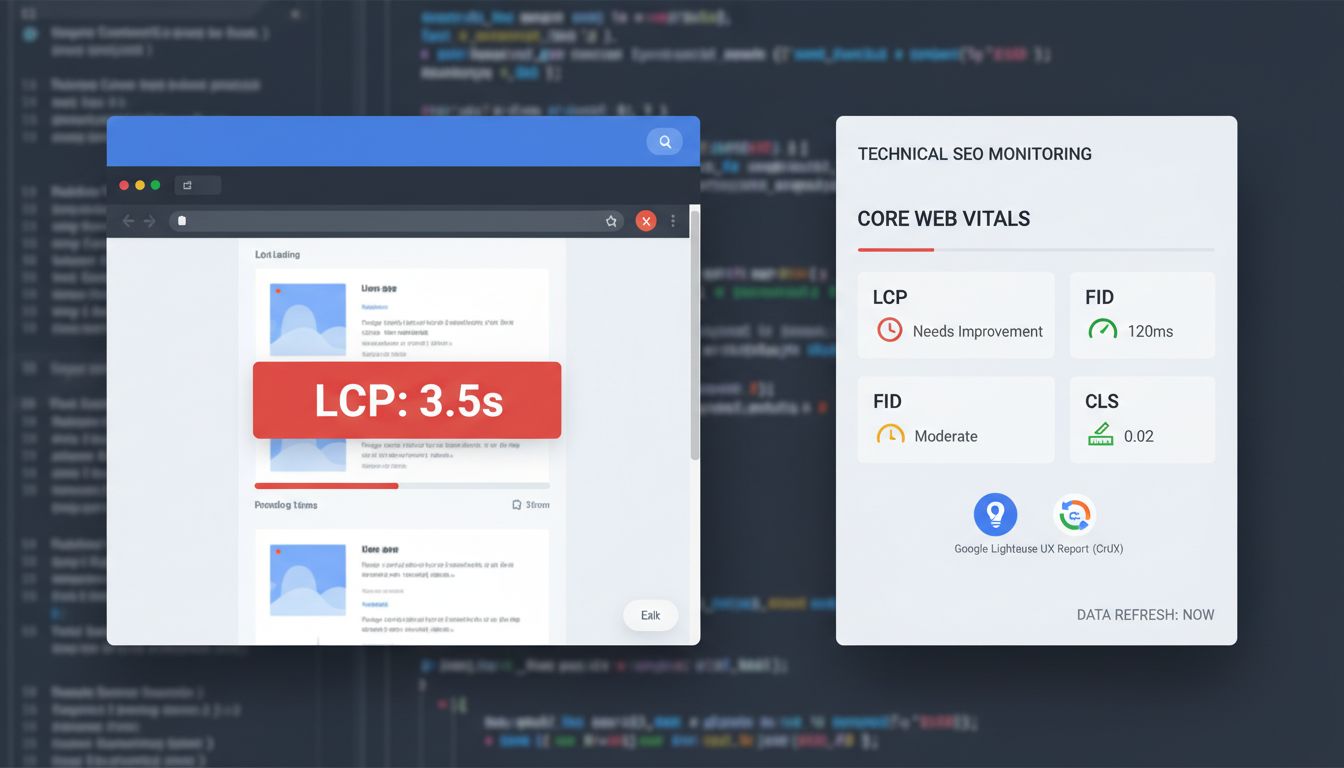
Core Web Vitals are table stakes for AI crawlability now. If your Largest Contentful Paint exceeds 2.5 seconds, you're telling AI systems your content isn't worth the processing time. Tools like Lighthouse and CrUX give you the lab and field data to monitor this systematically.
Canonicalization and hreflang are where I see the most common failures. A few critical mistakes that keep coming up:
- Using relative URLs in canonical tags (always use absolute)
- Implementing hreflang without reciprocal links between language versions
- Letting JavaScript frameworks strip hreflang tags during client-side rendering
For multilingual sites, incorrect hreflang implementation is particularly damaging. AI systems need clear signals about which content version to surface for which audience. Invalid ISO codes or missing bidirectional annotations mean your Spanish content won't appear for Spanish searches, regardless of quality.
This connects back to everything else in this guide, whether you're running on-page SEO services, working through an SEO marketing course, or studying on-page SEO keywords from SEO marketing examples you respect. The on-page SEO and off-page SEO conversation always circles back to the same thing.
Technical SEO for AI isn't about chasing every new signal. It's about making your content easily parseable, reliably accessible, and semantically clear to systems that need to understand context at scale. That's it. That's the whole job.
Writing for Extraction: The Content That AI Cites
Write for the machine first. The human will follow.
Structuring Content for AI Extraction
Think like an AI crawler. These systems scan content looking for clear, concise answers they can extract and attribute. Your structure needs to be explicitly parseable.
Start with a TL;DR or executive summary at the top of every substantive article. Research suggests this structure adds 20–25% visibility in AI Overviews. Then keep paragraphs short and self-contained, one clear idea per 40–60 word block.
When presenting steps, comparisons, or features, use numbered or bulleted lists. Concise, complete sentences only.
And make sure all critical information exists in plain HTML. If you bury key data inside an image or PDF, most crawlers won't parse it. Your content becomes invisible for citation purposes. This is the foundation of good on-page SEO services: make your answers machine-readable.
Boosting E-E-A-T with Data and Citations
AI systems evaluate credibility by looking for supporting evidence. The numbers here are worth paying attention to: adding statistics and data points boosts AI visibility by 30–40%. Citing credible sources adds another 30–35%. Including expert quotations pushes it another 25–30%.
That's your seo content creation formula. Clear structure, then saturate it with verifiable evidence.
Instead of "many businesses see improved results," say "STACK Media reported a 61% increase in visits after implementing AI-driven keyword analysis." Specific numbers. Named sources. Links to original research.
This works whether you're studying for an seo marketing course, evaluating on-page seo and off-page seo tradeoffs, or browsing seo marketing examples to figure out what actually moves the needle. The principle doesn't change.
When AI systems encounter your content, they find answers backed by data they can confidently cite. Not just another result. The result. That's the difference between showing up in seo marketing near me searches or getting buried, between commanding an seo marketing salary worth having or wondering why the traffic never came, between content built around on-page seo keywords that earns citations and content that just... sits there.
Measuring Success in an AI-First SERP
Most teams skip this part entirely. According to GoodFirms, only 14% of marketers actually track AI visibility. That means 86% are running blind while the rules change underneath them.
Traditional keyword rankings now tell you less than half the story.
I've seen this firsthand. Agencies would show clients ranking reports for positions 1–3, organic traffic was flat, and nobody could figure out why. The answer was AI Overviews answering queries directly and pushing organic results below the fold. Based on GSQI data, click-through rate for position 1 dropped from around 28% to under 10% when AI Overviews appear. The rankings looked great. The traffic wasn't there.
Key KPIs for AI Visibility
Here's what actually matters now:
| Metric | Traditional Approach | AI-First Approach |
|---|---|---|
| Visibility | Keyword rankings (1-10) | AI citation prevalence & zero-click rate |
| Traffic | Organic sessions | AI-referred traffic & conversion uplift |
| Engagement | Pageviews, bounce rate | Rich result clicks, SERP interactions |
| Conversion | General conversions | AI-driven conversions (up to 23× higher) |
Start with AI citation tracking, how often your brand appears in AI Overviews. Zero-click rates tell you how many queries resolve without a click, which helps you decide when to build deeper content versus quick-answer pages.
The part most people don't expect: AI-referred traffic converts dramatically better. Indexly reports visitors from AI citations convert up to 23 times more than traditional organic traffic. Makes sense. When AI picks your content as the authoritative source, it's already done the vetting for you.
Tools for Tracking AI Search Performance
Most SEO tools are still catching up. They'll show you rankings but won't tell you whether your page is appearing in AI Overviews or how often. You need dedicated tools, AWR (Advanced Web Ranking), Rankscale, or xƒunnel, that actually monitor AI citation prevalence.
The limitation is geographic coverage. Most tools are US-focused, and AI Overviews roll out differently by region. In my experience, you'll need to supplement with manual checks, especially for local markets. Setting up Google Alerts for "[Your Brand] according to Google AI" or similar phrases actually works, people screenshot interesting AI responses and share them.
For more technical setups, a simple monitoring script using the DataForSEO API or Ahrefs API can fill gaps. Track queries where you rank positions 1–3 but see falling CTR. That's usually the first sign AI Overviews are showing up. Rocky Brands used this approach and saw a 2.7× increase in search revenue with 74% year-over-year growth, according to ResultFirst.
Measurement is messy right now. Different tools report wildly different prevalence rates, some show AI Overviews in 60% of US queries, others show much lower numbers globally. Don't get hung up on absolute figures.
Focus on trends. Is your AI visibility going up month over month? Are you getting cited for higher-value commercial queries? Those are the on-page seo keywords and seo content creation signals that actually move the needle, whether you're deep into an seo marketing course, evaluating on-page seo and off-page seo tradeoffs, or just trying to understand why your seo marketing examples aren't translating into traffic. The same logic applies if you're offering on-page seo services, searching for seo marketing near me options, or justifying an seo marketing salary to someone who still thinks rankings are the whole game.
Common Pitfalls & How to Avoid Them

AI-optimised seo content creation introduces failure modes that traditional search optimisation never had. The most common mistake I see is treating AI search like it's the same as regular SEO and just reusing the same goals and metrics. It isn't, and that assumption wastes a lot of effort.
Keyword stuffing versus topic saturation trips up a lot of teams. AI systems evaluate semantic coverage, not keyword density. Over-optimising with exact-match phrases triggers Google's spam policies, while natural, contextual discussion of related concepts increases citation probability. The goal is answering the user's underlying question completely, not repeating your on-page seo keywords until the paragraph stops making sense.
Relying 100% on AI generation creates two problems: factual hallucinations and generic voice.
Without human verification against primary sources, you risk publishing inaccurate information that damages credibility. AI tools also tend toward generic phrasing that lacks any distinctive perspective. Use AI for research and drafting, but keep a human in the loop for fact-checking and editorial polish.
Schema mismatches are surprisingly common and directly hurt AI visibility. Implementing FAQPage structured data that doesn't match your visible content, or using the wrong schema types, leads to implementation failures. Google limits FAQPage rich results to two Q&A pairs by default [Source: Google Search Central], yet many sites try to mark up dozens of questions. Every structured data element needs a visible counterpart on the page.
Ignoring Core Web Vitals is still costly despite the constant reminders. AI crawlers prioritise sites with reliable performance, and slow-loading content gets deprioritised for extraction. Tools like Lighthouse and PageSpeed Insights give you something to act on, but most teams check once and move on.
Finally, not tracking AI-specific metrics means you're flying blind.
Only 14% of marketers track AI visibility according to GoodFirms, leaving 86% unable to measure their most important new channel. That gap shows up whether you're running on-page seo services, working through an seo marketing course, trying to explain on-page seo and off-page seo tradeoffs to a client, or justifying an seo marketing salary to someone who still thinks rankings are the whole story. Even a quick search for seo marketing near me options will surface agencies that still don't track this stuff.
Implement tracking for AI citations, zero-click rates, and AI-referred conversions. The seo marketing examples that actually hold up are the ones where someone bothered to measure what was working.
The Path Forward: Getting Started with AI-Optimized Content
Two paths. Which one depends on your budget and domain authority.
The Bootstrapper's Path for Low-DR Sites
New domain or tight budget? Go narrow. Pick one niche topic cluster with clear commercial intent, something your audience actually needs to solve, and stay there until you own it.
Use free tools like Koala AI for basic research and FAQ generation. Your real advantage is precision: manually go through every competitor citation in AI Overviews for your target queries. Study what's getting pulled and why.
Focus on E-E-A-T signals. Author bios with verifiable credentials, primary source citations, documented first-hand experience. It's labour-intensive. It works anyway, especially for establishing authority in a tight niche before you try to scale.
The Scalable Path with Automation
For teams with existing content operations, the math changes. Manual seo content creation hits a wall pretty fast at scale, I built Spectre specifically because of that wall.
Integrated platforms that automate keyword research, content generation, and publishing let you maintain quality while increasing output 4-5x. The thing is, you need tools that handle the entire pipeline, not just the writing part.
Spectre connects directly to DataForSEO for real-time SERP analysis, then generates and publishes optimised articles automatically. Strategy stays with you. Execution runs in the background.
Track AI-specific KPIs from day one, AI citation rates and zero-click search resolution especially. Those are the numbers that actually matter now, not the ones your seo marketing course taught you back when rankings were the whole story.
- Audit your existing content against AI extraction principles
- Choose tools based on your current scale and domain authority
- Implement tracking for AI visibility metrics immediately
- Start with one topic cluster before expanding
- Measure, iterate, and scale what works
Whether you're running on-page seo services, explaining on-page seo and off-page seo tradeoffs to a client, justifying an seo marketing salary, or just searching seo marketing near me trying to find someone who gets this stuff, the starting point is the same.
Pick a path. Implement the foundational changes. Look at seo marketing examples that are actually working in AI search, and start measuring your on-page seo keywords against AI visibility, not just traditional rankings.
The gap between early adopters and everyone else is widening. That's not a reason to panic, it's a reason to start today instead of next quarter.
Conclusion
SEO content creation in 2026 isn't really about humans versus algorithms anymore. It's about building for both at once, topic clusters and entities instead of keyword pages, human-AI workflows instead of purely manual ones. The way search visibility works has genuinely shifted.
What hasn't changed: you still need real expertise. AI tools speed up research, clustering, and drafting, but they make your judgment better, not unnecessary. Your technical decisions, structured data, internal linking, content architecture, are what determine whether AI systems can actually understand and cite your work.
Here's the part that surprised me: 86% of marketers still don't track AI visibility. You're not racing some abstract future. You're competing against the small group who already updated their measurement frameworks.
That's actually good news. Most people taking an seo marketing course right now are still optimizing for traditional rankings. They're comparing on-page seo and off-page seo tradeoffs the same way they did in 2021. The on-page seo keywords they're tracking don't include AI citation rates.
Whether you're selling on-page seo services, justifying an seo marketing salary to a skeptical CFO, or just searching seo marketing near me hoping to find someone who gets this, the gap is the same gap. And it's still closeable.
Audit your content for topic gaps. Run some seo marketing examples through an AI Overview and see what's getting cited and why. Start measuring AI visibility alongside traditional rankings.
The hybrid model isn't coming. It's here.
Frequently Asked Questions
What is SEO in content creation?
SEO content creation now is less about targeting keywords and more about building your site as something AI systems can actually read and understand. Think topic clusters, entity relationships, content that gets pulled into AI Overviews and Featured Snippets.
The goal isn't just ranking. It's getting cited.
Is SEO dead or evolving in 2026?
Evolving. AI Overviews now appear in over 58.5% of Google searches, and a lot of those searches end without a click [Source: goodfirms.co]. So the old playbook, rank, get clicked, win, doesn't cover it anymore.
You're now optimizing for machine extraction and citation probability. Only 14% of brands are tracking AI visibility right now [Source: goodfirms.co], which means most people are still playing the wrong game.
What are the 4 types of SEO?
The four main categories are Technical SEO (site infrastructure, Core Web Vitals, structured data), on-page SEO (content optimization, metadata, internal linking), off-page SEO (backlinks, domain authority, brand mentions), and Content SEO.
On-page SEO and off-page SEO still matter. But the balance has shifted, technical signals and structured content architecture carry more weight now because that's what helps AI actually comprehend your content.
Can a beginner do SEO?
Yes. AI tools make keyword research and drafting accessible enough that a beginner can get started. But the real skill isn't prompting, it's understanding search intent and knowing how to refine AI outputs for accuracy and E-E-A-T.
Start with topic clustering. Tools like Ahrefs and MarketMuse help, but your judgment about what's actually useful to a reader is still the part that can't be automated.
Can ChatGPT write SEO content?
It can help draft and ideate. I've built content systems that use LLMs as drafting engines, and they work, but only with human validation at every step. Hallucinations are real, and so is the risk of content that's technically optimized but commercially wrong.
Treat it like a writing partner. Your editorial judgment about what's genuinely helpful is what Google's algorithms are trying to reward.
How to create SEO content?
Start with intent-first keyword research, build topic clusters around pillar pages, and use on-page SEO keywords that reflect what people are actually asking, not just what has high volume. Then run a hybrid workflow: AI handles drafting and research, humans handle strategy, fact-checking, and voice.
Structure everything for AI extraction, TLDR summaries, short paragraphs, clear formatting. That approach can lift AI visibility by 20-25% [Source: digitalapplied.com].
Then measure the right things. Citation rates and zero-click search performance, not just organic traffic.