April 6th, 2026
Why the Digital Marketing Strategist Role Now Requires AI SEO Expertise
 WD
WDWarren Day
If you're still measuring success primarily by keyword rankings and organic CTR, you're already behind. Your dashboard is showing you a reality that stopped being the full picture over a year ago, and the gap between what those metrics tell you and what's actually happening to your organic visibility keeps growing.
Here's the uncomfortable truth: AI Overviews grew from appearing on 6.49% of queries in January 2025 to 13.14% by March. That's a 102% increase in two months. Searches that trigger them have an average zero-click rate of 83%.
That's not a blip. That's a structural shift in how people get answers.
For any digital marketing strategist trying to prove organic ROI right now, this creates a specific and painful problem. You can rank in position one and still lose. The goalposts haven't just moved, they've been replaced with entirely different ones.
The role is evolving accordingly. In 2026, the core competency isn't just crafting campaigns or publishing optimised content. It's architecting the content and data systems that get your brand cited and trusted by AI. That demands a hybrid skill set spanning prompt engineering, technical SEO, and cross-functional data governance, which is exactly why a solid digital marketing strategist course now looks very different from what it did three years ago.
This article covers that transition directly: the new metrics that actually matter, the skills worth building, and a concrete 30/60/90-day roadmap to get there without burning your current strategy to the ground.
The New Reality: Zero-Click Search & The Vanishing Organic CTR

Something broke in your analytics over the last 18 months. Impressions held steady or climbed, but clicks quietly fell off a cliff. If you've been staring at that divergence wondering what happened, here's the answer: the search results page stopped being a gateway and became the destination.
The culprit is AI Overviews, Google's AI-generated answer blocks that synthesise a response directly in the SERP, before a user ever thinks about clicking. In January 2025, they appeared on 6.49% of queries. By March 2025, that figure had doubled to 13.14%. By 2026, AI Overviews were present on 25.11% of all Google searches. That's not a gradual trend. That's a structural change happening fast.
The click-through impact is brutal and well-documented. Ahrefs' December 2025 analysis of 300,000 keywords found that an AI Overview correlates with a 58% lower average CTR for the position-one page. Seer Interactive's data puts organic CTR for those queries at just 0.61%, down from 1.76% the previous year. When you factor in that searches with AI Overviews carry an average zero-click rate of 83%, the maths stops working for traditional traffic-based ROI models.
Here's what most strategists haven't fully absorbed: ranking well no longer means being cited. Ahrefs' analysis of 863,000 keywords found that only 38% of pages cited in AI Overviews ranked in the top 10 organic results for that same query, down from 76% just seven months earlier. Around 31% of cited pages didn't rank in the top 100 at all.
So the game has changed. Your job is no longer to rank on page one. It's to be selected as a trusted source within the AI's answer. That's what AI Visibility means, and it requires a fundamentally different approach to how you build and structure content.
The Evolving Role: From Digital Marketer to AI Visibility Architect
A digital marketing strategist is a professional responsible for developing and executing data-driven strategies across digital channels to grow brand visibility, generate demand, and deliver measurable commercial outcomes, increasingly through AI-mediated discovery surfaces, not just traditional search.
That definition would have looked different in 2020. Back then, the role was channel-centric: own the content calendar, manage the backlink profile, optimise landing pages, brief the PPC team. Success meant rankings, impressions, and a conversion rate that justified the budget. Complex work, but the system was legible. You knew what you were optimising for.
That legibility is gone.
The 2026 digital marketing strategist operates in a world where the answer engine, not the search results page, is the primary interface between your brand and a potential customer. The question is no longer "can we rank for this keyword?" It's "will an LLM select us as a credible source when it constructs its answer?"
That's a systems problem, not a content problem.
The emerging archetype I'd call the AI Visibility Architect is a hybrid professional who understands user intent deeply, but also grasps how data pipelines work, how LLMs retrieve and weight information, and how to structure a brand's knowledge so it's machine-readable and citation-worthy. Not just producing content, building the infrastructure that feeds AI retrieval systems like Retrieval-Augmented Generation (RAG).
The skill set spans prompt engineering, technical SEO, structured data, and cross-functional data governance. If you're taking a digital marketing strategist course right now and none of this is on the syllabus, that's worth paying attention to. Even a free digital marketing course with certificate should be covering AI visibility basics at this point, because the digital marketing strategist salary premium is increasingly tied to candidates who can operate in this space.
That's what the next section breaks down.
Core AI SEO skills the modern strategist must master
Think of this as a skills audit. Read it against what you can actually do today, and be honest about the gaps. The four competencies below aren't theoretical, they're what separates strategists who are adapting from those quietly panicking over their traffic dashboards.
1. Prompt engineering for strategic discovery and optimisation
Most people hear "prompt engineering" and picture someone typing questions into ChatGPT. That's not what I mean.
As a strategic discipline, prompt engineering is the systematic design of inputs that guide LLM outputs toward specific, repeatable, analytically useful results. It's closer to writing a research brief for a very fast analyst than having a conversation.
The practical applications for a digital marketing strategist are real. You can build prompt templates that deconstruct a SERP, feed in the top ten results for a target query and ask the model to infer what "citation intent" each result satisfies. Which pages get cited because they define something? Which because they provide data? Which because they offer a comparison? That analysis tells you directly how to position your own content to be selected as a source.
You can run AI-powered content gap analysis at a scale that would take a human analyst days. Feed in your existing content inventory, competitor URLs, and a list of target topics, then prompt the model to identify what's missing, underserved, or redundant. The output isn't perfect. But it's a useful first draft of a strategic brief.
You can also use prompt engineering to stress-test your own content. Ask a model to summarise one of your pages in two sentences, the way an AI Overview would, and see what comes back. If the summary is vague or misses your core argument, that's a content structure problem, not an AI problem.
Tools like Frase and Semrush's AI features are useful here, but treat them as aids to a larger system you're designing, not the system itself. The underlying skill, writing precise, structured prompts that produce reliable outputs, is what you need to own. The tools will change. The skill won't.
2. RAG pipeline fundamentals: building the AI's reference library
Retrieval-Augmented Generation sounds like something that belongs in an engineering ticket, not a strategy deck. But if you're a digital marketing strategist who doesn't understand how RAG works, you're making decisions about content and data architecture without understanding the system you're trying to influence.
Here's the non-technical version.
Imagine an AI assistant that, before answering any question, consults a private library of documents you've curated for it. It searches that library for relevant passages, pulls them out, and uses them to ground its answer, rather than relying solely on what it was trained on. That's RAG. The quality of the library, and how it's organised, directly determines the quality and accuracy of the answers.
The pipeline works in stages, and each stage is a decision point for a strategist:
Parsing and chunking. Your source documents, product specs, legacy blog posts, whitepapers, technical guides, get broken into discrete chunks. The critical insight is that chunks should be split by topic and intent, not arbitrary word count. A 3,000-word blog post covering five different subtopics should produce five chunks, not thirty equal-length fragments. Bad chunking produces incoherent retrieval.
Embedding and semantic search. Each chunk gets converted into a numerical vector, a representation of its meaning in mathematical space. When a user asks a question, the system finds chunks whose meaning is closest to the question's meaning, not just chunks that share the same keywords. This is why semantically rich, clearly written content outperforms keyword-stuffed content in AI retrieval.
Prompt construction and retrieval. The relevant chunks get injected into a prompt template alongside the user's query. The LLM then generates an answer grounded in that retrieved context. The prompt template itself matters, it shapes how the model uses the retrieved information.
A simple way to visualise the full flow:
[Source Documents] → Parse → Chunk by Topic/Intent → Create Embeddings → Store in Vector DB → [User Query] → Retrieve Relevant Chunks → Inject into LLM Prompt → Generate Grounded Answer
Your role as a strategist isn't to build this pipeline, that's an engineering problem. Your role is to define the source truth: which content goes into the index, how it should be structured, and what the chunking logic should prioritise. You also need to define the governance rules: who can update the index, how often it's refreshed, and what quality controls sit upstream of ingestion.
The toolkits engineers typically reach for here are LangChain, Vectara, and LlamaIndex, open-source frameworks that handle the plumbing. You don't need to write code with them. You do need to understand what they're doing well enough to have a productive conversation with the engineers who do.
The real friction in RAG implementation is almost never technical. It's organisational. Who owns the content index? Marketing? Product? Legal? What happens when product specs change and the index isn't updated? These are cross-functional governance questions, and they land squarely in a strategist's remit.
3. Technical and content signals that drive AI citations
Traditional on-page SEO optimises for ranking algorithms. AI citation optimisation is related but distinct, the signals that get you cited in an AI answer aren't identical to the signals that get you to position one in organic results.
Content freshness. This is the most actionable signal with the clearest data behind it. Pages updated within two months earn 28% more AI citations than older content. That's not a marginal difference. It means a content refresh cadence isn't just good practice, it's a direct lever on AI visibility. Most teams treat content updates as reactive (fix it when it's wrong) rather than proactive (refresh it on a schedule to maintain citation eligibility). That needs to change.
Site architecture and entity clarity. Well-organised heading structures make a material difference, pages with clear, logical heading hierarchies are 2.8 times more likely to earn citations in AI results. This connects to a broader principle: AI systems are trying to extract structured meaning from your content. The clearer your topical authority and the cleaner your internal linking architecture, the easier you make that extraction. A site with strong topical clustering, where related content is logically grouped and interlinked, signals domain expertise in a way that both traditional crawlers and AI retrieval systems reward.
Structured data, with a caveat. Schema markup (Organisation, Article, How-To, BreadcrumbList) is worth implementing, but go in with accurate expectations. The evidence on its direct impact on AI citations is genuinely mixed, some analyses show a meaningful visibility boost, while at least one study found no direct correlation between schema presence and AI citation rates. My read: implement it for the traditional SEO benefits, which are well-established, and treat any AI citation uplift as a potential bonus rather than a guaranteed outcome.
Domain authority as a trust moat. This doesn't get discussed enough. Brand signals and domain rating still act as a trust filter for AI systems. A well-cited, high-authority domain is more likely to be included in an AI's reference set in the first place. This is why the CNN Brasil case study is instructive, the NP Digital partnership that delivered +91% pageviews and a 19% boost in top-10 keyword rankings wasn't built on a single tactic. It was built on systematic improvement of content quality, technical health, and Core Web Vitals across a high-authority domain. The authority moat matters. Freshness and structure matter more when you already have the authority baseline.
4. Defining and tracking the new AI visibility KPIs

Here's the uncomfortable truth: if your monthly reporting still leads with keyword rankings and organic CTR, you're measuring a game that has fundamentally changed. Rankings tell you where you appear in the blue-link results. They tell you nothing about whether you're being cited in the AI answer that sits above those results and captures 83% of clicks before anyone gets to you.
You need an "AI Visibility Stack", a parallel set of metrics running alongside your traditional reporting:
AI citation rate. The percentage of your target queries where your content is cited in an AI-generated answer. This requires running systematic prompt tests against your priority keyword set, manually or through emerging monitoring tools, and tracking inclusion over time. It's not automated yet, but it's the most direct measure of AI visibility.
AI referral traffic. Traffic where the referring source is an AI platform, ChatGPT, Perplexity, Claude, Gemini. This is increasingly parseable from your analytics referral data, though it requires careful segmentation. It's a small number for most brands right now, but it's growing, and establishing the baseline now means you'll have meaningful trend data in six months.
Assisted conversion influence. This is the hardest to measure and the most important to model. When a user gets their answer from an AI Overview without clicking, then searches your brand name directly two days later and converts, that's AI-assisted conversion. Traditional attribution misses it entirely. You need to correlate branded search volume trends with AI citation rates to start building this picture.
For the underlying data, you have two primary first-party sources right now. Google Search Console aggregates AI Overview impressions alongside traditional results, reporting them at position "1", imperfect, but the most accessible signal for tracking whether your content is appearing in AI-generated answers. Bing Webmaster Tools' AI Performance report is more granular: it surfaces citation counts, unique pages cited, and grounding queries, the actual retrieval queries the AI used to pull your content.
Search Influence's analysis of their own Bing Copilot data is worth studying. Across 91 days, they recorded 19,717 total citations across 86 pages, but one page captured 69% of all citations. That winner-take-most pattern isn't an anomaly. It's how AI retrieval works. Being the second-best resource on a topic often means getting nothing.
The practical challenge is that direct click data from AI surfaces is scarce, the 83% zero-click rate means most of your AI impressions will never produce a measurable visit. So the strategist's job shifts from tracking clicks to inferring influence: monitoring branded search lift, tracking direct traffic trends, and modelling the relationship between citation presence and downstream conversion behaviour. It's less precise than what you're used to. That's the reality of the measurement environment right now, and pretending otherwise helps no one.
The reality check: will AI replace digital marketing strategists?
Short answer: yes and no. The distinction matters for your career.
AI will replace the version of this role that spends its days pulling weekly ranking reports, writing generic content briefs from a keyword list, and copy-pasting competitor analysis into slide decks. That work is already being automated. If that's the core of what you do, the concern is legitimate.
But that's not what a senior digital marketing strategist actually does, or should be doing.
The strategists thriving right now are the ones who design the systems, not just operate them. They decide which signals matter, how data flows between tools, where human judgment overrides the algorithm, and how to explain attribution gaps to a CFO who wants a clean number. No LLM is doing that work reliably. Not yet.
AI adoption has hit 78% of marketing organisations, which means this isn't a future scenario. It's the current operating environment. The question isn't whether AI is in your workflow. It's whether you're directing it or being directed by it.
Here's the honest framing: AI is a career filter, not an apocalypse. It's separating tacticians, people who execute defined playbooks, from architects, people who build and govern the systems those playbooks run on. The former role is shrinking. The latter is expanding, commanding higher digital marketing strategist salaries, and sitting closer to the decision-making table.
That shift has a direct impact on earning potential. Which is exactly why the right digital marketing strategist course focuses on system design and strategic governance, not just tool familiarity. A free digital marketing course with certificate might cover the basics, but a serious marketing strategist course should be building toward the architect role, the one that's actually growing.
Career outlook & earning potential: the AI skill premium
The baseline digital marketing strategist salary in the UK sits around £50,000–£70,000 at manager level, rising to £95,000+ for Head of Digital roles [Source: intelligentpeople.co.uk]. In the US, senior digital strategists typically land in the $95,000–$158,000 band. Solid numbers. But not the interesting part.
The interesting part is what happens when you add demonstrable AI skills to that profile. AI-related skills carry a ~28% salary premium in job postings, and prompt engineering roles specifically command a 56% wage premium. On a £60,000 base, that 28% is an extra £16,800 a year, for skills that most of your peers are still treating as optional.
Job titles are shifting to reflect this. "AI SEO Strategist", "SEO Data Scientist", "AI Content Optimisation Manager", these are showing up with real frequency in senior listings. They're not just rebranded roles. They carry different scope, different reporting lines, and different budgets.
Is a digital marketing strategist a good career? Honestly, yes, but only if you're clear-eyed about what the role demands now. The hybrid architect position requires contextual judgement that comes from years of cross-functional work: understanding business goals, owning technical infrastructure decisions, coordinating across data, engineering, and legal. That combination is genuinely hard to automate.
Which is also why this isn't an entry-level game. Governing a RAG pipeline, managing citation telemetry, advising leadership on AI search risk, all of that requires seniority. You need the organisational credibility to push back on bad decisions, and the technical depth to know which ones are bad. The people who can do that are going to be paid accordingly.
That gap matters when choosing a digital marketing course. A free digital marketing course with certificate can cover the fundamentals, but a serious digital marketing strategist course or marketing strategist course should be building toward that architect role, the one that's actually growing.
Classic rules meet AI: adapting timeless principles for a new landscape
Here's the contrarian take: the fundamentals haven't changed. The tactics have.
The marketing principles that held up before AI Overviews existed still hold up now. They just need reinterpreting.
The 40-40-20 rule, classically, 40% audience targeting, 40% offer, 20% creative, still applies. But your "audience" now includes the AI model's understanding of user intent. When an LLM decides which sources to cite, it's making an audience-targeting decision on your behalf. Your "offer" isn't just a product or service anymore; it's your brand's authoritative, citable data, the specific claims, statistics, and structured content that make you worth quoting. The creative 20% matters less if the AI never surfaces you in the first place.
The golden rule of marketing, be useful to your customer, hasn't moved an inch. If anything, AI search amplifies it. Models cite content that genuinely answers questions. Thin, self-promotional content gets filtered out before a human even sees it.
The 3-3-3 rule now means your learning block must include auditing your AI citation footprint, testing how your brand appears in ChatGPT and Perplexity responses, and understanding where your structured data is or isn't being picked up.
Strategy is evergreen. The execution layer is what changes.
A 30/60/90-day upskilling roadmap for the practicing strategist
Strategy is evergreen. The execution layer is what changes, and right now, the execution layer is being rebuilt from the ground up. Here's how to rebuild yours without derailing your current workload.
This isn't a reading list. It's a working plan.
Days 1–30: Audit & foundation
Before you build anything new, get an honest picture of where you stand.
Start with your AI visibility baseline. Pull Google Search Console and Bing Webmaster Tools and look specifically at where AI Overviews are generating impressions but not clicks. This tells you where you're already in the conversation, and where you're being summarised out of the funnel entirely.
Then run a content freshness audit. Pull your top 20 pages by traffic and filter for anything not meaningfully updated in the past six months. Pages updated within two months earn 28% more AI citations than stale content. Prioritise by commercial intent first, because those are the pages where citation loss hurts most.
On the skills side: find a practical, project-based prompt engineering course, not a theoretical one. The goal in month one isn't mastery, it's enough working knowledge to write better prompts for content briefs, competitor analysis, and structured data generation. You'll learn faster by doing. If you're weighing a free digital marketing course with certificate against a paid option, go paid only if it's genuinely project-based. Most free versions are fine for building foundations.
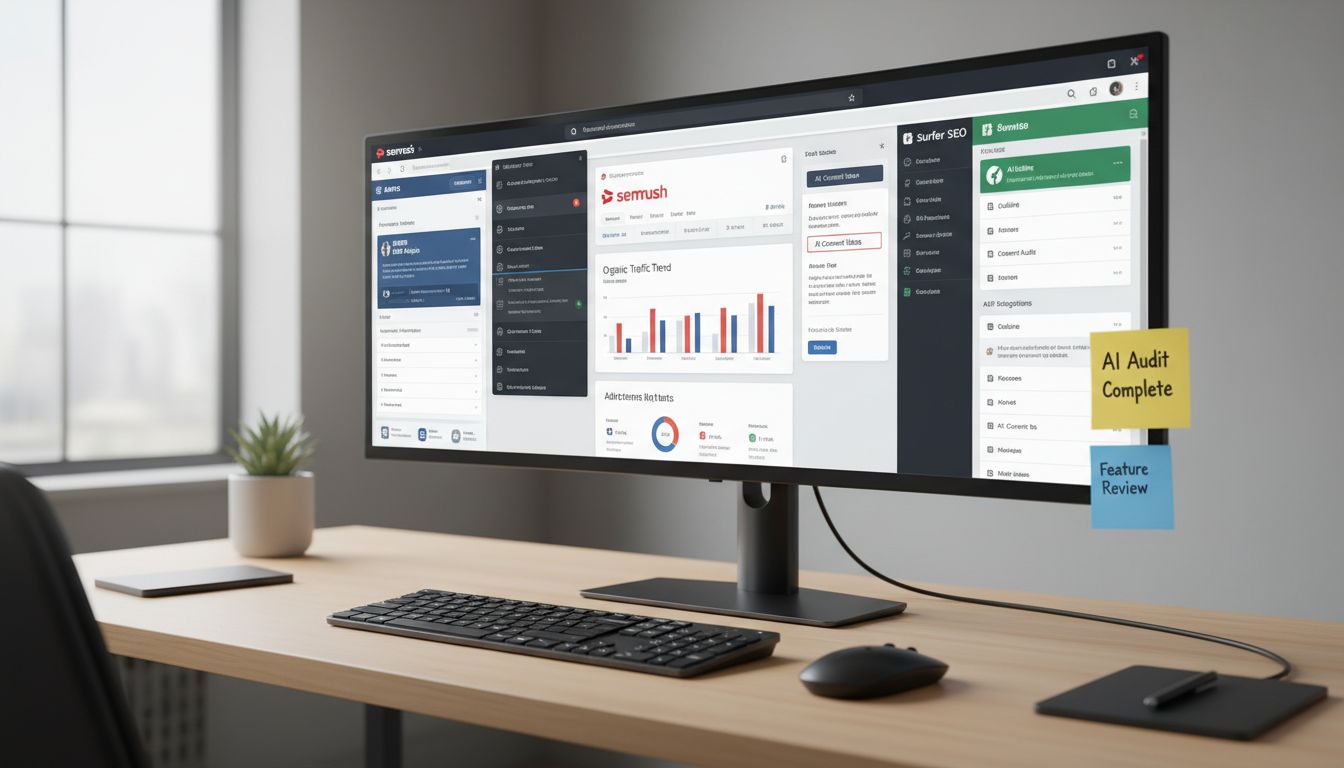
Finally, audit your existing tool stack. Semrush, Surfer, Ahrefs, most have added AI features in the last 12 months that plenty of teams aren't using. Spend an hour with each platform's AI features before assuming you need to buy something new.
Days 31–60: Pilot & build
This is where you shift from preparation to production.
Define your AI KPIs before you touch anything else. Establish a baseline for AI Citation Rate and AI Referral Traffic on your pilot content area. You can't show progress without a starting point, and leadership will ask.
Choose one content pillar, ideally a how-to or educational cluster where you have genuine depth, and run a small RAG pilot. Partner with someone technical: a data analyst, a backend developer, a technically-minded colleague. Tools like Vectara or a basic LangChain pipeline let you build a searchable knowledge base from existing content without a full engineering project. The point isn't production infrastructure, it's understanding how retrieval works so you can brief engineers and vendors properly.
At the same time, take your five to ten highest-value cornerstone pages and restructure them for LLM readability: logical heading hierarchies, current data with named sources, comprehensive FAQ schema. These are your quick wins.
Also draft a simple human-review checklist for any AI-generated content feeding into strategy. One page. Governance doesn't need to be complicated to work.
Days 61–90: Scale & integrate
Apply what the pilot taught you to one or two additional content areas. Don't roll out everywhere at once, the pilot exists to surface problems before they're systemic.
Build a reporting view in Looker Studio that pulls GSC data, Bing citation reports, and your standard traffic and conversion metrics into a single dashboard. That's what you take to leadership.
Then make the business case for proper tooling or platform upgrades, grounded in pilot results. Anecdote won't move budget, numbers will.
A structured digital marketing course or a dedicated digital marketing strategist course can fill theoretical gaps, but the real learning at this stage is applied. Whether you're a working digital marketing strategist looking to upskill, or someone benchmarking against digital marketing strategist salary data to make the case for a promotion, the portfolio of work you build here matters more than any credential. Share what you've built with one team member. Start the conversation with legal or compliance about AI content usage guidelines before you need to, not after.
Common pitfalls & governance: what to avoid (based on real data)
The 90-day roadmap gets you moving. What kills momentum isn't lack of effort, it's repeating the same mistakes organisations across the industry are already making at scale.
Chasing vanity metrics. Rankings and CTR are still useful signals, but they're no longer sufficient. If your reporting dashboard doesn't include AI citation rate and AI referral traffic, you're optimising blind. Nearly 80% of marketers already report fundamental measurement challenges with AI-driven traffic. Widespread doesn't mean acceptable.
Misreading where citations come from. This one surprises people: roughly 80% of URLs cited in AI answers don't rank in Google's top 100 organic results for the same query. Citation and ranking are different games with different rules. Optimising purely for position one won't get you into AI responses.
The set-and-forget fallacy. Pages updated within two months earn 28% more AI citations than stale equivalents. If your content calendar doesn't include structured refresh cycles, you're losing ground passively.
Over-relying on raw AI output. Skipping human review isn't a workflow efficiency, it's a brand risk. AI hallucinations in published content damage trust in ways that take months to repair. Human-in-the-loop review is the quality gate, not an optional step.
Working in a marketing silo. You can't build a functioning RAG pipeline or govern AI content usage without Data, Engineering, and Legal in the room. Access controls, embedding logs, privacy compliance, none of that lives in a marketing team alone. Try to own this end-to-end without those functions and you'll build something fragile, something non-compliant, or both.
Treating schema as a magic bullet. Structured data helps, but the evidence on its direct correlation to AI citations is genuinely mixed. Schema without strong underlying content quality and freshness is scaffolding on a weak building.
The strategist's role here isn't just practitioner, it's process owner. Someone has to define the governance framework, run the cross-functional conversations, and hold the line on quality. That responsibility sits with you.
The bottom line
The digital marketing strategist role hasn't just evolved, it's been restructured from the ground up. Campaign management is table stakes now. The real job is architecting the content and data systems that make your brand visible to AI, not just humans.
That means building RAG pipelines, instrumenting citation telemetry, governing cross-functional workflows, and measuring influence in a world where 83% of AI-triggered searches never produce a click. Traditional KPIs won't capture any of that.
The opportunity is real. A ~28% salary premium doesn't show up in job postings by accident. It reflects genuine scarcity of people who can operate at the intersection of strategy, technical SEO, and data infrastructure. If you've been looking at a digital marketing strategist course or a free digital marketing course with certificate to close those gaps, this is exactly the skill set those programs are starting to address -- though the field is moving faster than most curricula.
The digital marketing strategist salary premium only holds if you can actually do the work. And the marketing strategist course landscape is still catching up to what employers want.
Start with the 30-day audit. Pick one skill to go deep on this week. Then have the conversation with your engineering or data team about what a pilot looks like.
That conversation is where the new role begins.
Frequently Asked Questions
What is a digital marketing strategist?
A digital marketing strategist develops and executes plans to grow a business through online channels, covering organic search, paid media, content, and conversion. In 2026, the role has shifted considerably. The best strategists aren't just managing campaigns; they're building the content and data systems that determine whether a brand gets cited and trusted by AI-generated answers. That requires a working understanding of AI SEO, prompt engineering, and data governance, not just channel tactics.
Will AI replace digital marketers?
No, but it is replacing the task-based, repetitive end of the job. With 78% of marketing organisations already running AI in their operations [Source: siteimprove.com], the pattern is clear: AI handles execution at scale, humans handle judgement, system design, and accountability. Strategists at genuine risk are those who've built their value around doing things AI can now do faster. Those who can design AI-driven workflows, interpret ambiguous data, and govern cross-functional processes are becoming harder to replace, not easier.
What is the digital marketing strategist salary range?
It depends almost entirely on your technical fluency. A strategist working with traditional channel skills sits at one salary band; one who can demonstrably build AI SEO workflows, write effective prompts, and instrument citation telemetry sits meaningfully higher. AI skills currently carry roughly a 28% salary premium in job postings [Source: linkedin.com], and that gap is widening as demand outpaces supply. Your earning potential is now a direct function of how deep your technical capability goes.
Is a digital strategist a good career?
It's a strong career precisely because the role is getting harder to commoditise. A strategist who knows how to build systems for AI visibility, structuring content for retrieval, governing RAG pipelines, measuring brand citations across AI surfaces, operates at the intersection of marketing, data, and engineering. That hybrid skill set is genuinely rare, and it's what organisations are struggling to hire for right now.
Is SEO dead or evolving in 2026?
SEO is alive. The goal of being visible to the right audience at the right moment hasn't changed, where that visibility happens has. With AI Overviews appearing on over 25% of Google searches and carrying an average zero-click rate of 83% [Source: superlines.io, click-vision.com], optimising purely for a top-ranked blue link misses most of the picture. The work has shifted toward earning citations within AI-generated answers, which demands fresh content, clean entity signals, and technical infrastructure most SEO playbooks haven't caught up to yet.
What are the 3-3-3 and 40-40-20 rules in marketing, and do they still apply?
Both frameworks hold up, they just need reframing for an AI-first environment. The 40-40-20 rule (40% audience targeting, 40% offer and message, 20% creative and medium) still describes where your strategic effort should concentrate. In 2026, your "audience" includes the intent signals an LLM uses to generate answers, and your "offer" is the brand authority signal you build into your content architecture. The 3-3-3 rule works as a personal productivity heuristic, but point it at the right activities: time spent on data freshness, structured content, and system-level thinking compounds far more than time spent tweaking ad copy.