May 2nd, 2026
Internal Linking and SEO vs. AI Crawlers: Which Strategy Wins?
 WD
WDWarren Day
It's 2026. GoogleBot still needs to crawl your site, but now so do a dozen AI agents, parsing, summarizing, citing. Traffic from AI crawlers grew 96% between May 2024 and May 2025 [Source: Ramp AI Index, Search Engine Land]. AI adoption among businesses crossed 50%.
Your crawl budget didn't get bigger.
So now you're stuck with a real prioritization problem: do you double down on internal linking and SEO, the stuff that's worked for years, or do you start optimizing for ChatGPT, Claude, and Perplexity?
It's not an either/or. But you do have to pick what comes first.
The foundation goes before the flourishes. That means making sure GoogleBot can actually discover and index your core pages through a solid internal linking structure. Once that's in place, then you layer in AI-specific signals like structured data, based on your actual crawl budget, your actual resource constraints, and the specific queries where AI citations are eating your traffic.
This article is a diagnostic framework for people building the thing, not just reading about it. We'll compare the durable value of traditional internal linking against what actually drives AI citations. You'll get a five-axis decision framework to figure out where your site needs attention most, then a hybrid implementation playbook built from real engineering logs, including the server costs and crawl budget trade-offs most guides skip.
H2: What is Internal Linking & Classic SEO? The Unbreakable Bedrock
Internal linking is your site's dependency graph. It's the system of HTML hyperlinks between pages on the same domain that distributes authority, defines your information architecture, and gives search engines their crawl paths. From an engineering standpoint, it's the foundational layer of your technical SEO stack, the "Code" pillar within the classic "3 C's of SEO" (Content, Code, Credibility).
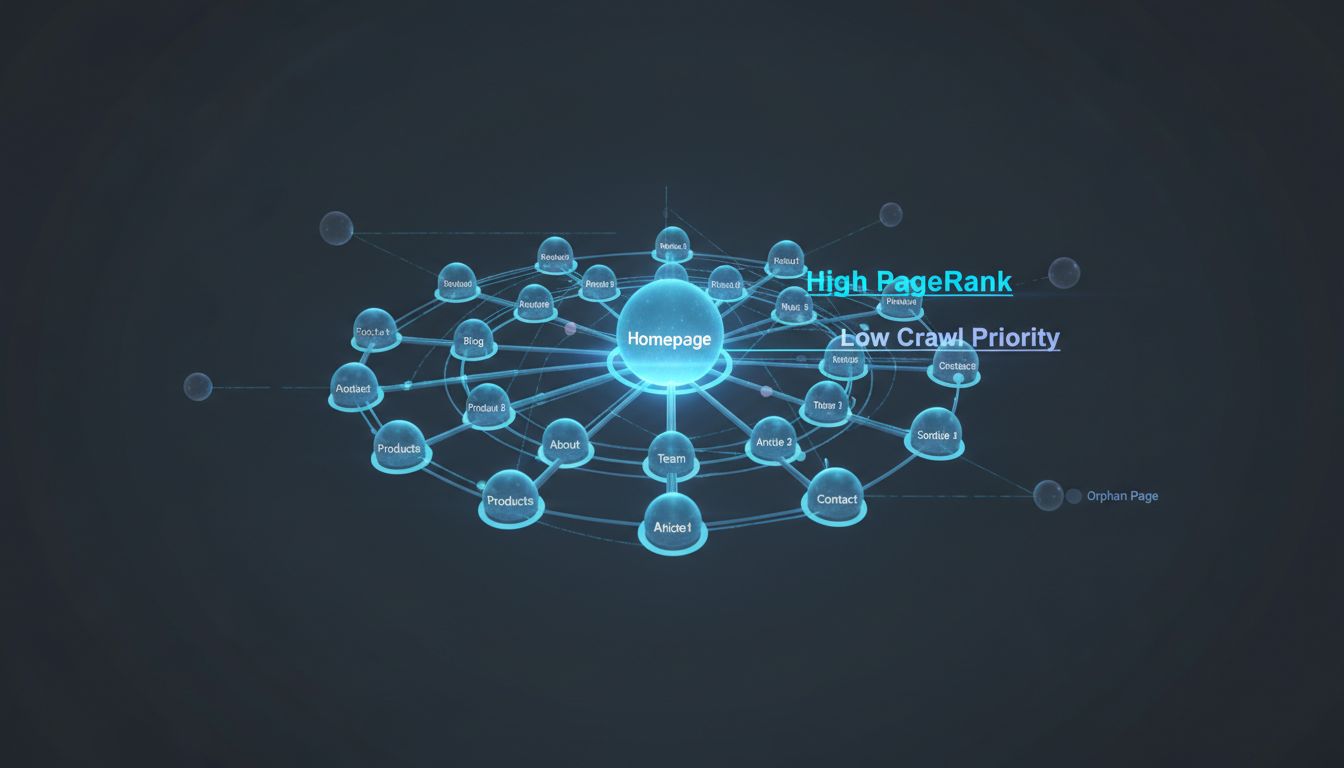
The core mechanism is simple: each internal link passes PageRank-derived "link equity" to its target page.
But the real power is architectural. JetOctopus research shows pages just 1-2 clicks from your homepage rank 75% better than those buried deeper. That proximity to your site's root is a real ranking signal, not something AI markup can replicate.
It's also a discovery engine. Without internal links, pages become orphans. Invisible to crawlers, invisible to users. Google's own documentation says every page you care about should have at least one link pointing to it. The data backs this up: after an internal linking audit, seoClarity reported a retail brand gained +150,000 annual visits.
External linking builds credibility by citing other domains. Internal linking and SEO is about reinforcing your own structure, controlling crawl efficiency and equity distribution from the inside.
Without it, your content can't be found, understood, or ranked. Doesn't matter how well-optimized it is.
H2: What is AI-First Optimization? Playing the New Citation Game
AI-first optimization isn't about replacing traditional SEO. It's a parallel game with different rules.
The objective shifts from securing top organic rankings to earning citations inside AI-generated answers like Google AI Overviews, Bing Copilot, and ChatGPT summaries. A citation is a fundamentally different KPI, not about being #1, but about being deemed credible enough to quote in a synthesized answer.
The core mechanism is making your content machine-readable for AI agents. That means implementing structured data, FAQPage, Product, Review, and Breadcrumb JSON-LD schemas, which gives AI systems explicit semantic context to work with. Clear semantic HTML, descriptive headings, tables, and protocols like IndexNow for rapid content discovery form the technical backbone.
The goal is "grounding" content: stuff AI systems can confidently reference. FAQ schema alone increases the probability of appearing in Google AI Overviews by around 40%.
The impact is real, but it operates on a different axis than classic SEO. 66% of Google AI Overview citations come from pages not in the top-10 organic results. A page can be invisible in traditional SERPs and still become a primary AI source.
That's why tools like Bing's AI Performance dashboard (public preview launched February 2026) are showing up now, so you can track citations, cited pages, and grounding queries directly.
So is SEO dead? No. It's splitting into two tracks. You optimize for the traditional crawl-index-rank pipeline and this new citation game, where being a trusted, well-structured data source matters more than your position on page one. Internal linking and SEO still feeds the first track. AI-first optimization feeds the second.
Both matter.
H2: The Decision Framework: Five Axes for Technical Prioritization
So, is SEO dead or being replaced by AI? No. It's evolving from a singular focus on ranking algorithms to a dual-track strategy. You now have to optimize for both the traditional crawl-index-rank pipeline and this new citation game, where being a trusted, well-structured data source matters more than your position on page one.
The real question isn't "which strategy is better?" It's "which one should I prioritize given my actual constraints?" This framework gives you five diagnostic axes. Score your site on each, and the prioritization becomes clear.
H3: Axis 1: Primary Goal & Success Metrics
Your primary goal dictates where engineering resources go. Internal linking and SEO is fundamentally about maximizing organic visibility. Success is measured in Google Search Console rankings, sessions from search, and indexation depth. You're directing PageRank and crawl efficiency toward your most important commercial pages.
AI-first optimization targets something different: becoming a cited source. Success is measured by appearances in Google AI Overviews or Bing Copilot answers, tracked through tools like the Bing AI Performance dashboard.
These goals are decoupled. 66% of Google AI Overview citations come from pages not in the top-10 organic results. A page can be a primary AI citation while ranking 15th.
Choose internal linking if your core KPI is direct organic traffic and conversions. Choose AI-first signals if you're after brand visibility, topical authority, and capturing traffic from queries where AI summaries dominate the SERP.
H3: Axis 2: Technical Foundation & Prerequisites
This is the hierarchy of needs. Internal linking and SEO requires a clean, crawlable site architecture as its base. No major crawl errors (4xx/5xx), a sensible URL structure, HTML that isn't buried in unrenderable JavaScript. If bots can't crawl, they can't follow links.
AI-first optimization needs a different layer: parsable, structured data. Clean HTML with correct heading hierarchies, valid JSON-LD with no schema errors. Crawlability is still the foundation, but the requirements are more precise.
If your site has rampant JavaScript rendering issues or a spaghetti URL structure, layering in FAQPage schema is like installing a marble countertop in a house with no foundation.
Fix the architecture first. The 80/20 rule for SEO applies here: foundational crawlability fixes deliver more reliable, scalable gains than chasing the latest AI signal.
H3: Axis 3: Resource Intensity & Crawl Budget Impact
Here's where engineering cost gets real. A well-optimized internal linking structure generally improves crawl efficiency. It acts like a traffic director, focusing GoogleBot's limited crawl budget on high-value pages instead of wasting cycles on parameter-heavy URLs or thin content.
AI crawlers operate differently. According to server log analysis, AI crawlers requested 2.5× more data per event, 134,498 bytes vs 53,331 for GoogleBot. They fetch more, and they can hammer 404 pages in large volumes.
For a media site with millions of pages, that's not trivial. It's increased server load, bandwidth consumption, and potentially higher CDN bills.
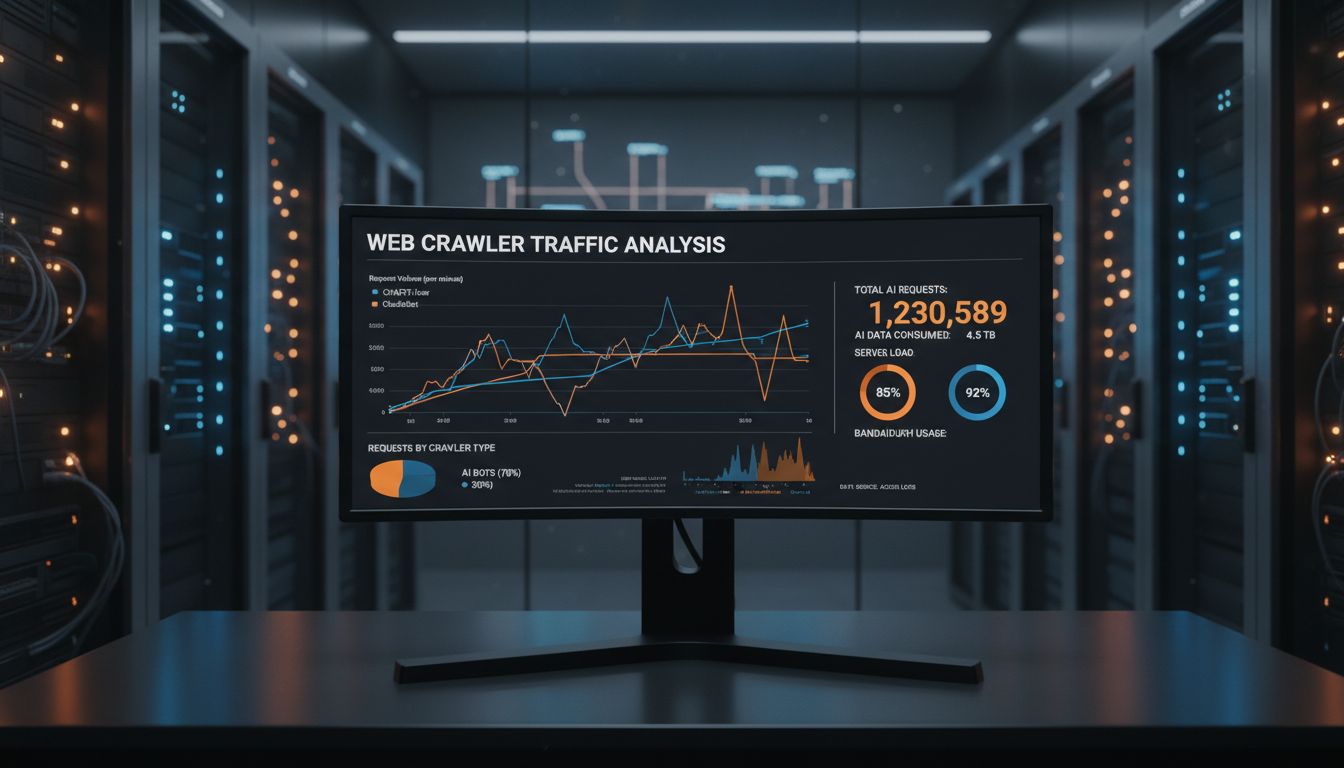
Check your server logs. How much of your crawl budget is going to ChatGPT-User or ClaudeBot? If AI crawlers represent a significant share of server requests, optimizing for them stops being just an SEO activity and becomes a cost and infrastructure problem.
H3: Axis 4: Implementation Complexity & Maintenance
Internal linking is conceptually simple, operationally complex at scale. Auditing link equity distribution across 10,000 product pages is a data engineering task. Site-wide changes often require CMS re-architecture or custom automation. But once a clean structure is in place, it's mostly set and forget.
AI signal implementation is technically nuanced from the start. Valid, non-duplicative JSON-LD for complex entities like products with reviews and offers requires real developer input. Emerging standards like llms.txt have low adoption and unconfirmed efficacy.
And unlike internal links, structured data isn't static. Change a product price or FAQ answer and the schema has to update with it, or it becomes misleading noise.
The maintenance burden is the deciding factor. Internal linking is an architectural concern. AI signals are a content-level concern that has to stay in sync with every publish and edit cycle.
H3: Axis 5: Measurability & Tooling Maturity
The tooling for internal linking and SEO analysis is mature. Platforms like Screaming Frog, Sitebulb, and JetOctopus give you a complete graph of your site's link equity. Impact is clear and attributable in Google Search Console within a few months. You can even run controlled experiments through platforms like SearchPilot to isolate the causal impact of a new navigation structure.
Measuring ROI for AI optimization is fuzzier. Bing's dashboard shows citation counts, but establishing that adding FAQ schema caused a specific traffic increase is hard. The platforms you're optimizing for, Google's AI, Copilot, Perplexity, are black boxes with frequently changing algorithms.
If your organization needs clear, attributable ROI with established testing frameworks, internal linking is the safer bet. If you're on a longer innovation horizon and can tolerate uncertain returns, layering in AI signals makes sense as a strategic experiment.
H2: The Hybrid Playbook: A Staged Implementation Guide
Don't think of this as a checklist. Think of it as a sprint plan, where each phase has a clear definition of done and nothing in a later phase works if you skipped an earlier one.
You can't build on AI signals if Google can't even crawl your site. Foundation first. Then the high-ROI layers. Then the strategic bets.
H3: Phase 1: The Non-Negotiable Foundation (All Sites)
Action: Run a full crawl. Find every orphan page, any page with zero internal links pointing to it. Make sure your navigation, footer links, and in-content links are real <a> tags, not JavaScript-driven elements crawlers might quietly skip.
Why: This is internal linking and SEO 101, but a lot of sites fail it. You can't win the AI citation game if your pages are undiscoverable. GoogleBot and AI crawlers follow links to find content, so an orphaned page is effectively invisible, wasted crawl budget, wasted content investment. According to Whitehat SEO, 66.2% of web pages have only one internal link pointing to them. That's a massive discovery problem hiding in plain sight.
Tooling & Definition of Done: Use Screaming Frog or JetOctopus. You're done when your "Orphaned Pages" report is empty and your crawl shows a clear, hierarchical link graph from the homepage to all important content. Per JetOctopus research, pages reachable within 1-2 clicks rank 75% better than deeper pages, so keep important content within 3-4 clicks max.
H3: Phase 2: The High-ROI Layer (Most Sites)
Action: Implement structured data where your content actually supports it. FAQ schema for real question-and-answer pages, Article or BlogPosting schema for editorial content. At the same time, audit your HTML: one H1 per page, logical heading hierarchy, <table> elements for actual tabular data.
Why: This is low-effort work with real upside. Bing Webmaster Tools explicitly recommends clear headings and tables to improve AI citation likelihood. According to Frase.io, FAQ schema increases the probability of appearing in Google AI Overviews by around 40%. These are signals both traditional crawlers and AI agents use to parse what your content is actually about.
Definition of Done: All key informational pages have validated, error-free structured data in JSON-LD. Your HTML passes an automated semantics check. You're not forcing schema where it doesn't fit, you're annotating what's already there.
H3: Phase 3: Strategic Investment by Site Type
Foundation is solid. Now direct resources based on what your site actually does.
For E-commerce: Deploy the full JSON-LD stack: Product, Review, Offer, BreadcrumbList. This isn't just about rich results, when an AI agent answers a shopping query or compares products, it parses this structured data to understand price, availability, and ratings. One warning: mismatched data hurts more than no schema at all, so get it precise.
For Content/News Publishers: Use IndexNow to push new and updated content to search engines fast. Build your content architecture around topic clusters, a strong, internally-linked pillar page with supporting articles around it. For key informational queries, put a clear 2-3 sentence answer summary near the top of the article. That's what AI Overviews pull.
For JS-Heavy Sites (React, Vue, Angular): This one isn't optional. Implement server-side rendering or a reliable prerendering service. Some AI bots request pages with JavaScript disabled, which means your React app renders as a blank page for them [Source: Common mistakes in research]. If crawlers can't see your content or your internal links, Phase 1 and Phase 2 both fail before they start.
H3: Phase 4: Advanced Orchestration (Enterprise)
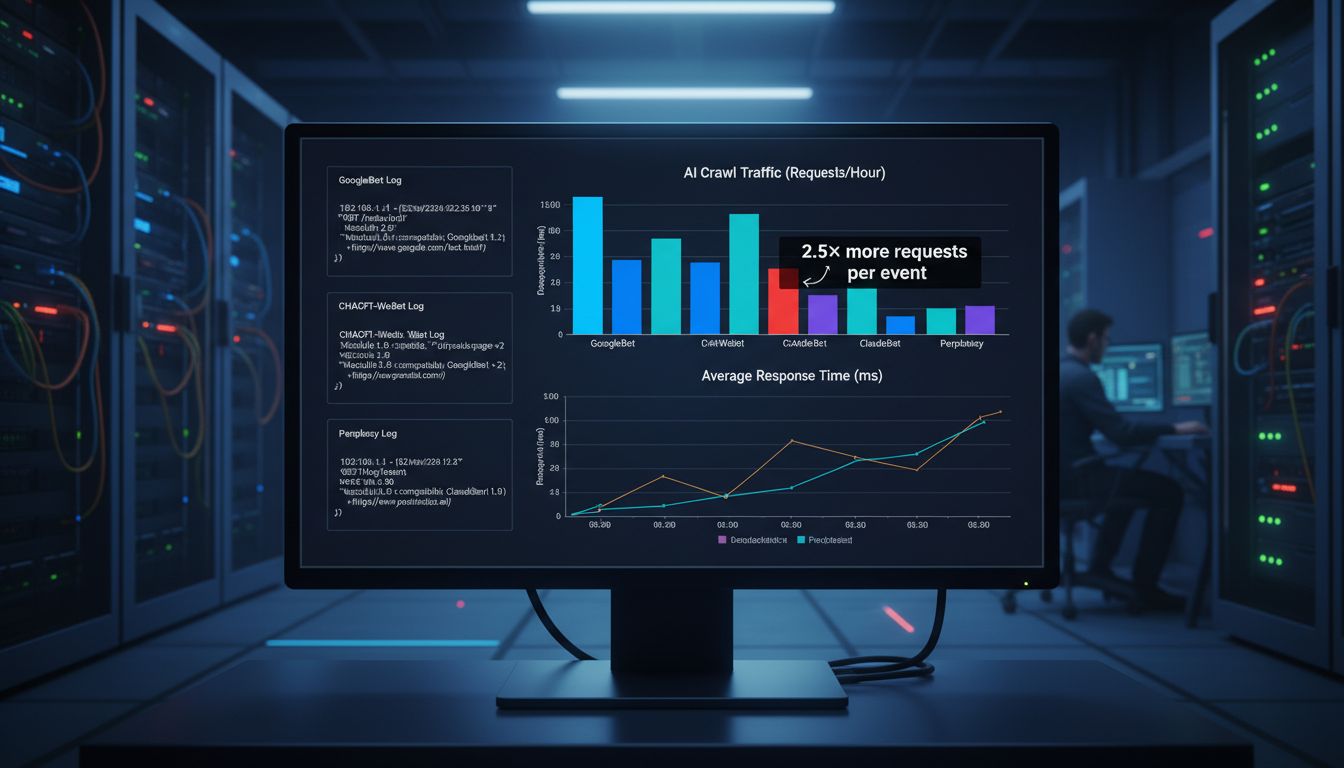
Action: Move from implementation to ongoing optimization. Analyze your server logs regularly, how many requests are coming from GoogleBot vs. ChatGPT-WebBot, ClaudeBot, or Perplexity? Per BensonSEO, AI crawlers request 2.5x more data per event, which can actually hit your server load. Set up alerts for unusual crawl patterns before they become a cost problem.
Action: Actually use the Bing AI Performance dashboard and Google Search Console's AI feature reports. Don't just check for errors. Which queries are generating citations? Which pages are getting cited most? That data should be driving your content strategy.
Action: For major changes, a site-wide nav overhaul, a new schema rollout, run a controlled A/B test through something like SearchPilot. It isolates the impact of your SEO work from everything else happening on the site and gives you attributable ROI data. That's how you stop following best practices and start building an actual data-driven advantage.
H2: Common Pitfalls & Technical Gotchas from the Engineering Log
Fifteen years building systems and watching teams implement SEO at scale. The same mistakes keep showing up. These aren't theoretical concerns, they're the bugs that burn engineering hours, waste crawl budget, and tank visibility. Treat this as a post-mortem.
Pitfall 1: Assuming AI Crawlers Behave Like GoogleBot
This is the most expensive assumption you can make. A 2026 analysis found AI crawlers request 2.5× more data per event than GoogleBot, different crawl frequencies, different render budgets, different parsing priorities. Some AI bots specifically requested pages with JavaScript disabled.
If your AI optimisation strategy is a carbon copy of your GoogleBot handling, especially around client-side rendering or lazy-loaded content, you're building on shaky ground.
Pitfall 2: Neglecting Crawl Budget in the AI Era
Your server resources are finite. Every request from ChatGPTBot or ClaudeBot is a request that could have been a GoogleBot crawl.
Letting AI crawlers waste cycles on infinite pagination, session IDs, or low-value filtered pages directly competes with your core indexing. AI crawler traffic grew 96% between May 2024 and 2025. You need explicit crawl guidance in robots.txt for these new user-agents, not blanket allowances.
Pitfall 3: Botching Schema Implementation
Throwing JSON-LD on a page is easy. Doing it correctly is not.
I've audited sites where duplicate Product blocks or FAQPage schema with missing acceptedAnswer fields caused parsing errors. Search engines and AI models don't just ignore broken schema, they may distrust the entire page. Bing's AI Performance report explicitly recommends clear structure, but that structure has to be valid. Use the Schema Markup Validator, then check the Rich Results Test. Most teams skip this.
Pitfall 4: The Orphan Page Problem in the AI Era
"AI crawlers will find it via the sitemap." This is a dangerous half-truth.
An AI agent might discover an orphan page from your XML sitemap, but it arrives with no context. No internal links with topical anchor text. No signal about what the page is about or how it connects to your authority clusters. That page becomes an isolated data point, not a connected node in your topical graph. Its chances of getting cited drop significantly.
Discovery ≠ understanding. This is why internal linking and SEO fundamentals still matter even as the crawler landscape shifts.
Pitfall 5: Following llms.txt Dogma Blindly
The llms.txt hype is a distraction. Adoption sits somewhere between 5–15% of sites, and no major AI platform has confirmed they automatically read and respect it. A Semrush analysis found no statistical correlation between its presence and improved AI visibility.
It's a speculative footer, not a core ranking signal. Implementing it takes five minutes, fine. But treating it as a silver bullet wastes mental bandwidth that should go toward proven signals: solid internal linking and valid structured data.
The common thread across all of these? Treating new AI signals as magic bullets while neglecting engineering fundamentals. Optimise for crawler efficiency first, implement structured data correctly, and view every new bot through the lens of server load and crawl budget.
Conclusion
This isn't really an either/or decision. It's a prioritisation problem based on what your site actually looks like right now.
Prioritise internal linking if you're managing a large, complex site with limited engineering bandwidth. Fix orphaned pages, clean up your crawl budget, get Google finding your content reliably before you worry about AI citations. Focus on AI-first signals if you're in a heavily informational niche, have a small but well-structured site, and your target queries are getting swallowed by AI Overviews.
For most teams, the path is pretty clear: get your internal linking and technical foundation solid first.
Then layer in the AI optimisations, FAQ schema, clean structured HTML, on top of that stable base. Not before it.
In 2026, SEO is about making content understandable to both traditional algorithms and AI systems. Internal linking tells your site's full story. Structured data gives AI the trustworthy summary that gets cited. The real question isn't "will AI replace SEO?" It's "how do I build systems that serve both efficiently?"
Your next move: Audit your internal link graph this week. Find your top 10 orphaned or weakly-linked pages. That's your next sprint.