April 23rd, 2026
SEO Marketing Tools That Scale AI Content Production for SaaS Teams
 WD
WDWarren Day
Most teams don't have a tool problem. They have a system problem.
You're a growth lead at a 50-person SaaS company. The directive is simple: dominate organic search. You've tried scaling content with freelancers, expensive and all over the place. You've tried general AI writers, fast, but the output feels generic and doesn't rank.
The promise of AI solving your volume problem is real. The part where quality and SEO performance fall apart is where most teams actually stall.
Scaling content isn't about finding a magic button. It's about building a system.
Success with seo marketing tools isn't about finding the single best platform. It's about designing a lean, integrated toolchain that connects keyword research to AI-assisted creation to performance tracking, while ruthlessly prioritizing the work that actually moves the needle for your domain rating and SaaS niche.
The market for these tools is growing fast, from USD 4.0 billion in 2025 to a projected USD 32.6 billion by 2035. That growth reflects real demand. It also means overwhelming choice.
Most roundups of top seo tools are just feature checklists. They don't tell you how any of this fits into your actual stack and workflow.
This is a practitioner's framework instead. You'll get a taxonomy that organizes tools by their actual function in your content engine, a staged rollout roadmap that scales with your team size, and honest takes on costs, risks, and where humans still need to stay in the loop.
The goal is measurable output. Not hype.
What are SEO and Marketing Tools in the Age of AI? A Systems-First Definition
When most people search for "seo marketing tools," they're thinking about a rank tracker. Maybe a keyword tool. Something to check backlinks.
That's too narrow.
What you're actually building is an infrastructure layer that manages the entire content lifecycle. Keyword discovery, competitive analysis, AI-assisted creation, on-page optimization, publication, performance tracking... and now, visibility in AI-generated answers. That last one is new, and it matters more than most people realize.
A decade ago, tools were siloed. Ahrefs for backlinks, Screaming Frog for technical audits, a separate CMS that didn't talk to any of it. Today the category has moved toward platforms that connect these functions into something you can actually run as a repeatable system. The goal is a content engine, something that turns search intent into qualified traffic without you manually stitching everything together each time.
Then there's Generative Engine Optimization (GEO), which has fractured the top seo tools conversation in a real way. Traditional SEO is about ranking in Google's blue links. GEO is about getting your brand cited in AI Overviews, ChatGPT, and Perplexity. AI-generated content already accounts for 19% of Google search results, and those AI answers have cut organic click-through rates by an average of 34.5%. That's not a rounding error. That's a structural change in how search works.
So the definition of seo software tools free or paid has shifted. It's not about point solutions anymore.
The modern take is systems-first: SEO and marketing tools are the programmable layers of your content infrastructure. Everything else in this article flows from that.
A Practitioner's Taxonomy: The 3 Core Categories of Modern SEO Marketing Tools
When you're building a content engine, you need to understand what each component actually does. The market is flooded with "AI SEO tools" that promise everything, but most fall into two or three distinct categories based on their core job. Getting this right stops you from buying overlapping tools that don't integrate, or worse, buying a drafting tool when you actually need a strategy layer.
Here's the framework I use when advising teams:
- AI-Assisted Creation Tools – Your drafting engine
- AI-Powered SEO Research & Optimisation Tools – Your force multiplier
- AI search visibility & GEO Tools – The new frontier
This maps directly to workflow stages: ideation → strategic optimisation → visibility tracking. A tool that excels at one category typically fails at another.
1. AI-Assisted Creation Tools: The Drafting Engine
Core Job: Accelerating the initial draft and ideation phase, overcoming the blank page problem for writers and scaling output volume.
These are your writing co-pilots. Jasper, Writer, and the foundation models (ChatGPT, Claude) live here. They're designed to get words on the page quickly, Jasper reportedly helped one team increase blog output by 113% [Source: market research].
Pricing is typically per-seat subscription, though you'll find entry points through free SEO software tools like ChatGPT's free tier or NeuronWriter's freemium model.
Here's the thing though: these are drafting tools, not SEO strategists. They'll happily write a thousand words about "cloud infrastructure" without considering whether you should even target that term given your domain rating.
Their output requires direction and optimisation to actually rank. I've seen engineering teams pump out technically accurate but utterly uncompetitive content because they treated Jasper as a complete solution rather than a starting point. The blank page problem gets solved. The competitive analysis problem gets ignored.
2. AI-Powered SEO Research & Optimisation Tools: The Force Multiplier
Core Job: Injecting data-driven SEO strategy into content. This category analyses SERPs, provides actionable briefs, and grades content against ranking factors.
If creation tools are the engine, these are the navigation system. Surfer SEO's Content Editor, Clearscope, and MarketMuse provide the strategic layer that makes AI-generated content competitive. They answer the questions that actually matter: What's ranking? What topics should we cover?
Surfer's real-time content score gives writers immediate feedback on structure, keyword density, and semantic relevance. Alli AI takes this further with on-page automation, but the principle is the same: data-driven optimisation beats guesswork.
These are typically the best paid SEO tools in your stack. The investment tends to be justified, companies using AI-powered SEO tools see search rankings improve by 30% within six months [Source: market.us].
The trap here is optimising for metrics over user value. I've built systems that chase perfect Surfer scores only to produce content that reads like an SEO checklist. These tools are a proxy for quality, not a measure of it. Your 95/100 score might tick every technical box while failing to answer the searcher's actual question.
3. AI Search Visibility & GEO Tools: The New Frontier
Core Job: Measuring brand visibility beyond traditional SERPs, specifically within AI-generated answers (Google AI Overviews, ChatGPT, Perplexity).
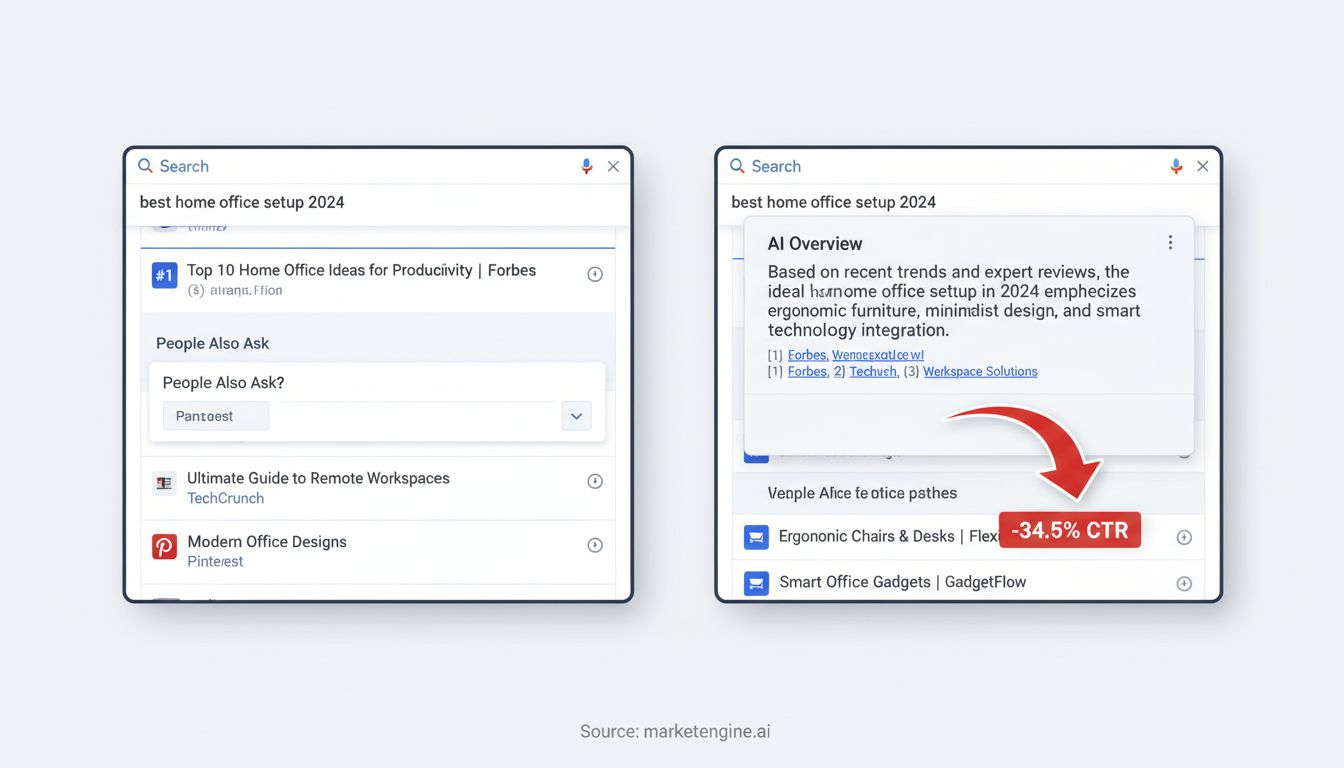
This category exists because ranking #1 doesn't guarantee traffic anymore. With AI Overviews cutting organic click-through rates by an average of 34.5% [Source: marketengine.ai], the answer often appears before anyone clicks anything.
Tools like Semrush's AI Visibility Toolkit, Rankscale, and AthenaHQ track citation frequency in AI-generated answers. Not ranking positions, whether AI models actually cite your content as a source when users ask questions in your niche.
Semrush's AI Visibility Toolkit is sold as an add-on to their core platform. Most teams aren't tracking these metrics yet, but forward-thinking SaaS companies probably should be.
The strategic shift here is real. Instead of "rank for this keyword," you're aiming for "be the source AI cites for this topic." That changes content strategy, formatting, and how you structure information from the ground up.
The surprising truth? These three categories rarely overlap well in a single platform. A tool that excels at drafting typically has weak SERP analysis. A research platform might offer basic AI writing that's worse than dedicated creation tools. Your job isn't finding the mythical all-in-one solution from any seo tools list, it's assembling the right components for your specific workflow. The best seo tools for website performance, whether you're looking at the best seo tools for small businesses, best seo tools for beginners, or the best seo tools for wordpress, they all assume you know which category you're actually shopping in.
The Integration Imperative: From Silos to a Coherent Content Engine
Most tools advertise "seamless integration" as a checkbox feature. The reality is messier. A marketing promise isn't a system architecture.
True integration means building a data pipeline where each component passes structured information to the next, without manual copy-pasting or context switching.
Here's a real workflow I've built for SaaS clients: Ahrefs API exports keyword clusters as JSON. A Python script transforms this into a structured brief, mapping primary and secondary keywords, search intent, and competitor URLs. That brief gets posted via the MarketMuse API to generate a content outline with semantic topic suggestions. The outline, along with brand voice guidelines, goes to the Jasper API for initial drafting.
The draft comes back, but the work isn't done. It's pushed to the Surfer SEO API for real-time optimisation scoring. The API response flags missing headers, suggests keyword density adjustments, and identifies semantic gaps. Only after those automated checks does the content land in a WordPress staging area via REST API, ready for human review.
The "glue" holding this together is where costs hide. No-code tools like Zapier or Make.com handle simple triggers fine, but they choke on complex data transformation. Building with native APIs gives you control but introduces real engineering overhead: handling rate limits (Ahrefs is particularly strict), managing authentication tokens, writing error-handling logic for when a third-party service goes down, and monitoring credit consumption on pay-per-call APIs.
The real expense isn't the £99/month Surfer subscription. It's the 20-40 engineering hours to build and maintain a reliable pipeline.
This is why so many organisations are buying point solutions from every seo tools list they find, with no plan to connect them. For teams wanting bespoke automation without full custom development, platforms like AirOps let you design multi-step workflows using a visual builder that generates and executes code. Extract article, analyse for AI citation potential, apply optimised edits. No, it's not the most glamorous part of working with top seo tools or best paid seo tools, but it's the part that determines whether any of it actually works.
Your goal isn't to avoid integration complexity. It's to manage it deliberately. Keyword research should directly fuel your content briefs, which directly guide your AI drafts, which get automatically scored before they ever reach your CMS.
Whether you're running seo marketing tools for a solo blog, looking at the best seo tools for wordpress, evaluating the best seo tools for small businesses, comparing seo software tools free versus paid options, or just trying to find the best seo tools for beginners or best seo tools for website growth, the question is the same: do these tools actually talk to each other, or are you just managing a collection of tabs?
That's the difference between a content engine and a content headache.
A Staged Implementation Roadmap: From Solo Founder to Scaling Team
Should you build your content engine all at once? No. And I've seen what happens when teams try.
They buy every tool on the seo tools list, spend months configuring integrations they'll never actually use, and end up maintaining software instead of publishing content. The right approach is to start with what you need to prove ROI, then add complexity as your team grows into it.
Think of it like technical debt. Build a complex system before you've validated your core workflow, and you'll spend more time managing tools than ranking pages. Here's the phased approach I've used across startups, scale-ups, and my own agency.
Phase 1: The Foundation (For the Solo Marketer or Beginner)
You're one person. Bandwidth is limited. You need to show that content marketing actually drives sign-ups.
At this stage, complexity is your enemy.
Skip the temptation to buy separate tools for keyword research, creation, and optimisation. You need one platform that covers the basics with built-in AI. For most solo marketers, that's Semrush with its AI writing and visibility tools, or Ahrefs with its growing AI features. The goal isn't feature comparison, it's a repeatable process you can actually execute.
The workflow is simple: keyword research → brief → AI-assisted draft → publish → track rankings. Use the platform's templates. Let its AI generate your first draft, then edit heavily for accuracy and voice. Track everything in a spreadsheet, keyword, publish date, initial ranking position.
This is also where you establish governance, even if it's just one page. Define what topics AI can draft, what needs human expertise, and how you fact-check. For small businesses and beginners, this single-platform approach keeps costs predictable while you figure out what actually moves your rankings.
Phase 2: The Acceleration (For the Small Marketing Team)
Now you have a dedicated content person or a small team (2-5 people). You've proven content drives qualified traffic. You're ready to improve quality and consistency.
This is where you separate drafting from optimisation.
Add a dedicated AI creation tool like Jasper for better brand voice control, and an optimisation tool like Surfer SEO or Clearscope for data-driven content scoring. One tool helps you write better. The other tells you what "better" means for search engines. According to Market.us research on AI-powered SEO software, companies using this layered approach see search rankings improve by 30% within six months, but that comes from systematic optimisation, not just writing faster.
Start measuring the content score from your optimisation tool and correlate it with actual ranking changes. You'll quickly learn which metrics matter in your niche. Then start connecting tools via native integrations or simple Zapier workflows, Surfer briefs feeding into Jasper, for instance.
Formalise your governance here too. A mandatory human review stage where someone with domain expertise fact-checks every AI-generated piece. Brand voice guidelines documented in the AI tool's training system. This phase is about repeatable quality, not just volume.
Phase 3: The Engine (For Scaling Teams with Technical Resources)
You have dedicated content and SEO roles now, plus developer or technical marketer support. Your content engine is a production system. Treat it like one.
Build the integrated pipeline: keyword research (Ahrefs/Semrush API) → automated brief generation (MarketMuse/Clearscope API) → AI drafting with brand guardrails (Writer/Jasper API) → optimisation scoring (Surfer API) → CMS publishing via webhook. For tracking AI search visibility, consider specialised GEO tools like Rankscale. For orchestrating complex content refreshes, AirOps.
Your focus shifts to automation and measurement. Automate content refreshes when rankings drop. Build dashboards combining traditional SEO KPIs with AI visibility metrics. Run A/B tests on optimisation approaches, does Surfer's NLP score correlate better with rankings than Clearscope's relevance metric for your specific content type?
Integration becomes API-driven. Your content pipeline gets treated like a data pipeline, with error handling, retry logic, and monitoring. Governance becomes a real AI policy covering training data sources, output validation, and regular audits. Someone owns the toolchain itself as a critical business system.
Here's the thing though. Most teams jump straight to Phase 3 tooling while still running Phase 1 processes. They have AirOps workflows but no documented brand guidelines. They're evaluating the best seo tools for website growth and the best paid seo tools while tracking AI visibility metrics they can't connect to pipeline. They're using top seo tools and seo marketing tools without the processes to support them.
Whether you're a solo founder comparing seo software tools free versus paid options, looking at the best seo tools for wordpress, exploring the best seo tools for small businesses, or just getting started with the best seo tools for beginners, the phase you're in matters more than the tools you pick.
Build the engine incrementally. Each phase should solve a specific bottleneck before you add the next layer.
Navigating Risks, Costs, and the Essential Human Role
Scaling with AI isn't a matter of buying a subscription and hitting go. The tools are powerful, but they introduce new categories of operational risk and hidden costs that can derail your entire content programme if you ignore them. Most vendor-focused content stops here. For a technical leader, this is where the real work begins.
Governance: The 61% Problem and How to Fix It

The biggest operational risk you face isn't technical. It's a governance gap. Research shows 61% of organisations have no formal generative-AI guidelines. That's a recipe for inconsistent quality, brand voice drift, and compliance problems.
Your policy doesn't need to be a 50-page legal document. Start with a simple checklist your team can actually follow:
- Approved Use Cases: Blog draft outlines, meta descriptions, social post variations, internal brainstorming.
- Banned Uses: Direct customer communications, legal or financial advice, proprietary code generation.
- Mandatory Human Review: Every AI-generated draft must pass an expert fact-check and have genuine 'Experience' injected, this is your E-E-A-T layer.
- Required Disclosures: If your industry or jurisdiction requires it, define when and how to disclose AI-assisted creation.
- Brand Adherence: All output must be run through your documented brand voice and style guide.
This is why enterprise-grade platforms like Writer exist, they bake governance controls directly into the workflow. Without them, you're just scaling chaos.
The True Cost: Scaling Spend and Integration Debt
Forget the sticker price on a marketing page. The real cost of an AI SEO toolchain is subscription fees, consumption credits, and the engineering time to maintain it.
Many tools, especially those focused on Generative Engine Optimization (GEO), use credit-based pricing. Cheap at low volumes, unpredictable as you scale. You need to model your consumption based on actual content velocity, not optimistic projections.
More critically, account for integration debt. Those API pipelines you built in Phase 3 to connect Surfer, your CMS, and your analytics dashboard? They require ongoing maintenance. A breaking API change from a vendor, a CMS update, a schema change, any of it can halt your entire content production line. The TCO isn't just the software bill. It's subscription + credits + engineering maintenance hours.
Legal and Quality Imperatives
Many AI models are trained on publicly scraped web data. Before feeding sensitive company data into any tool, scrutinise the vendor's terms for data usage rights and output indemnification. Non-negotiable for regulated industries.
This brings up two questions I get constantly from technical founders.
First: "Can ChatGPT do SEO?" No. ChatGPT has no live search data, no competitor insights, no ranking factors. It's a language model, not an SEO platform. Second: "Will AI replace SEO?" Also no. AI replaces manual, repetitive tasks. The human role shifts to strategist, editor, and the person responsible for injecting real expertise.
That last part matters more than most people realise. With AI-generated content now accounting for 19% of Google search results, generic repackaged information is a commodity. Whether you're using the best seo tools for website growth, evaluating top seo tools, or just browsing a basic seo tools list, none of it matters if your content doesn't offer something a language model can't generate on its own.
Unique insight. Proprietary data. Genuine practitioner experience. That's the 'E' in E-E-A-T.
The AI assists the process. The expert provides the value. That's your competitive moat, and it doesn't show up on any seo marketing tools pricing page.
Conclusion: Building Your Content Engine
The goal was never to find the "best" tool. It's to build a system where the pieces actually connect.
Three layers: research (Ahrefs, Semrush), creation and optimization (Surfer SEO, Clearscope), and visibility tracking (tools like Profound for AI search). Keyword to brief to published page, with as little friction as possible in between.
Don't try to build all of it at once.
Pick your biggest bottleneck right now, research, writing, or tracking, and fix that one thing first. The staged roadmap exists for a reason. A solo founder's stack looks nothing like a scaling team's integrated pipeline, and that's fine.
The broader context: AI-generated content already accounts for 19% of Google search results. That number isn't going down.
What stays the same is the underlying logic. Integration beats isolated features. You measure what actually moves domain rating, not vanity metrics. And you keep a human in the loop, always.
Whether you're comparing the best paid seo tools, looking for seo software tools free options, researching the best seo tools for small businesses, or just trying to figure out what belongs on your seo tools list, the tool is never the moat. The system you build around it is.
That's true for the best seo tools for wordpress, the best seo tools for beginners, the best seo tools for website performance. The seo marketing tools market will keep producing new options. Top seo tools lists will keep getting longer.
Your job is to audit your current workflow, map the data flow from research to performance tracking, and build one real connection this week.
That's it. Start there.
Conclusion
The goal was never to find the "best" tool. It's to build a system where the pieces actually connect.
Three layers: research (Ahrefs, Semrush), creation and optimization (Surfer SEO, Clearscope), and visibility tracking (tools like Profound for AI search). Keyword to brief to published page, with as little friction as possible in between.
Don't try to build all of it at once.
Pick your biggest bottleneck right now and fix that one thing first. A solo founder's stack looks nothing like a scaling team's integrated pipeline, and that's fine.
The broader context: AI-generated content already accounts for 19% of Google search results [Source: market.us]. That number isn't going down.
What stays the same is the underlying logic. Integration beats isolated features. You measure what actually moves domain rating, not vanity metrics. And you keep a human in the loop, always.
The biggest risks are unmanaged API costs, no clear generative-AI guidelines, and failing to track new KPIs like AI answer citations. SEO isn't dead. It's just measuring different things now, including Generative Engine Optimization alongside traditional SERP rankings.
Whether you're comparing the best paid seo tools, looking for seo software tools free options, building out your seo tools list, or trying to figure out the best seo tools for small businesses, the tool is never the moat. The system you build around it is.
That's true for the best seo tools for wordpress, the best seo tools for beginners, the best seo tools for website performance. The seo marketing tools market will keep churning out new options. Top seo tools lists will keep getting longer.
Audit your current workflow. Map the data flow from research to performance tracking. Build one real connection this week.
Start there.
Frequently Asked Questions
What are SEO and marketing tools?
They're a lot more than keyword research and rank tracking now.
In 2026, seo marketing tools cover the entire lifecycle of content meant to drive organic traffic. AI writing assistants, optimization tools that analyze what's actually ranking, visibility trackers that monitor whether your brand shows up inside Google's AI Overviews. The modern toolstack isn't just about ranking pages. It's about producing relevant content and measuring performance across every search surface that exists.
Can ChatGPT do SEO?
No.
ChatGPT is useful for generating text. But it has no access to real-time search volume, live SERP data, competitive backlink profiles, or content gaps. You can pull it into your process for drafting or ideation, sure. But it can't do what Ahrefs, Semrush, or Surfer SEO do. The research, analysis, and measurement functions aren't there.
Will AI replace SEO?
The repetitive stuff, yes. Keyword clustering, first-draft content, technical audits, performance reports. AI is already handling a lot of that.
But the strategic layer is a different story. AI doesn't have real expertise, experience, authoritativeness, or trustworthiness. Those things matter to users and to search engines. The people who will do well here are the ones treating AI as execution support and keeping themselves in the strategist seat.
Is SEO dead or evolving in 2026?
Evolving. Fast.
AI Overviews and AI-generated answers have already changed how people use search. Traditional organic click-through rates are down an average of 34.5% [Source: marketengine.ai]. So "position #1" as a KPI doesn't mean what it used to.
SEO is now expanding into Generative Engine Optimization (GEO), which is about getting your content cited inside those AI answers. That requires different tooling and different measurement. The top seo tools lists are starting to reflect this, and if yours doesn't, it's probably out of date.