February 25th, 2026
AI Content Optimization Tools in 2026: The Complete Guide for SaaS Founders
 WD
WDWarren Day
You've tried ChatGPT for blog posts. Maybe you ran a Surfer SEO report. The board is asking for a scalable content engine, but every 'best AI SEO tools' list adds three more solutions to your tab pile.
The problem in 2026 isn't a lack of tools. It's a surplus of strategic confusion.
Worldwide AI spending is expected to hit $2.52 trillion this year, growing 44% year over year. Your competitors are making bets. Your investors are asking questions. But navigating the ecosystem of AI content optimization tools requires a founder's lens, not a marketer's wishlist.
Most tool guides treat selection like shopping: compare features, pick the shiniest option, move on. That approach worked when you were testing prompts in ChatGPT. It breaks down the moment you need to justify a $50K annual spend on a content stack, explain why your AI-generated product descriptions triggered a compliance flag, or defend why three different tools can't talk to each other.
Here's the thing: the real bottleneck isn't finding powerful tools. It's building a coherent system that won't collapse under its own complexity or cost you six figures in infrastructure overruns.
Winning with AI content in 2026 isn't about using the most tools. It's about strategically integrating the right ones, prioritizing workflow cohesion, total cost of ownership, and compliance, so you can build a scalable, trustworthy content engine that actually drives measurable SaaS growth.
This article gives you the framework your board deck is missing. You'll get a stage-based approach that maps tools to your actual growth phase, a breakdown of the hidden costs that don't appear on pricing pages, and a decision matrix that cuts through vendor hype. We'll cover the RAG infrastructure nobody warns you about, the compliance risks that can sink a product launch, and the five mistakes that separate founders who scale from founders who churn through tools every quarter.
Why the 2026 AI Gold Rush Demands a Founder's Strategy
Worldwide AI spending is expected to hit $2.52 trillion in 2026, growing 44% year over year. That's a tidal wave reshaping how SaaS companies compete for organic visibility.
But here's what the Gartner headline doesn't tell you: most of that spend is infrastructure, not results. Founders are writing checks for vector databases, model APIs, and enterprise seats on platforms they'll abandon in six months. The real cost isn't the subscription. It's the opportunity cost of building on the wrong foundation while your competitors figure it out first.
You've moved past the "let's see what ChatGPT thinks" phase. You've run the Surfer reports, tested Jasper for a quarter, maybe even spun up a RAG prototype. Now your board wants to know: what's the actual ROI on this AI content pipeline?
Which tools are driving qualified pipeline, and which are just expensive noise? That's the question nobody's answering honestly.
The shift from experimentation to accountability is where most SaaS content strategies stall. You're not looking for another listicle of "top 50 AI tools." You need a decision framework that maps specific tools to your growth stage, your CAC payback window, and your compliance surface area. Because in 2026, choosing the wrong best ai seo tools isn't just a marketing mistake. It's a board-level liability.
Tool sprawl is the hidden tax nobody warns you about. Every new platform means another login, another data silo, another integration to maintain. Your marketing team spends more time context-switching between dashboards than actually shipping content. The tools were supposed to create leverage. Instead, they've created a second full-time job just managing the stack.
The founders who win in 2026 aren't the ones using the most AI tools. They're the ones who've built a coherent system where each tool has a specific job, integrates cleanly with the others, and ladders up to a metric the board actually tracks. That's what strategic AI adoption looks like. And it requires thinking like a CTO, not just a marketer.
The Strategic Tool Stack Builder: A Visual Guide for SaaS Founders
Before you evaluate a single tool, you need to know where you actually stand. Most founders skip this step and end up with a stack that's either overbuilt for their stage or missing critical infrastructure for the next one.
Here's the decision matrix that cuts through the noise:
Your Company Stage:
- Pre-Seed/Seed: First marketing hire or founder-led content. Primary goal is proving content can drive pipeline.
- Series A: Small marketing team (2-5 people). You need repeatable systems and initial compliance for enterprise deals.
- Series B+: Established content operation. Focus shifts to efficiency, multi-market scale, and bulletproof compliance.
Your Primary Constraint:
- Time-to-Market: You need content velocity to compete for rankings or launch a new category.
- Budget/Cash Flow: Runway is tight. Every dollar needs measurable ROI within 90 days.
- Compliance/Enterprise Sales: You're closing deals where SOC 2, GDPR, or audit trails are table stakes.
The Mapping Logic:
If you're Pre-Seed/Seed + Budget-constrained, start with the Build stage (Section 3). Prioritize tools with generous free tiers and fast time-to-value. You can't afford experiments that don't pay back immediately.
If you're Series A + Time-to-Market, jump to the Optimize stage. You need workflow integration and measurement, not just generation. Free ai seo tools won't cut it anymore when you're trying to own a category.
Series B+ with compliance requirements? Go straight to the Scale stage. Your stack needs enterprise security certifications and multi-tenant architecture, or that six-figure enterprise deal dies in legal review.
The framework in Section 3 will detail exactly what each stage requires. But this matrix tells you where to start reading and, more importantly, what you can skip. No reason to stress about enterprise ai seo optimization features if you're still figuring out product-market fit.
The 2026 Framework: Build, Optimize, Scale
Most founders approach AI content tools backward. They start with feature comparisons, trial sign-ups, and Slack channel recommendations. The tools proliferate, subscriptions stack up, and six months later you're paying for eight platforms that don't talk to each other.
The smarter play is to map tools to your actual growth constraint. Not what competitors are using. Not what Product Hunt is hyping. What you need right now to move your primary metric.
This framework breaks ai content optimization tools into three stages that mirror how SaaS companies actually grow. Each stage solves a different bottleneck, requires different tooling.
Stage 1: Build (Velocity & Ideation)
Your constraint: The blank page. You need publishable drafts, fast.
Goal: Overcome content paralysis and establish publishing rhythm.
Tools: Jasper, Writesonic, Anyword.
Use case: First-draft blog posts, social content, email sequences, product announcement copy.
Look, in 2026, speed isn't the differentiator anymore. It's memory. Jasper and Anyword now maintain persistent brand voice profiles across sessions, so they're not starting from zero every time you open a new document. Anyword's multi-step workflow automation can generate an entire nurture sequence with CRM handoffs, not just isolated posts.
This is where best AI SEO tools diverge from generic writing assistants. They remember your product terminology. They avoid contradicting previous content. They integrate with your existing stack instead of sitting in isolation.
Stage 2: Optimize (SEO & Performance)
Your constraint: Traffic and conversion. You're publishing, but nothing ranks.
Goal: Make content discoverable and ensure it performs against business KPIs.
Tools: Surfer SEO, Clearscope, MarketMuse, NeuronWriter.
Use case: SEO brief generation, on-page optimization, competitor content gap analysis, SERP intent mapping.
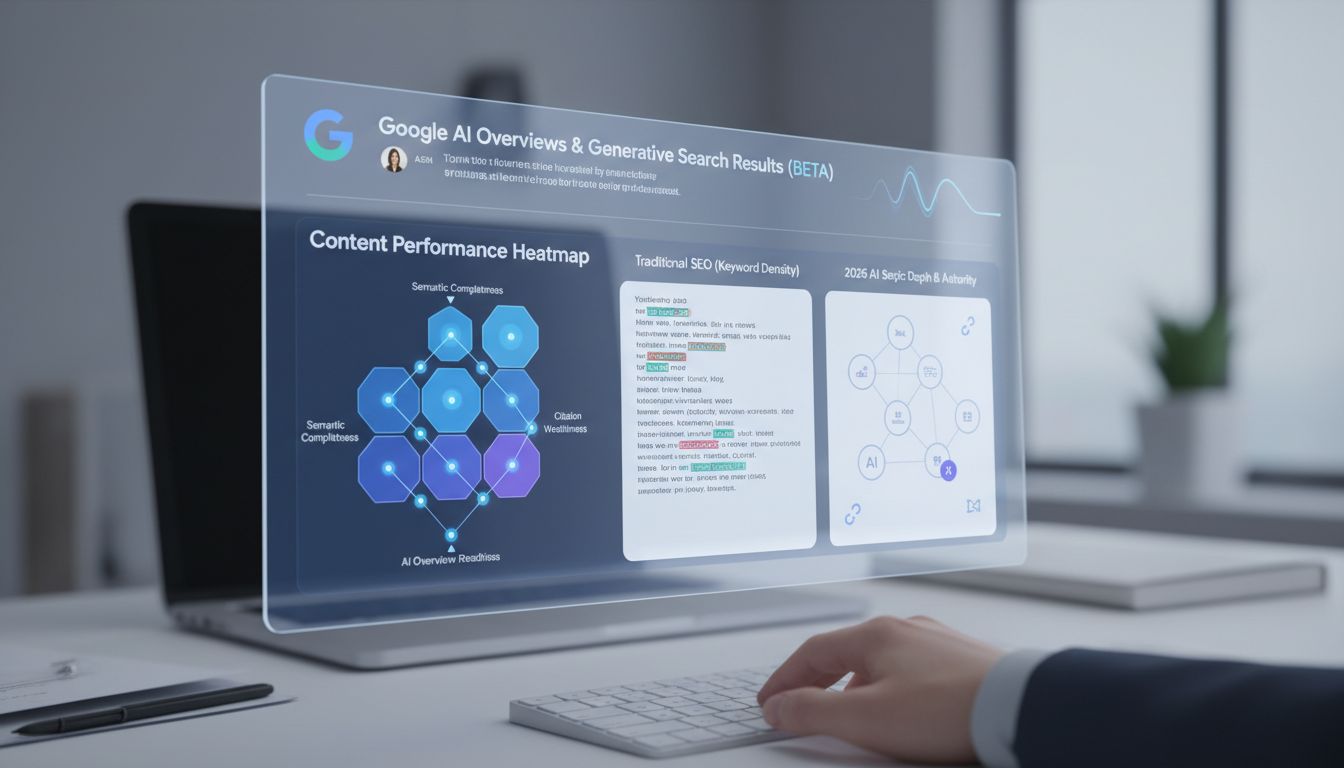
The 2026 shift here is ai seo optimization that accounts for Google's evolving AI Overviews and generative search. Tools like Surfer now score content not just for traditional keyword density, but for semantic completeness and citation-worthiness. Those are the signals that get you featured in AI-generated answers.
Clearscope's live content scoring and MarketMuse's topic modeling help you build topical authority, not just rank for isolated keywords. Different game entirely.
Stage 3: Scale (Compliance & Globalization)
Your constraint: Risk and reach.
You need enterprise-grade guardrails and multi-market expansion. Publishing faster won't help if legal kills every piece before it ships, or if your expansion into EMEA stalls because you can't localize without blowing the budget.
Goal: Expand into new regions and verticals without legal exposure or quality degradation.
Tools: Writer (compliance), Smartling (localization), Pinecone (RAG accuracy).
Use case: Policy-compliant content generation, launching in EMEA or APAC, grounding AI outputs in verified product data.
The 2026 table stakes are published security certifications and built-in guardrails. Writer prevents content that violates HIPAA or GDPR before it's drafted. Smartling maintains SOC 2 and PCI compliance while translating at $0.005 per word. Pinecone ensures your AI-generated content cites real product features, not hallucinated specs.
Each stage builds on the last. But you don't need all three on day one.
Deep Dive: The 2026 AI Content Tool Landscape
The tool landscape has moved past the "GPT wrapper" phase. What separates winners from noise now is specialization, workflow integration, and provable compliance.
Here's how the categories stack up.
AI Content Generation & Ideation Platforms
Category Purpose: Generate first drafts, social posts, and marketing copy at scale without hiring a full content team.
2026 Differentiator: The shift from generic writing to predictable performance. Jasper's TEI study reports $884,000 in annual time savings and a 342% ROI over three years, but the real story is platforms like Anyword now offering predictive performance scores before you publish. Multi-step workflow automation isn't a bonus anymore. It's table stakes.
Top Contenders: Jasper (enterprise voice consistency, SOC 2/GDPR compliance, SSO), Anyword (performance prediction, CRM integrations with HubSpot and Salesforce), Writesonic (real-time web access with automatic citations for fact-checking).
Ideal SaaS Founder Use Case: You need volume across formats (blogs, emails, ads) and can't afford inconsistent brand voice. Pick Jasper if compliance matters; pick Anyword if you're optimizing for conversion metrics, not just output.
SEO & Content Optimization Platforms
Category Purpose: Ensure content ranks by analyzing SERP competitors and providing keyword, structure, and semantic guidance.
2026 Differentiator: Integration of AI search visibility data.
Tools like LLM Clicks now track how often ChatGPT, Gemini, and Claude cite your brand. Half of consumers already use generative AI to find answers. Traditional SEO platforms are adding semantic analysis specifically tuned to catch AI-generated content's weaknesses: keyword stuffing, shallow topic coverage, missing E-E-A-T signals.
Top Contenders: Surfer SEO (SOC 2, knowledge graph integration, detailed audit logs), Clearscope (content scoring with topic suggestions, Google Docs integration), MarketMuse (content gap analysis and competitor benchmarking at enterprise scale).
Ideal SaaS Founder Use Case: You're publishing 4+ posts per month and losing to competitors in search. Surfer gives you the fastest path to parity; Clearscope is better if you have experienced writers who need guardrails, not hand-holding.
RAG & Knowledge Base Tools (The Accuracy Engine)
Category Purpose: RAG stops AI from guessing by forcing it to cite your company's knowledge base first. Instead of hallucinating product features or pricing, the AI retrieves verified facts from your docs, then generates an answer.
2026 Differentiator: Hybrid search (vector + keyword), real-time indexing, and enterprise certifications.
Pinecone offers SOC 2, GDPR, ISO 27001, and HIPAA compliance with serverless scaling. Weaviate provides both managed cloud and self-hosted options with multimodal support. Haystack is the open-source framework for teams that want full control.
Top Contenders: Pinecone (managed, serverless, enterprise-grade security), Weaviate (hybrid deployment, RBAC/SAML on Cloud Plus tier), Haystack (Apache 2.0, integrates with FAISS, Elasticsearch, Qdrant).
Ideal SaaS Founder Use Case: You're building a product assistant, customer support chatbot, or internal knowledge tool where accuracy isn't optional. Start with Pinecone if you want zero infrastructure headaches; choose Weaviate if you need hybrid cloud; pick Haystack if you have engineering resources and want to own the stack.
Localization & Translation Platforms
Category Purpose: Scale content globally without sacrificing brand consistency or compliance.
2026 Differentiator: Not just AI translation, but certified, auditable workflows.
Smartling holds HITRUST certification (rare in localization), SOC 2, HIPAA, and GDPR compliance, with AI translation priced at $0.005 per word. Lilt's contextual AI engine learns from human corrections, offering on-prem deployments for regulated industries.
Top Contenders: Smartling (PCI Level 1, HITRUST, proven customer outcomes at Lyft and Therabody), Lilt (human-in-the-loop AI, air-gapped deployments, SOC 2/GDPR/HIPAA).
Ideal SaaS Founder Use Case: You're expanding to EMEA or APAC and can't afford brand voice drift or compliance gaps. Smartling if you need proven scale; Lilt if you're in healthcare, fintech, or another regulated vertical.
Compliance & Governance Platforms
Category Purpose: Prevent content from violating regulations, brand guidelines, or industry standards before it ships.
2026 Differentiator: Published, enforceable guardrails.
Writer maintains SOC 2 Type II, HIPAA, PCI, and ISO certifications, with documented policies that it doesn't train models on customer data. Bloomfire offers a self-healing knowledge base that flags outdated or duplicate content, plus role-based permissions and SSO/SCIM.
Top Contenders: Writer (regulatory guardrails, SSO, RBAC, data encryption), Bloomfire (AI-powered auto-tagging, content health monitoring, SOC 2/GDPR).
Ideal SaaS Founder Use Case: You're in a regulated industry (healthcare, finance) or scaling fast enough that a compliance miss could tank a funding round. Writer for content creation; Bloomfire for internal knowledge management.
Analytics & Experimentation Integration
Category Purpose: Measure content impact and optimize performance through testing, not guesswork.
2026 Differentiator: AI agents that predict content impact before publication and automatically A/B test headlines, CTAs, or page layouts.
Amplitude now serves 11,000 products with AI-driven session replay and heatmaps. Optimizely and VWO both hold ISO 27001, SOC 2 Type 2, and HIPAA certifications, making them viable for regulated teams.
Top Contenders: Amplitude (AI agents, predictive analytics, web experimentation), Optimizely (ISO/SOC 2/PCI/HIPAA certified, enterprise feature flagging), VWO (ISO 27001/27701, SOC 2, behavioral targeting).
Ideal SaaS Founder Use Case: You're past the "publish and pray" phase and need to prove content ROI to the board. Amplitude if you want product analytics integrated; Optimizely or VWO if experimentation is your primary use case.
The Hidden Cost: Infrastructure, Compliance, and Total Cost of Ownership
Infrastructure will account for more than half of AI spend in 2026. Data centers, servers, model hosting, vector databases. This isn't an enterprise problem that magically skips startups.
For every dollar you spend on a Jasper or Surfer SEO subscription, budget $2-4 for the underlying infrastructure: API calls to OpenAI or Anthropic, vector database hosting for RAG pipelines, and the engineering hours to wire it all together. Most founders see a $99/month tool price and think they've found their budget line. They haven't found the starting point.
The Real TCO Formula
Total Cost of Ownership breaks into three buckets, and only one shows up on your SaaS expense report.
1. Software Subscriptions: The visible line item. Jasper at $49-$125/seat, Surfer SEO at $119-$239/month, Clearscope at $170-$1,200+. This is table stakes.
2. Infrastructure Costs: API calls to LLM providers (GPT-4 runs $0.03-$0.06 per 1K tokens; a 2,000-word article costs $1.20-$2.40 in tokens alone), vector database hosting (Pinecone serverless starts free but scales to hundreds monthly under load), and model fine-tuning or RAG pipeline maintenance.
Running 50 articles a month through an AI workflow? Infrastructure can hit $500-$2,000 before you see a single published post.
3. Operational Labor: Integration work, content review to catch hallucinations, and the hidden tax of stitching tools that don't talk to each other. A content ops hire at $80K-$120K annually exists primarily to manage this layer.
The 2026 Compliance Checklist: Your First-Class Filter
Compliance isn't a "nice-to-have" for later-stage companies. It's a deal-breaker that surfaces during your Series A diligence or your first enterprise sales cycle.
Baseline certifications to demand from any vendor in your production stack: SOC 2 Type II, ISO 27001, GDPR compliance. These prove the vendor has third-party-audited security controls and won't vaporize your customer data. Industry-specific add-ons matter if you touch regulated verticals: HIPAA (healthcare), PCI (payments), HITRUST (high-trust environments).
Pinecone, Writer, Surfer SEO, Smartling, Lilt, and Elastic all publish these certifications publicly. If a vendor hides their trust page or says "we're working on it," move on.
Ask every vendor: "Where is my data processed, and do you use it to train your models?" The wrong answer disqualifies them immediately.
Why Free AI SEO Tools Cost More Than You Think
Free ai seo tools are perfect for exploration. They're terrible for production.
The hidden cost is data privacy (you're the product), zero integration capability (manual copy-paste becomes someone's full-time job), and inability to scale (rate limits kick in exactly when you need velocity). Use them to learn the category, not to run your content engine.
Implementation: Sidestepping the 5 Most Common (and Costly) AI Tool Mistakes
You've picked your tools. Now comes the part where most implementations quietly fail.
The gap between purchase order and production value is littered with abandoned dashboards, unused seat licenses, and content that tanks your E-E-A-T score. Here's how to avoid becoming a case study in what not to do.
Mistake 1: Chasing Vanity Metrics Over Business Outcomes

Your content optimization tool gives you a "97/100 content score." Congratulations. You've optimized for a number that doesn't appear on your P&L.
What actually matters: Did the piece move from position 12 to position 4 for your target keyword? Did it generate 15 demo requests? Jasper's TEI study documented $884,000 in annual time savings by focusing on production velocity and conversion impact, not arbitrary quality scores. Numbers that sound impressive in a dashboard mean nothing if they don't connect to revenue.
Tie every ai content optimization tool to a core business metric from day one. If you can't draw a straight line from the tool's output to pipeline, traffic, or CAC reduction, you're collecting data, not driving growth.
Mistake 2: Ignoring Workflow Integration
You buy a best-in-class SEO optimization platform that doesn't connect to WordPress. Now someone's copying and pasting between five browser tabs, and your "automation" created a new manual job.
Map your actual content workflow before you shop. From brief creation through publishing to performance tracking. Demand native integrations or a robust API. If the vendor says "we have a Zapier integration," that's code for "you'll be debugging workflows at 11 PM."
Mistake 3: Blindly Following AI Suggestions, Eroding E-E-A-T
AI doesn't know your product roadmap changed last week. It will confidently cite a feature you deprecated in Q3 or invent pricing tiers that don't exist.
Implement a mandatory human review gate for all AI-generated content, especially anything touching product capabilities, pricing, or compliance-sensitive claims. Use tools with built-in citation capabilities (like Chatsonic's real-time source attribution) or RAG architectures that ground suggestions in your actual documentation. The five minutes you save by skipping review will cost you weeks when a prospect calls out incorrect information in your content.
Mistake 4: Underestimating Hallucination & Compliance Risks
One SaaS company let AI generate a comparison page. The model invented competitor features to make the comparison "balanced." Their competitor's legal team noticed.
Hallucination isn't a quirk if you're in a regulated vertical or enterprise sales. It's a liability. Prioritize tools with compliance guardrails (Writer's policy enforcement) and maintain an audit trail of what was AI-generated versus human-written. The distinction matters when things go sideways.
Mistake 5: Applying a One-Size-Fits-All AI Approach
The tool that crushes SEO-optimized blog posts will produce garbage whitepapers. Help documentation needs different optimization than thought leadership.
Match tool categories to content format goals. Blogs get best ai seo tools focused on rankings and traffic. Product docs get knowledge base tools with accuracy validation. Thought leadership gets human writers with AI research assistance, not full generation. You wouldn't use a chainsaw to slice bread. Same logic applies here.
Future-Proofing Your Stack: The 2026 Trends You Can't Afford to Miss
The tools you choose today need to survive your next funding round. Here's what's actually shifting in 2026, not what vendors want you to believe.
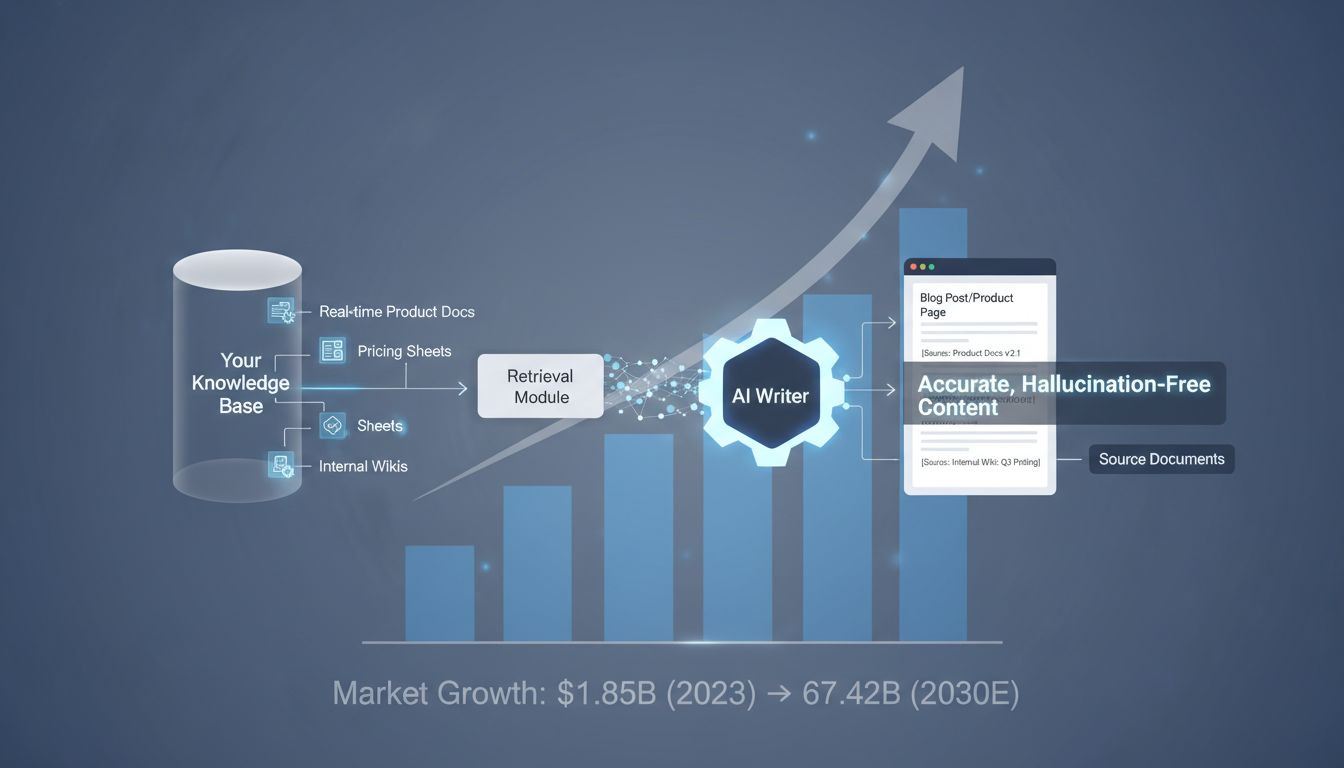
RAG is becoming infrastructure, not a feature. The Retrieval-Augmented Generation market is projected to reach $67.42 billion by 2034, up from $1.85 billion in 2025. That's not hype. It's a signal that RAG is moving from "nice to have" to table stakes.
You won't be buying standalone RAG platforms much longer. Instead, expect RAG-in-a-box: content optimization tools, knowledge bases, and even CMS platforms will ship with built-in vector databases and retrieval layers. The question shifts from "should we use RAG?" to "which vendor's RAG implementation actually works with our existing content?"
AI governance just got a budget line. Gartner reports that AI governance platforms can improve governance effectiveness by 3.4x, and 60% of Fortune 100 companies have appointed dedicated AI governance heads. For seed-to-Series-B founders, this translates to one thing: your board will ask about it.
Choose ai content optimization tools that already offer audit logs, RBAC, and transparent data handling policies. Writer and Jasper publish these features now. Platforms that treat governance as an afterthought will force expensive migrations later when compliance becomes non-negotiable.
Search is fragmenting into AI answer engines. Google Search Console won't tell you if ChatGPT or Perplexity are citing your product correctly, or at all. Tools like LLM Clicks now track brand mention rates across major chat models and flag hallucinations in real time.
This isn't theoretical. If your competitor's product gets cited in AI responses and yours doesn't, you're invisible to a growing segment of high-intent buyers who never touch Google. Optimizing for AI visibility instead of just traditional SEO is the new baseline. Your best ai seo tools need to handle both, or you're fighting half the battle.
Content and product analytics are converging. Platforms like Amplitude are adding AI agents and experimentation features that traditionally lived in content tools. Meanwhile, Surfer SEO is building deeper integrations with CRM and product data.
The future stack doesn't separate "content performance" from "product performance." Your ai seo optimization tools will feed engagement signals directly into product-led growth loops, surfacing which content actually drives activation, not just traffic. The wall between marketing and product is coming down whether your org chart is ready or not.
Conclusion: Building Your Content Engine, One Strategic Layer at a Time
The 2026 AI content landscape rewards strategic integration, not tool accumulation. You've seen the frameworks, the TCO calculations, the compliance checklists. The difference between founders who build scalable content engines and those who burn budget on disconnected SaaS subscriptions comes down to one thing: knowing which stage you're actually in.
Your immediate next step is simple but clarifying.
This week, audit your last quarter of content. Categorize each piece as Build, Optimize, or Scale. The pattern that emerges reveals your true priority stage, not the one you think you're in, but the one your content execution proves. If 80% of your output is net-new explainer content, you're still in Build, regardless of your Series A deck. If you're rewriting the same five pillar pages monthly, you're stuck in Optimize without the right tooling.
Then trial one tool in that category using the TCO and compliance checklist from section 5. Run the numbers on infrastructure costs, not just seat licenses. Verify SOC 2 or GDPR certification before you ingest proprietary data. These two filters alone eliminate 60% of bad tool decisions.
Look, ai content optimization tools aren't magic. They're infrastructure. Treat them like you'd treat your CRM or analytics stack, as foundational layers that compound over quarters, not quick wins that spike traffic for a month.
The content engine you build now determines whether your next board meeting celebrates organic revenue or explains why you're still dependent on paid acquisition.
Conclusion
You don't need more AI content optimization tools. You need a system that survives your next funding round.
The difference between a $200/month experiment and a scalable content engine isn't features. It's strategic integration. Tool selection is secondary to workflow cohesion. Total Cost of Ownership isn't just seat licenses, it's the infrastructure, compliance overhead, and hidden API costs that surface in month six when your vector database bill hits four figures [Source: channeldive.com].
RAG isn't optional anymore. It's the engine that prevents hallucinations, maintains brand accuracy, and keeps your content trustworthy as you scale. Security certifications (SOC 2, GDPR, HIPAA) aren't checkboxes. They're your primary filter for any tool touching customer data or production workflows.
Start here: Audit your current workflow against the Build-Optimize-Scale framework. Map one quarter's content goals to a single stage. Pressure-test one tool in that category against the TCO and Compliance Checklist from Section 5.
Strategic beats sprawling. Every time.
Build your content engine one layer at a time, not one trial subscription at a time.
Frequently Asked Questions
What's the most common mistake SaaS founders make with AI content tools?
They treat it like a plug-and-play solution. Grab a "best AI SEO tools" list, pick whatever's ranked first, and assume it'll just work with their existing setup.
It doesn't. You end up with a tool that nobody uses because it doesn't fit the workflow, features you're paying for but can't leverage, and content that tanks on E-E-A-T because there's no process for grounding the AI in your actual proprietary data or running human review. The real starting point isn't a tool demo. It's a workflow audit that shows you where AI actually fits.
Are 'free AI SEO tools' worth it for a bootstrapped startup?
For basic keyword research or surface-level content scoring? Sure, they're a decent starting point.
But you're trading features for access. Free tiers cap your API calls, strip out advanced SEO analysis, and won't give you the compliance certifications (SOC 2, GDPR) that B2B customers expect to see in your stack. If you're bootstrapped, better to allocate a small budget to one solid tool in your highest-leverage stage, like Surfer SEO or Clearscope for optimization, and use it deeply. Juggling five limited free tools just fragments your process.
How do I ensure my AI-optimized content maintains E-E-A-T?
Build a human-in-the-loop process and stick to it.
First, use RAG architecture (something like a Pinecone vector database) to ground every AI output in your verified knowledge base: product docs, past high-performing content, approved messaging. Second, require that a subject-matter expert on your team reviews every draft, adds firsthand experience, and fact-checks claims. Third, use optimization tools with built-in guardrails (Writer is good for this) to enforce brand voice and compliance standards.
Document the whole editorial process. That documentation is your E-E-A-T proof when Google or customers ask how you maintain quality at scale.
What's the single most important feature to look for in an AI content tool in 2026?
Security and compliance posture. Full stop.
Before you evaluate anything else, ask the vendor for current certifications: SOC 2 Type II, ISO 27001, GDPR compliance. If you're in healthcare or finance, add HIPAA or PCI readiness to the list. Then verify their data handling policy. Do they train their models on your proprietary content? The only acceptable answer is no.
This isn't paranoia. Enterprise customers will audit your vendor stack before signing, and a tool with weak compliance can kill deals you haven't even pitched yet.
How do I calculate the true Total Cost of Ownership (TCO) for an AI content stack?
The formula: (Monthly Software Subscription) + (Infrastructure Costs) + (Operational Labor).
Infrastructure means API calls to foundational models like OpenAI, vector database hosting, any fine-tuning or dedicated compute. Operational labor is the engineering and content team hours spent integrating, managing, and reviewing outputs. A $100/month ai seo optimization tool might rack up another $200-500 in API costs and need 10 hours per week of engineering time to maintain the RAG pipeline.
Vendors love citing TEI studies (Jasper claims $884,000 in annual time savings), but model your own numbers based on your team's actual capacity and usage patterns [Source: tei.forrester.com].
What is RAG and why is it suddenly necessary for content?
RAG (Retrieval-Augmented Generation) is what stops AI from making things up.
Here's how it works: before the AI generates anything, it first retrieves relevant information from your trusted knowledge base (documentation, verified blog posts, internal wikis). Then it augments the prompt with that data before writing. So instead of guessing what your product does or hallucinating a feature, the AI is citing your actual source truth.
For content teams, this is the difference between publishing accurate information about your pricing or product features versus publishing confident-sounding nonsense. Tools like Pinecone or Weaviate provide the vector database layer that powers this. The RAG market is projected to grow from $1.85 billion in 2025 to $67.42 billion by 2034, which tells you how foundational this architecture has become [Source: precedenceresearch.com].